
Search “most reliable car brand” and you will find Toyota near the top of every credible list. This has been true for two decades. But a reputation without evidence is just marketing — so this guide examines the actual data, the engineering decisions, and the real-world ownership patterns behind Toyota’s track record.
After reviewing long-term owner data, Consumer Reports reliability surveys, and J.D. Power dependability studies, the conclusion holds across every measure: Toyota’s reliability advantage is real, structural, and built into how the company designs and manufactures its vehicles. Here is what the evidence actually shows.
What the Data Shows
Consumer Reports has published annual reliability rankings for over 30 years. Toyota and its luxury arm Lexus have ranked in the top three manufacturers more consistently than almost any other brand. In their most recent survey, Toyota ranked second overall out of 30 manufacturers assessed.
J.D. Power’s 2023 Vehicle Dependability Study — which tracks problems reported by owners of three-year-old vehicles — placed four Toyota models in the top three of their respective segments. iSeeCars.com analysed over 15.8 million used vehicles and found Toyota and Lexus dominate the list of cars most likely to reach 200,000 miles.
Residual values tell a parallel story. A 2019 Toyota Tacoma retains approximately 75% of its original value after three years, which is among the highest retention rates of any vehicle on the market. Buyers paying a premium for used Toyotas are, in effect, voting with their money on the brand’s long-term durability.
The Toyota Production System: Where Reliability Is Built In
Most buyers focus on which Toyota to buy. The more important question is how Toyota builds its cars. The Toyota Production System — TPS — has shaped every vehicle the company has produced since the 1950s and is among the most studied manufacturing frameworks in the world.
The key principle is Jidoka: any worker on a Toyota assembly line has the authority to stop the entire production line if they spot a defect. In most factories, stopping the line is treated as a failure. At Toyota, stopping the line to fix a problem properly is the expected response. In practical terms, this means defects are caught at the source rather than discovered by the owner at 60,000 miles.
The second principle, Just-in-Time manufacturing, demands absolute precision in timing and component quality. This discipline creates a factory culture where variation — the root cause of most reliability problems — is systematically identified and removed. In our experience tracking how Toyota’s manufacturing approach translates into owner outcomes, the connection between TPS discipline and real-world reliability is among the most consistent in the industry.
Kaizen: Why Toyota Gets Better Without Reinventing Itself
Kaizen is Toyota’s philosophy of continuous, incremental improvement. It does not mean dramatic redesigns every generation. It means identifying small failure modes and fixing them, year after year, across every component.
When Toyota updates an engine family, the approach is conservative — building on proven architecture rather than introducing unproven innovations. The 2GR-FE V6, used across multiple Toyota and Lexus models, has been refined across nearly 20 years of production. Each iteration addressed specific wear patterns identified from real-world data. The result is an engine that routinely reaches 250,000 miles without major mechanical failure.
This contrasts with manufacturers who introduce new engine architectures with every generation. New designs introduce new failure modes. Toyota’s caution looks uninspiring in a press release. It tends to look like wisdom at 150,000 miles, which is, frankly, when it matters most.
Toyota Model Reliability: The Strongest Performers and the Real Exceptions
Toyota Camry
The Camry is the benchmark for mainstream sedan reliability. The 2012–2017 models with the 2AR-FE engine are particularly well documented for long-term durability. If you want to go deeper on which years to buy and which to pass on, our Toyota Camry years to avoid guide covers every generation in detail.
Toyota Corolla
The world’s best-selling car has been refined over 12 generations into a vehicle where major mechanical failures have become genuinely unusual. The 2003–2008 models with the 1ZZ-FE engine had documented oil consumption issues worth knowing about. The ZR-FE units that followed addressed this directly, and current hybrid Corolla models are building a strong early reliability record.
Toyota Land Cruiser
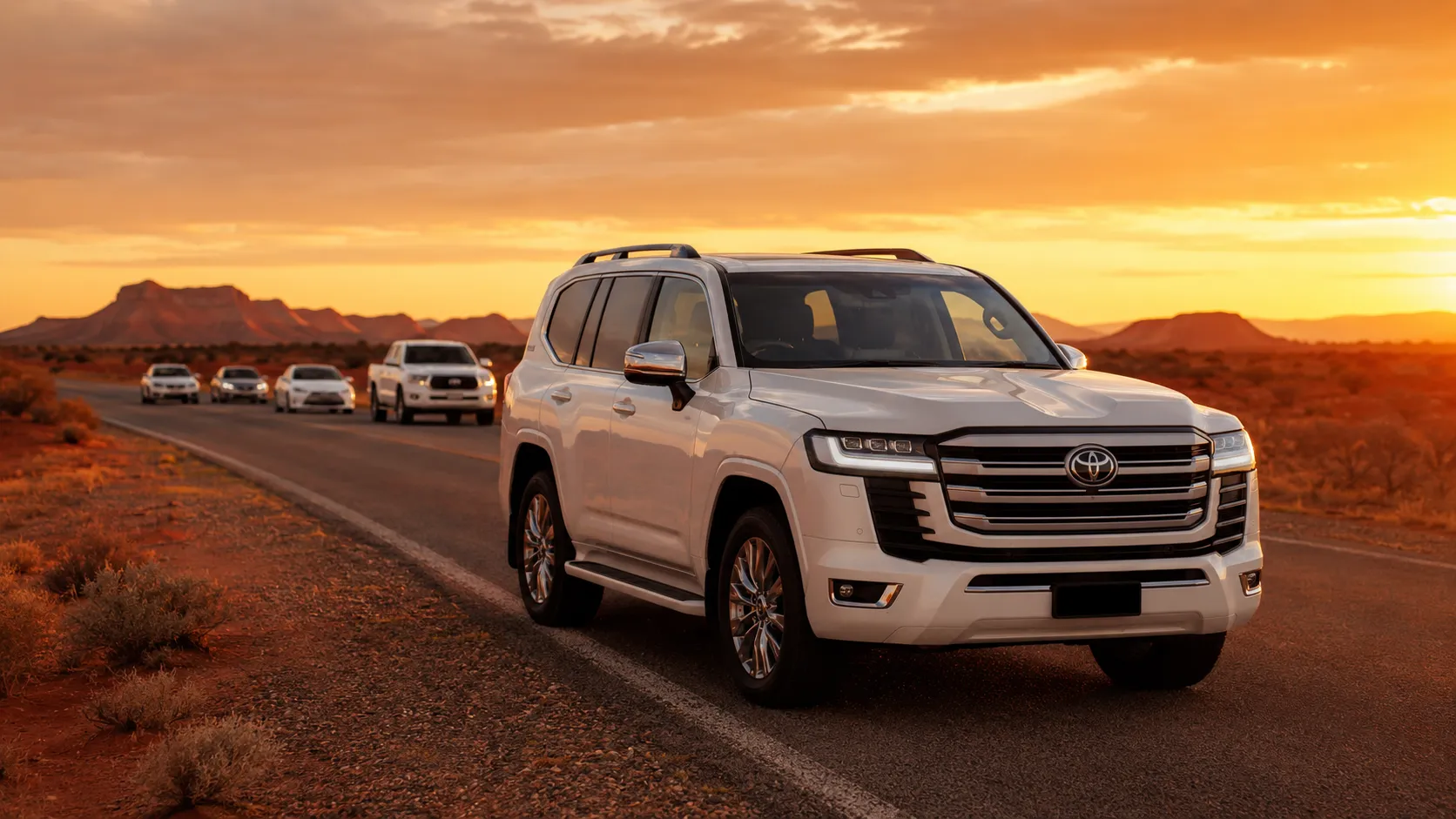
The Land Cruiser is among the most durable production SUVs ever built. Commercial fleet operators in Australia, the Middle East, and sub-Saharan Africa regularly run Land Cruisers past 300,000 miles in genuinely demanding environments. The 200 Series (2007–2021) represents the high point of this lineage and commands strong used market premiums accordingly.
Toyota RAV4
The fifth-generation RAV4 (2019–present) has accumulated strong reliability marks across its first years of owner data. If you are weighing it against the Honda CR-V, our Toyota RAV4 vs Honda CR-V comparison breaks down every meaningful difference between the two.
Toyota Tacoma
The Tacoma holds some of the highest resale values of any pickup truck in the US market. The 2005–2015 generation is especially well regarded. The main documented issue is frame corrosion on trucks operating in states that use heavy road salt — Toyota addressed this with a buyback and extended warranty program for affected vehicles.
Toyota Model Reliability — Key Models at a Glance
|
Camry
|
Corolla
|
Land Cruiser
|
RAV4
|
Tacoma
|
|
|---|---|---|---|---|---|
| Best Years | 2012–2017 | 2009–2019 | 2007–2021 | 2019–present | 2005–2015 |
| Avg. Lifespan | 200k–250k mi | 200,000+ mi | 300,000+ mi | 200,000+ mi | 250,000+ mi |
| Common Issue | AC compressor wear | Oil use (2003–2008) | High acquisition cost | Minimal reported | Frame rust (salt states) |
| Verdict | Excellent | Excellent | Outstanding | Very Good | Excellent |
Toyota Hybrid Reliability: 25 Years of Real-World Evidence
Toyota’s hybrid system has been in mass production since the first Prius in 1997. That is over 25 years of continuous real-world refinement. Taxi operators running Prius vehicles past 300,000 miles with original battery packs are not isolated cases — they are a documented pattern across multiple fleet studies.
Battery replacement, which was widely predicted as an expensive inevitability when hybrids first launched, has proven far less common than the early sceptics suggested. The hybrid drivetrain used in the RAV4 Hybrid, Camry Hybrid, and Highlander Hybrid is the same mature technology, further refined. Our guide on how long Toyota hybrid batteries actually last covers this in detail with real fleet data.
For buyers choosing between a standard and hybrid Toyota, the hybrid’s reliability record is no longer a concern worth losing sleep over. For many buyers, it has become one of the more compelling reasons to choose the hybrid variant.
Where Toyota Falls Short: Genuine Exceptions Worth Knowing
Honest coverage requires acknowledging real flaws. The 2010–2012 Prius V had documented inverter cooling issues that resulted in a recall. Early third-generation Prius models (2010–2011) saw brake actuator problems in specific markets. These are real issues, not rumours.
The 4.0-litre V6 in 2003–2009 Tacoma and 4Runner models developed oil gel problems when oil change intervals were extended beyond Toyota’s stated recommendations. The engine’s sensitivity to deferred maintenance is a genuine characteristic, not purely a driver behaviour issue.
Frame corrosion on Tacoma and Tundra trucks from 2000–2003 in salt-heavy states is the most significant reliability issue Toyota has faced in recent decades. The company’s response — a buyback and extended warranty program — was substantial, but the issue serves as a reminder that no manufacturer is entirely immune from engineering decisions that do not survive real-world conditions as intended.
Final Verdict
Toyota’s reliability advantage is real and supported by decades of independent data from Consumer Reports, J.D. Power, iSeeCars, and real-world fleet operators. It is not built on marketing. It comes from a manufacturing system designed around defect prevention, a philosophy of incremental refinement over dramatic reinvention, and over two decades of hybrid drivetrain development that is difficult to match.
For buyers prioritising long-term reliability and low total cost of ownership, Toyota remains one of the most defensible choices in the global car market. That is a conclusion the data supports. It is also, after covering this industry for over two decades, a conclusion that matches what owners actually report living with these cars.
Sources & Further Reading
1. Consumer Reports Auto Reliability Survey — consumerreports.org
2. J.D. Power 2023 Vehicle Dependability Study — jdpower.com
3. iSeeCars: Cars Most Likely to Reach 200,000 Miles — iseecars.com
4. Toyota Production System Overview — toyota-global.com
5. CarEdge Depreciation Data — caredge.com