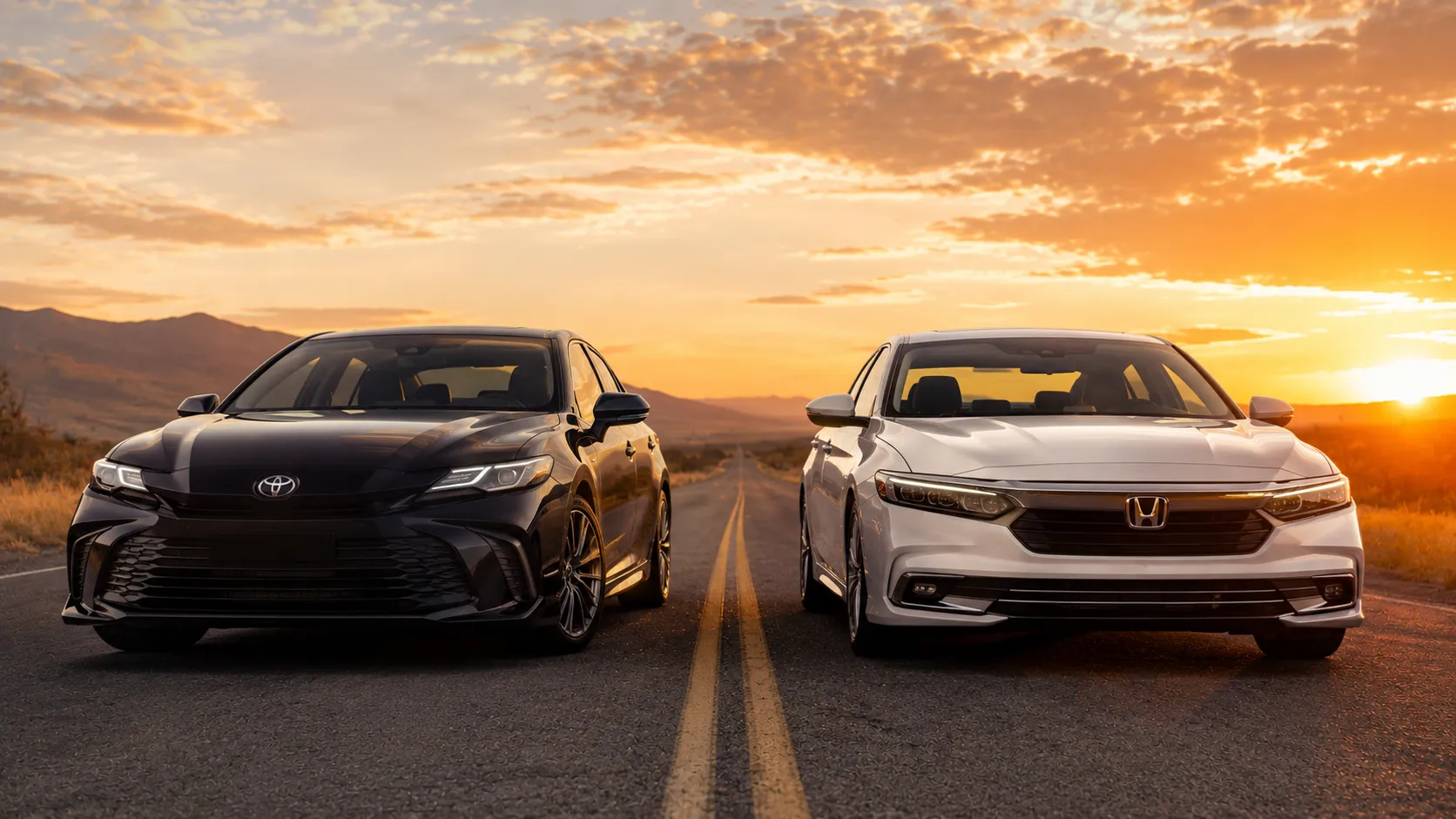

This is one of the most frequently asked questions in automotive research, and it deserves a more nuanced answer than most comparisons provide. Honda and Toyota are the two Japanese manufacturers most consistently associated with long-term reliability. Both brands appear near the top of independent reliability surveys year after year. Both have built global reputations on vehicles that last well beyond the 150,000-mile mark when properly maintained. So which is actually better?
The short answer is that they are closer than most people expect, with each brand having genuine advantages in specific areas. The longer answer requires looking at the engineering philosophies, the model-by-model track records, the ownership cost differences, and the areas where each brand’s reputation is stronger than the other. Having driven and researched both brands extensively over two decades, here is the detailed breakdown.
Engineering Philosophy: Two Different Routes to the Same Destination
Toyota’s approach to reliability is built on conservative engineering and manufacturing discipline. The Toyota Production System prioritises process consistency and defect elimination at source. Toyota tends to use proven technology refined over long production runs rather than introducing entirely new architectures with each model generation. This conservative approach means Toyota vehicles rarely lead in outright performance or feature innovation, but it also means the failure modes are well understood and addressed over time.
Honda’s approach is more engineering-adventurous. Honda has a long history of developing genuinely innovative engines and drivetrains — the VTEC variable valve timing system, the i-VTEC refinement, the two-motor Sport Hybrid system in the Accord Hybrid. Honda engineers are known within the industry for a creative confidence that Toyota engineers sometimes lack. This produces vehicles that can be more engaging to drive and more technically interesting, but occasionally introduces reliability issues in the early years of a new system that Toyota’s more cautious approach avoids.
Head-to-Head: The Model Comparisons That Matter
Toyota Camry vs Honda Accord
The Camry and Accord are the two most direct competitors in the mainstream American sedan segment, and their reliability records are remarkably similar. Both consistently score above average in Consumer Reports surveys. Both have long track records of exceeding 200,000 miles with routine maintenance. The Camry edges ahead in long-term residual values — it holds its value slightly better in the used market, which is a meaningful proxy for buyer confidence. The Accord is widely regarded as the more enjoyable to drive, with sharper steering and a more engaging chassis. If reliability is the only criterion, the Camry has a marginal advantage from a longer proven track record. If you also value the driving experience, the Accord is a serious contender.
Toyota RAV4 vs Honda CR-V
This is the most hotly contested comparison in the mid-size SUV segment. The RAV4 leads in global sales volume and has a slightly stronger reliability record in Consumer Reports data across multiple generations. The CR-V had documented issues with oil dilution in the 1.5-litre turbocharged engine introduced in the 2017 model year — a genuine problem where fuel contaminated the engine oil in certain conditions, particularly cold climates with frequent short trips. Honda issued software updates and eventually a revised engine specification, but the issue affected buyer confidence in that generation. The RAV4, by contrast, has had a largely clean reliability record across both standard and hybrid variants.
Toyota Corolla vs Honda Civic
Two of the world’s best-selling cars and two of the most reliable vehicles in their segment. The Civic has historically been seen as the more dynamic option — particularly in the Si and Type R performance variants — while the Corolla has prioritised refinement and long-term dependability. Both have excellent reliability records. The Civic had some issues with the 1.5T engine’s oil dilution problem, shared with the CR-V of the same era. The Corolla has been more consistently issue-free across generations. For pure reliability over a long ownership period, the Corolla has a slight edge. For a more engaging ownership experience with comparable reliability, the Civic is a genuine alternative.
Toyota Tacoma vs Honda Ridgeline
The Tacoma is a market leader in the mid-size truck segment with a reliability record that, despite some known issues with frame corrosion on early 2000s examples and an automatic transmission that drew criticism in the 2016–2019 models, remains strong overall. The Ridgeline is a very different vehicle — a car-based unibody truck that prioritises comfort and versatility over towing and off-road capability. The Ridgeline has a genuinely excellent reliability record and scores highly in Consumer Reports, but it serves a different buyer than the Tacoma. Direct comparison is less useful than asking which vehicle suits your actual needs.
Honda vs Toyota — Direct Model Reliability Comparison
|
Camry vs Accord
|
RAV4 vs CR-V
|
Corolla vs Civic
|
Tacoma vs Ridgeline
|
|
|---|---|---|---|---|
| Toyota Edge | Resale value, longevity | Reliability record | Consistency across years | Off-road, towing |
| Honda Edge | Driving dynamics | Interior quality | Performance variants | Comfort, reliability score |
| Verdict | Toyota for reliability, Honda for enjoyment | Toyota — 1.5T oil issue hurt Honda | Tie — both excellent | Different buyers — depends on use |
Long-Term Cost of Ownership: Where the Real Difference Shows
Over a ten-year ownership period, Toyota and Honda vehicles cost remarkably similar amounts to maintain when bought new and serviced according to the manufacturer schedule. Both brands use components that are widely available, both have extensive independent specialist networks, and both have avoided the parts pricing extremes of European premium brands.
The differences that do exist tend to favour Toyota slightly in resale value — Toyota vehicles hold their value approximately 2–3% better than comparable Honda models at the five-year mark in North American markets. This is a meaningful difference over the full ownership period. Honda, conversely, tends to offer a slightly more engaging driving experience that some buyers consider worth a modest premium.
Where Honda Beats Toyota
Honda’s engineering creativity has produced some genuinely outstanding powertrains that Toyota has not matched. The K-series four-cylinder engine family in particular — used in the Accord, Civic Si, and CR-V across multiple generations — is one of the most mechanically robust and tuneable engines produced by any mainstream manufacturer. Honda’s two-motor Sport Hybrid system in the Accord Hybrid is more sophisticated and better integrated than Toyota’s hybrid system in several objective measures.
Honda also tends to offer more engaging driving dynamics at equivalent price points. The Civic’s steering, the Accord’s chassis balance, and the CR-V’s ride quality have all received consistent praise from independent reviewers across multiple generations. If you want a reliable car that is also genuinely enjoyable to drive, Honda’s lineup deserves serious consideration.
The Verdict: Which Brand Should You Choose?
Toyota has a marginal reliability advantage across most model comparisons, reflected in stronger long-term residual values and a more consistent absence of significant recalls across recent generations. If minimising the probability of mechanical problems over a long ownership period is your primary goal, Toyota edges ahead.
Honda is not far behind, and in specific categories — particularly engine sophistication and driving dynamics — it is ahead. The 1.5T oil dilution issue affected specific models in specific conditions and has been addressed; it should not define the entire brand’s modern reliability record.
The most honest advice is this: both brands will serve you well if you buy a well-maintained example and service it properly. Research the specific model year you are considering rather than relying entirely on brand-level reputation. The difference between a well-maintained Honda and a well-maintained Toyota is far smaller than the difference between a properly serviced vehicle of either brand and a neglected one.