
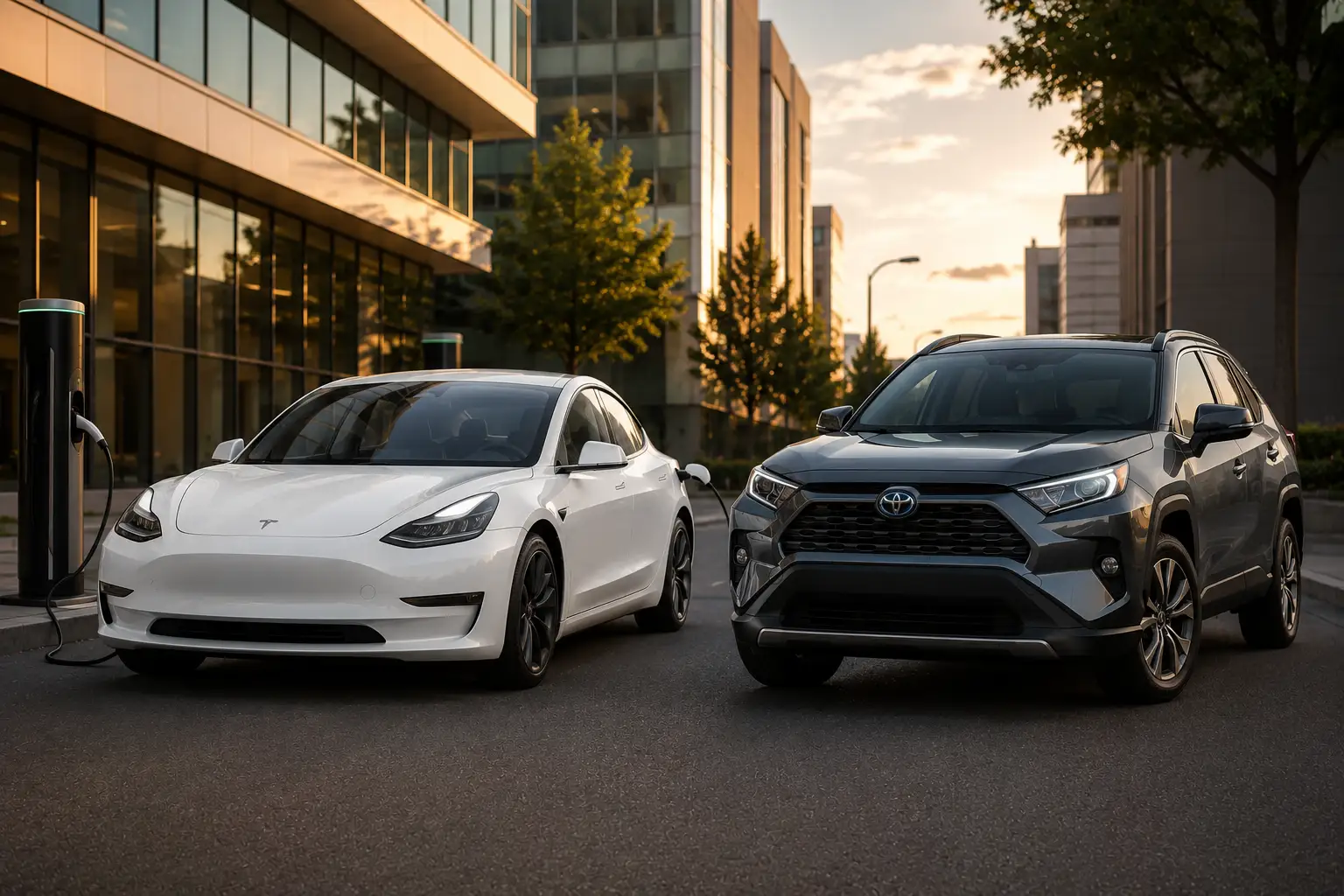

The shift away from pure internal combustion engine vehicles is accelerating, and the choice facing most car buyers in 2024 is no longer whether to consider electrified vehicles but which type of electrified vehicle makes sense for their specific situation. The marketing around both electric vehicles and hybrids can be misleading in different directions — EV advocates overstate the practicality of charging infrastructure in areas where it remains genuinely inconvenient, while hybrid advocates understate the real-world cost advantages of EVs for drivers in the right circumstances.
This is an honest assessment of where electric cars and hybrid cars genuinely make sense, and where they do not, based on real-world ownership data rather than manufacturer claims.
Understanding the Categories
Full Electric Vehicles (BEVs)
Battery electric vehicles run entirely on electric power, require charging from an external source, and produce zero direct emissions. Their range varies from around 150 miles in budget models to over 400 miles in premium variants. Charging speed varies from slow home charging (overnight) to rapid public charging (20–80% in 20–40 minutes at compatible stations).
Plug-in Hybrids (PHEVs)
Plug-in hybrids combine an internal combustion engine with a battery that can be charged from an external source. The electric-only range is typically 20–50 miles, after which the petrol engine takes over. They offer the flexibility of electric driving for daily commutes with the range reassurance of a petrol engine for longer journeys.
Standard Hybrids (HEVs)
Conventional hybrids use an electric motor to assist the petrol engine but cannot be charged externally. They generate electricity through regenerative braking and do not require any changes to your charging infrastructure. Toyota’s hybrid system — used in the Prius, RAV4 Hybrid, and Camry Hybrid — is the most proven example of this technology.
When a Full Electric Vehicle Makes Most Sense
A full electric vehicle makes genuine financial and practical sense if you have reliable home charging available, your daily driving rarely exceeds 150 miles, public charging infrastructure in your area is adequate for your travel patterns, and you are in a tax bracket that benefits from applicable EV incentives.
For a driver who charges overnight at home and commutes 30–40 miles daily, a full EV is almost certainly the most economical option over a five-year ownership period. Home electricity costs per mile are significantly lower than petrol costs per mile in most markets. Scheduled maintenance costs are lower because EVs have fewer moving parts. And with a home charger, the convenience of waking up to a full charge every day is genuinely superior to stopping at a petrol station.
The situation changes significantly for drivers in rural areas with limited public charging, for those who regularly make journeys that exceed their EV’s range, or for those living in apartments without access to home charging. For these buyers, the EV calculus currently does not work as cleanly.
When a Hybrid Makes More Sense
A conventional hybrid — particularly Toyota’s proven HEV system — makes sense for buyers who want meaningfully better fuel economy than a petrol car without any changes to their refuelling habits. There is no charging infrastructure requirement, no range anxiety, and no compromise in how you use the vehicle. You simply fuel it at the same petrol stations you have always used and benefit from fuel economy improvements of 25–40% over an equivalent non-hybrid vehicle.
For high-mileage drivers who regularly cover long distances, a hybrid frequently makes more financial sense than an EV. The fuel cost savings relative to a non-hybrid petrol car are substantial, and the absence of range or charging concerns means the hybrid works for all the journey types in your driving pattern rather than most of them.
The PHEV Middle Ground
Plug-in hybrids make the most sense for drivers whose daily commute falls within the electric range (typically 20–50 miles) but who need longer-range capability regularly. A PHEV can operate as an effective urban commuter EV while retaining the full flexibility of a petrol car for weekend and holiday journeys. The key is charging the battery regularly — a PHEV owner who never charges externally is simply paying the weight penalty of a larger battery pack without accessing its benefit.
EV vs PHEV vs Hybrid — At a Glance
|
Full EV
|
PHEV
|
Hybrid (HEV)
|
|
|---|---|---|---|
| Home Charging | Essential | Recommended | Not required |
| Range Anxiety | Real concern | Low w/ petrol | None |
| Fuel Costs | Lowest | Low to moderate | Moderate |
| Long Journeys | Requires planning | Excellent | Excellent |
| Maintenance Cost | Lowest | Moderate | Low |
| Best For | Urban/suburban home charging | Mixed use short commute | All drivers high mileage |
The Honest Bottom Line
In 2024, the decision between an EV and a hybrid is genuinely situational rather than ideological. EVs are the right choice for the right buyer in the right circumstances. Hybrids are the right choice for buyers whose situation does not yet align with EV ownership — and that description still covers a significant proportion of the global car-buying population.
Do not let marketing from either direction push you into a vehicle type that does not match your actual driving patterns and charging reality. The best vehicle for you is the one that fits how you actually live, not how manufacturers would prefer you to live.