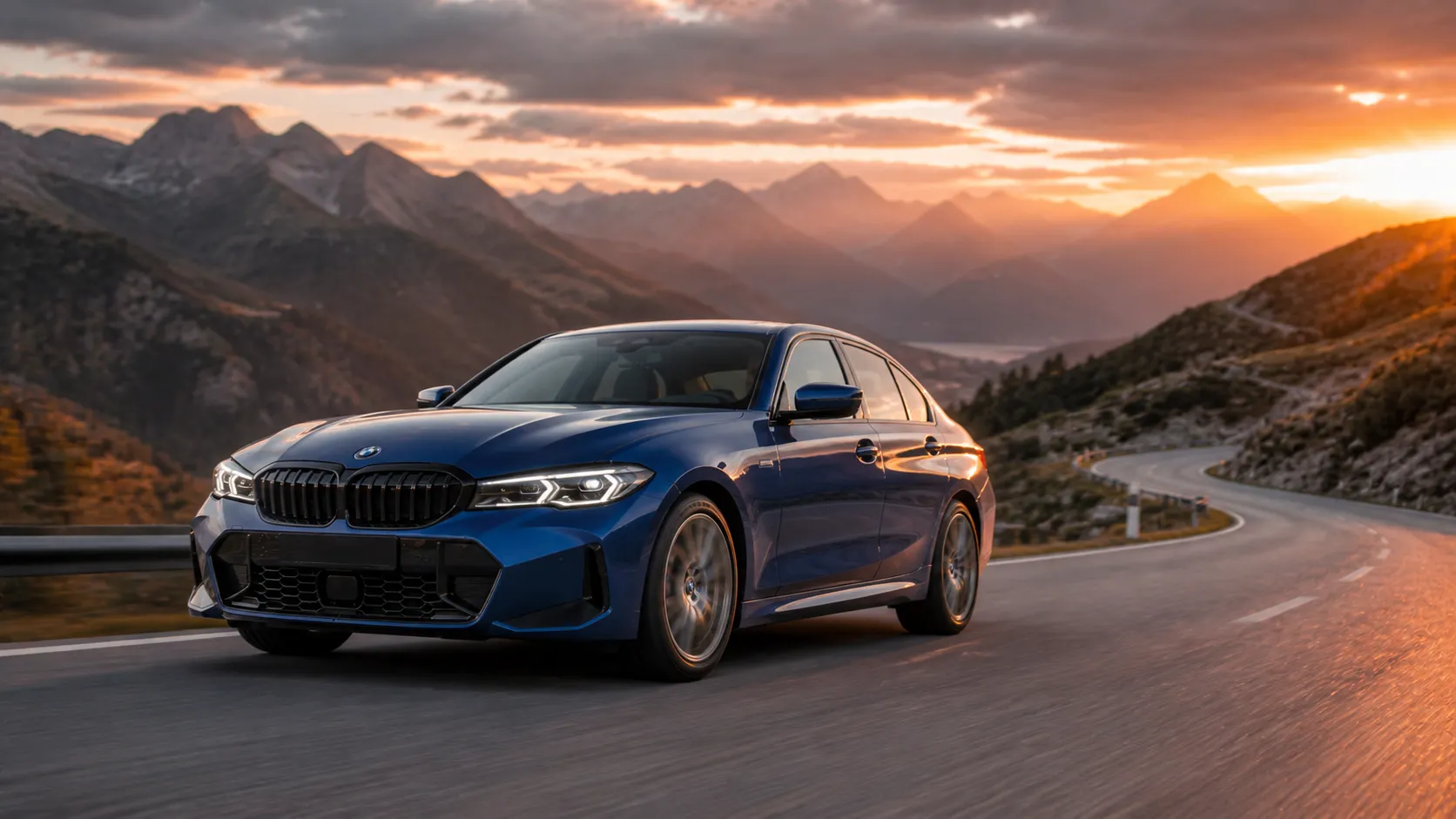
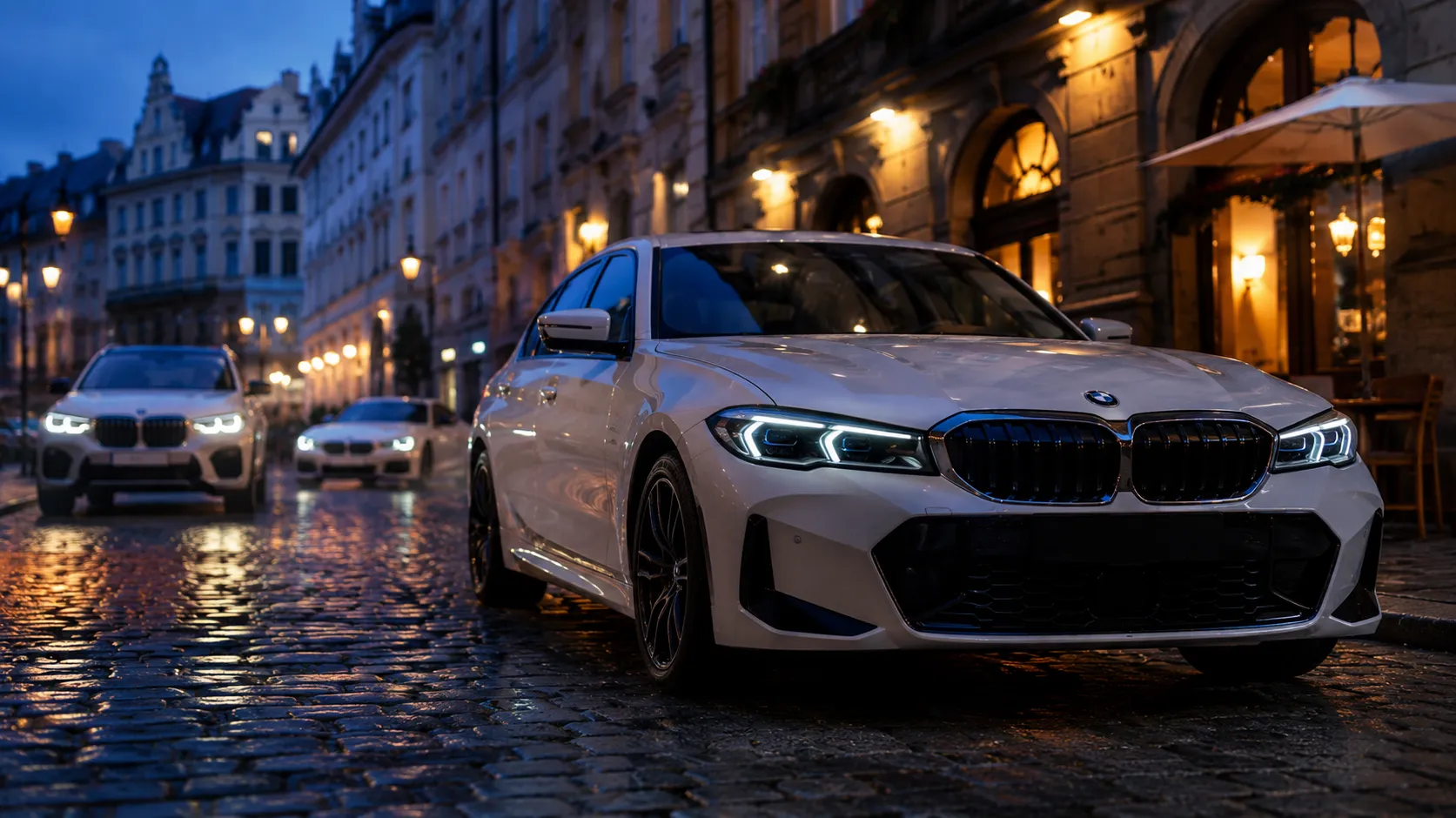

BMW is one of the most aspirational car brands on the planet, and also one of the most misunderstood by first-time buyers. Walk into a conversation about BMWs and you will quickly encounter strong opinions in every direction — passionate advocates who swear by the driving dynamics, and equally passionate critics who cite reliability concerns and expensive maintenance costs. Both groups have a point. The truth about BMW, as with most things worth understanding properly, sits somewhere between the headline narratives.
This guide is for people who are seriously considering a BMW but want to understand the brand beyond the badge. What does each series actually mean? Which models are worth buying and which should give you pause? What does ownership actually cost beyond the sticker price? Having covered BMW from Milan for several years and driven models across the full range on European roads, here is my honest assessment.
Understanding BMW’s Series Structure
BMW uses a numbered series system that can be confusing if you have not navigated it before. The core principle is straightforward: lower numbers indicate smaller, more affordable vehicles; higher numbers indicate larger, more expensive ones. Odd numbers are generally saloons and coupes; even numbers are historically estates and convertibles, though this rule has become less rigid as the lineup has expanded.
1 Series and 2 Series — The Entry Point
The 1 Series is BMW’s smallest offering, a compact hatchback that competes with the Audi A3 and Mercedes A-Class. It underwent a controversial switch from rear-wheel drive to front-wheel drive with the F40 generation launched in 2019, which drew criticism from driving enthusiasts but made it more practical for everyday urban use. The 2 Series splits into two very different vehicles: the 2 Series Coupe retains rear-wheel drive and genuine sporting character, while the 2 Series Active Tourer is a front-wheel-drive MPV aimed at families. Know which one you are looking at before making any assumptions.
3 Series — The Benchmark
The 3 Series is the model that built BMW’s global reputation. For decades it was the definitive sports saloon — the car that combined genuine driving pleasure with everyday practicality and reasonable running costs by premium brand standards. The E46 (1998–2006) and E90 (2005–2012) generations are widely regarded as the purest expressions of this formula. The current G20 generation is technically accomplished and extremely well-equipped, but some critics argue it has prioritised comfort and technology over the raw driving involvement that defined earlier models. It remains the most balanced choice in the BMW range for most buyers.
4 Series — The Coupe and Convertible
The 4 Series is essentially a two-door 3 Series, sharing its platform, engines, and most of its mechanical components. The coupe is genuinely attractive and the convertible offers open-air motoring with the reassurance of BMW’s well-sorted chassis. The Gran Coupe adds two rear doors while retaining the sloping roofline — a practical compromise if you need occasional rear access. The current 4 Series drew significant attention for its large kidney grille design, which divided opinion sharply. Set aside the aesthetics and evaluate it on its driving dynamics and practicality, which are both strong.
5 Series — The Executive Saloon
The 5 Series targets the executive saloon segment alongside the Mercedes E-Class and Audi A6. It is larger and more comfort-oriented than the 3 Series without abandoning BMW’s sporting pretensions entirely. The G30 generation (2017–present) is particularly accomplished, with the 530d diesel and 540i petrol representing the sweet spots of the range. The 5 Series Touring estate is worth serious consideration if you need the practicality — it combines BMW’s driving character with genuinely useful load space.
7 Series — The Flagship
The 7 Series is BMW’s largest, most luxurious, and most expensive model. It competes with the Mercedes S-Class and Audi A8 in the flagship saloon segment. The current G70 generation has moved decisively toward a technology-focused, comfort-first proposition. If you are in the market for a large luxury saloon, the 7 Series is worth evaluating — but be aware that running costs, including maintenance and tyres, are substantially higher than in smaller BMW models.
X Series — The SUVs
BMW’s X range covers the full SUV spectrum. The X1 and X2 are compact SUVs. The X3 and X4 compete in the mid-size premium segment. The X5 and X6 are large SUVs, and the X7 is BMW’s three-row flagship. The X3 is consistently the best-selling model in the X range and arguably the most coherent — it manages the difficult balance between driving dynamics and SUV practicality better than most. The X5 is the choice if you need genuine seven-seat capability with a premium feel.
BMW Reliability: The Honest Assessment
BMW’s reliability record is more nuanced than either its advocates or critics typically acknowledge. The brand consistently scores below average in Consumer Reports reliability surveys compared to Toyota and Honda, and above average compared to brands like Alfa Romeo or Jaguar. The picture varies significantly by model, generation, and engine.
BMW Reliability by Series — A General Guide
| Specification |
3 Series (E46)
|
3 Series (E90)
|
5 Series (F10)
|
X3 (F25)
|
X5 (F15)
|
|---|---|---|---|---|---|
| Reliability Rating | Good | Average | Average | Average | Below average |
| Common Issues | VANOS, cooling system | N52/N54 injectors, turbos | N63 engine oil consumption | Timing chain (N20) | Air suspension, N63 oil use |
| Best Engines to Seek | 325i, 330i straight-six | 328i N52, 325d diesel | 528i, 530d | xDrive28i, xDrive20d | xDrive30d diesel |
The most important reliability insight for BMW buyers is this: the straight-six petrol engines (M54, N52) from the E46 and early E90 era are among the most durable engines BMW has produced. The turbocharged N54 and N55 engines that followed are more powerful but carry a higher maintenance burden. The N20 four-cylinder used in many 2012–2016 models had a documented timing chain issue that can be expensive if not addressed. Do your research on the specific engine before any used BMW purchase.
The True Cost of BMW Ownership
This is where many first-time BMW buyers receive an unpleasant education. The purchase price of a BMW — whether new or used — is only the beginning of the financial commitment. BMW parts are expensive. BMW labour rates at main dealers are high. And certain BMW models carry maintenance requirements that accumulate costs at a rate that can genuinely surprise unprepared owners.
Brake discs and pads wear faster on performance-oriented vehicles driven enthusiastically — and BMW owners tend to drive their cars harder than average. Tyre costs are higher because BMW models typically run wider, lower-profile tyres than mainstream vehicles. The electronic systems in modern BMWs are sophisticated and capable, but when they develop faults, diagnosis and repair costs reflect that sophistication.
The practical advice for prospective BMW buyers is to research the specific model’s known issues before purchasing, budget for annual maintenance costs that are roughly double those of a comparable Toyota or Honda, ensure any used example has a full service history from reputable independent specialists or BMW main dealers, and consider BMW’s own extended warranty products if purchasing a newer used vehicle.
Which BMW Should a First-Time Buyer Consider.
For most first-time BMW buyers, the recommendation is to start with a late-model 3 Series or X3, both of which represent the brand’s strengths most coherently. If budget is the primary constraint, a well-maintained E46 3 Series with a straight-six engine is genuinely excellent value — it offers the pure driving character that BMW’s reputation was built on at a price that reflects its age but not its quality.
Avoid the temptation to stretch to the highest specification or the most powerful engine without honestly assessing your maintenance budget. A modestly specified BMW that is properly serviced will give more pleasure and fewer headaches than a highly specified one that is maintained on a budget.
The Verdict on BMW as a Brand
BMW makes some of the most rewarding cars to drive in the premium segment. That reputation is real and was earned. The cost of accessing it — in purchase price, running costs, and maintenance commitment — is also real and often underestimated by first-time buyers. Go in with accurate expectations on both sides and a BMW can be an excellent ownership experience. Go in expecting Toyota reliability at Mercedes pricing and you will be disappointed.
The brand is worth considering seriously if you value driving dynamics, appreciate sophisticated engineering, and are prepared to maintain what you buy properly. If long-term low-cost ownership is your priority, this is probably not the brand for you — and there is nothing wrong with being honest about that before you commit.