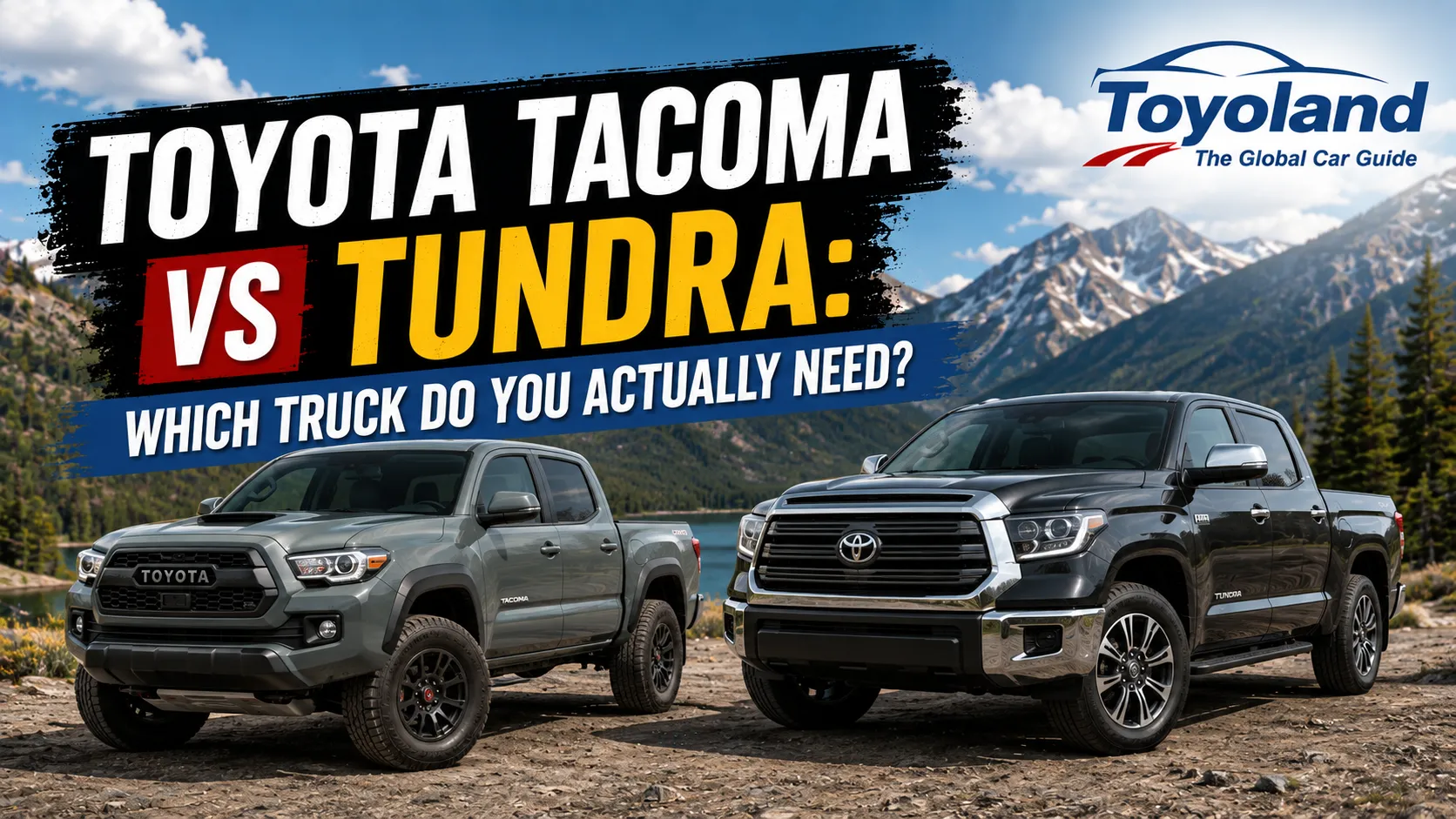

Toyota’s truck aisle presents a nine-thousand-dollar question, and most buyers answer it with vibes. Here’s the number that should answer it instead: the heaviest trailer you’ll pull more than a few times a year. The Tacoma tows up to 6,500 pounds; the Tundra up to 12,000. Everything else — size, price, fuel, cabin — falls in line behind that single honest figure, and this page walks it through in order, then does the part no dealer comparison will: which used eras of each truck deserve your money.
The short version
- Regular towing under ~5,500 lb (with safety margin), city parking, trails, daily driving → Tacoma. From $32,245, up to ~26 mpg highway, and a foot-and-a-half easier to live with.
- Regular towing above that, serious payload, work duty, cross-state hauls → Tundra. From $41,260, up to 12,000 lb, and built to do it all day.
- Want maximum grunt in either size → the i-FORCE MAX hybrids: 326 hp/465 lb-ft (Tacoma) and 437 hp/583 lb-ft (Tundra) — though note both hybrids lower max towing slightly versus their gas twins.
- Buying used → different rules per truck; the second half carries them.
Towing and payload: the honest math
The Tacoma’s 6,500-pound ceiling (6,000 on the hybrid) covers most real recreational life — a mid-size boat, a loaded utility trailer, a small camper — with payload around 1,705–1,710 pounds. The Tundra’s 12,000-pound peak (on the SR5 4×2 Double Cab; the hybrid rates up to 11,450) with payload up to about 1,940 is a different category: sustained heavy hauls, big campers, equipment trailers. Two rules keep the math honest. First, payload and towing draw from the same combined-weight budget — a bed full of gear shrinks your usable trailer rating, which is how people end up technically overloaded in trucks that ‘should’ handle it. Second, buy margin, not the limit: towing at 90-plus percent of capacity every weekend is miserable in a way spec sheets don’t show. If your realistic trailer math lands within about 5,500 pounds, the Tacoma does it with composure; if it lands beyond, stop debating and buy the Tundra.
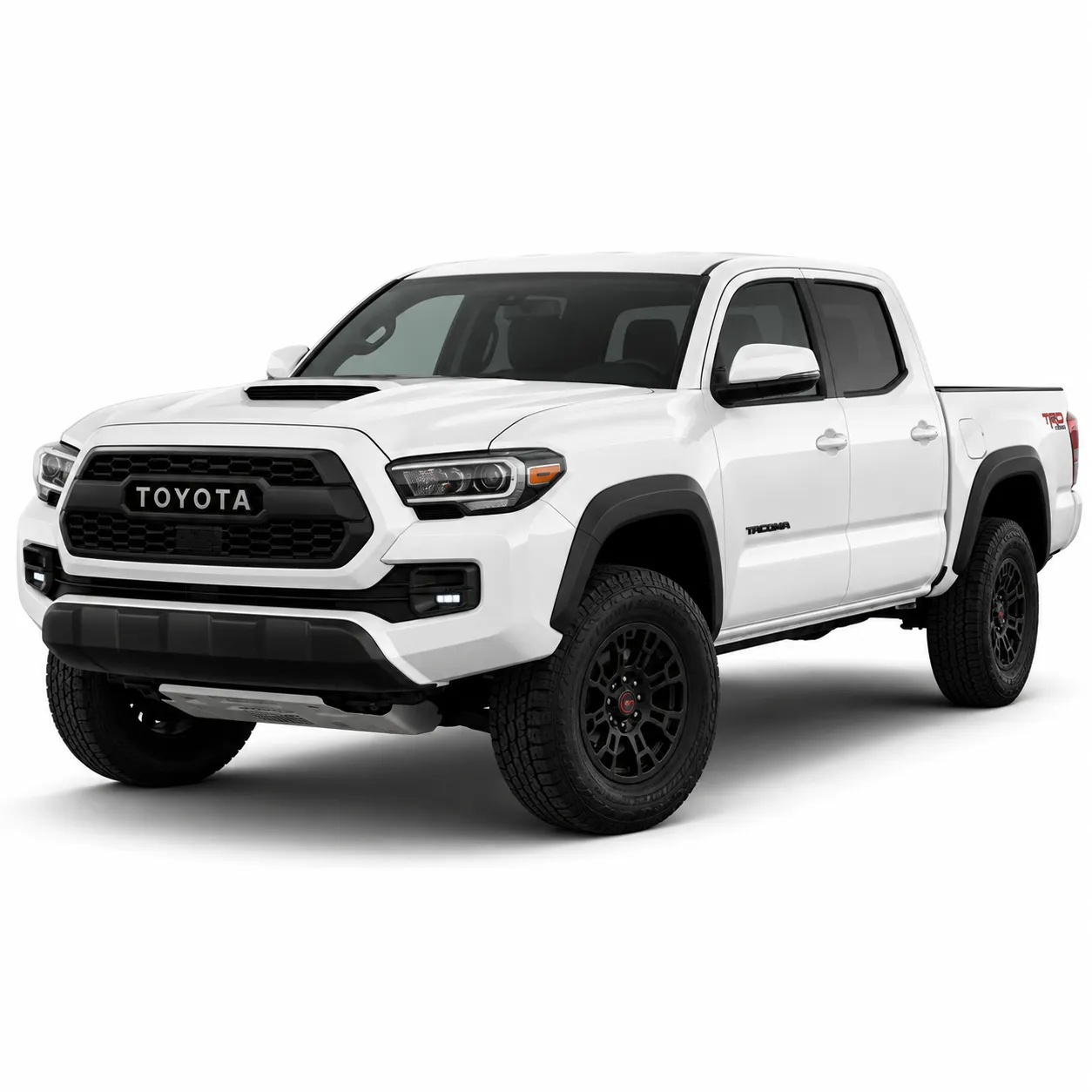
 Toyota
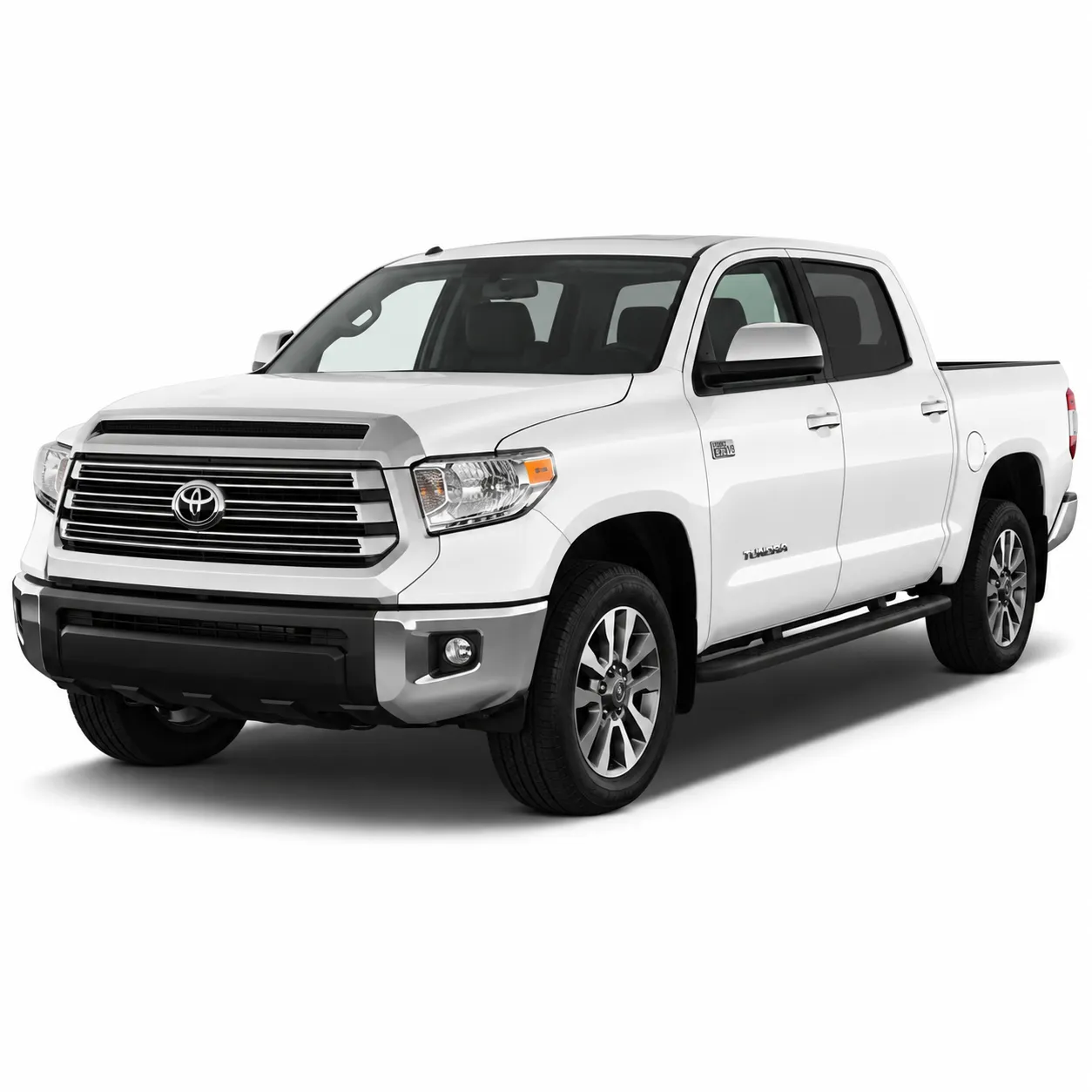 Toyota
Power: two philosophies, one family
Both trucks now run turbocharged engines with available hybrid muscle. The Tacoma’s 2.4-liter turbo spans 228 to 278 horsepower depending on trim and transmission — including the segment’s rare manual option — with the i-FORCE MAX hybrid stacking 326 hp and a stout 465 lb-ft. The Tundra’s 3.4-liter twin-turbo V6 starts where the Tacoma peaks (348–389 hp, up to 479 lb-ft) and its MAX hybrid lands 437 hp and 583 lb-ft, engineered for loaded grades rather than stoplight bragging. On the road that translates simply: the Tacoma feels quick and right-sized; the Tundra feels inexhaustible, particularly with weight on the hitch — and its 32.2-gallon tank exists precisely so towing range doesn’t become the trip’s main character.
Size, economy, and the monthly reality
Twenty-one inches separate them (~213 vs ~234), and that’s the daily difference — the Tacoma fits garages, trailheads and parallel spots the Tundra negotiates with. Fuel follows size: the Tacoma reaches ~26 mpg highway in its most efficient gas form (hybrid ~22–23 combined), while the Tundra lives around 20–22 — and neither number flatters a heavy right foot or a loaded bed. Before deciding on price alone, run both through our fuel cost calculator at your actual miles: the Tacoma’s purchase savings plus its fuel gap versus a Tundra is often a few thousand dollars a year, which is either wasted capacity or money well spent depending entirely on your trailer.
- One combined-weight budget governs both trucks — understanding it prevents the 'rated for it, still overloaded' trap.
- Margin-buying (staying ~15% under ratings) is the difference between relaxed towing and white-knuckle weekends.
- The MAX hybrids' torque transforms loaded driveability in both sizes — grunt where it's actually felt.
- Hybrid ratings dip versus gas (Tacoma 6,000 vs 6,500; Tundra 11,450 vs 12,000; Tundra hybrid payload ~1,680) — spec the individual truck.
- Peak figures attach to specific configurations (12,000 = SR5 4x2 Double Cab) — the door-jamb label outranks the brochure, every truck, every time.
Buying used: two trucks, two rulebooks
Whichever truck wins, the used-market rules differ sharply by era — and this is where homework pays four figures. The Tacoma’s story is generation-launch clusters and the frame chapter: our Tacoma best and worst years guide maps the sorted years, and the Tacoma’s problems page teaches the lift inspection, the 2016–2017 transmission test and the 2024-item VIN checks.
The Tundra splits cleanly in two: the legendary 2015–2021 5.7L V8 era (the certainty buy) and the 2022-onward twin-turbo years, where a documented engine recall makes the VIN sweep absolutely non-negotiable — and where completed-recall trucks can quietly be bargains. Our Tundra best and worst years guide carries those verdicts, and the Tundra’s problems page the full mechanism, air-pump and frame detail.
Tacoma vs Tundra at a Glance
| Car Name |
Spec Label
|
Spec Value
|
|---|---|---|
| Max towing | Tacoma / Tundra | 6,500 lb (hybrid 6,000) / 12,000 lb (hybrid 11,450) |
| Max payload | Tacoma / Tundra | ~1,705–1,710 lb / up to ~1,940 lb (hybrid ~1,680) |
| Power ceiling | Tacoma / Tundra | 326 hp / 465 lb-ft (MAX) / 437 hp / 583 lb-ft (MAX) |
| Length | Tacoma / Tundra | ~213 in / ~234 in |
| Economy | Tacoma / Tundra | Up to ~26 hwy; hybrid ~22–23 / ~20–22 combined |
| New from | Tacoma / Tundra | $32,245 / $41,260 |
The bottom line
Weigh your real trailer, add margin, and let the number choose: within ~5,500 pounds, the Tacoma is the smarter life truck — cheaper to buy, cheaper to run, easier everywhere; beyond it, the Tundra isn’t an upgrade, it’s the correct tool. Both, bought in the right era with the right checks, deliver exactly what Toyota’s truck reputation promises. For the buying method itself — VIN sweeps, records doctrine, inspection logic — our used Toyota buying guide is the companion to keep open in the next tab.