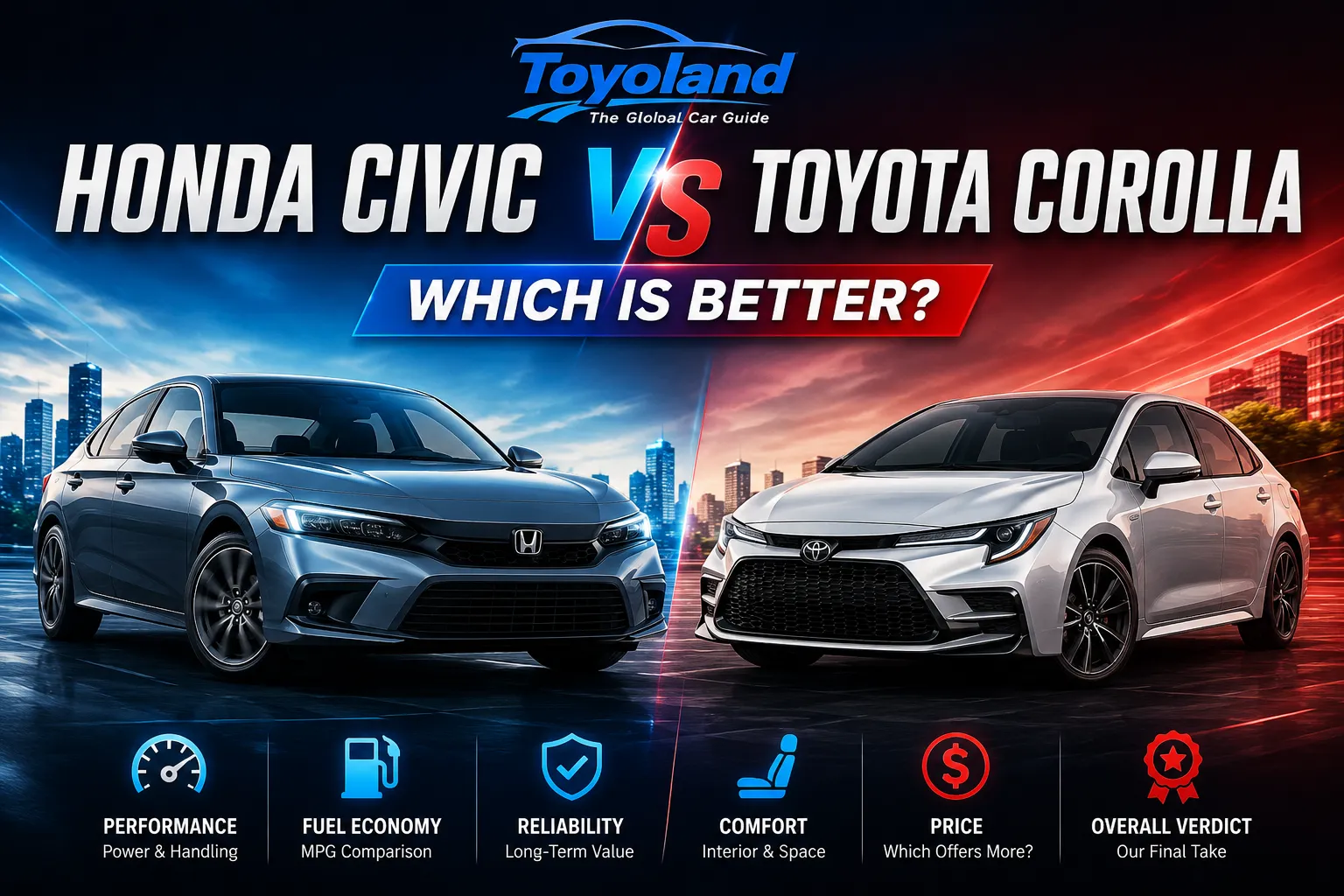

The Honda Civic vs Toyota Corolla rivalry is one of the longest-running and most fiercely contested battles in automotive history. Since the early 1970s, these two Japanese sedans have dominated the compact car segment, each earning legions of loyal fans along the way. For 2026, both manufacturers have refined their offerings to near-perfection, making the choice between them more difficult than ever.
Whether you are shopping for a practical daily driver, a fuel-sipping hybrid, or a sporty sedan that puts a smile on your face, the Civic and Corolla both deliver compelling packages. But which is better, Civic or Corolla? This comprehensive comparison examines every aspect of these iconic nameplates to help you answer that question once and for all.
With new-car prices continuing their seemingly endless climb, the Civic and Corolla remain two of the best vehicles you can buy for less than $30,000. From design and performance to reliability, resale value, and ownership costs, we leave no stone unturned. Let’s dive into the details and settle this rivalry once and for all.
⚡ Quick Verdict: Honda Civic vs Toyota Corolla
Honda Civic
Superior driving dynamics, premium interior, and stronger resale value.
Toyota Corolla
Lower starting price and excellent standard features.
Toyota Corolla Hybrid
Up to 50 MPG combined efficiency rating.
Honda Civic
Car and Driver 10Best winner with precise chassis control.
Honda Civic
99.0 cu ft cabin space, 14.8 cu ft trunk, and 2.6 inches extra rear legroom.
The Honda Civic vs Toyota Corolla rivalry isn’t just about automotive history – it’s about two vehicles that consistently dominate sales charts and search trends worldwide. Both cars have cultivated cult-like followings, and for good reason: they offer exceptional value, proven reliability, and a driving experience that transcends their humble price tags.
In the United States, the Civic and Corolla are the bestselling compact sedans, with both models coming well equipped with available fuel-efficient hybrid variants. The Civic stands out with its two-motor hybrid powertrain, which delivers better performance and efficiency than its non-hybrid sibling. It’s standard on the more expensive versions of the car, perhaps explaining why more than a third of Civic sales are hybrids.
The Toyota Corolla enters the 2026 model year with new safety features and a modern digital instrumentation panel. Unlike most of its rivals – including the Civic – the Corolla offers its hybrid variants with available all-wheel drive (AWD), a feature that resonates strongly with buyers in colder climates.
Both cars benefit from enormous production volumes, widely available parts, and simple mechanical layouts, making them among the most affordable vehicles to own and maintain. Their strong market presence ensures that parts are readily available and repair costs remain low, further cementing their status as smart choices for budget-conscious buyers.
For more insights on long-term vehicle ownership, explore our Toyota Reliability Guide and other buying guides.
- Exceptional long-term resale value retention (Civic 77.3% vs Corolla 74.3%).
- Ultra-low annual maintenance costs with proven Japanese engineering.
- No All-Wheel Drive option available on the Honda Civic.
- Toyota Corolla sedan missed out on IIHS Top Safety Pick due to marginal overlap crash score.
3. Exterior Styling & Road Presence Comparison
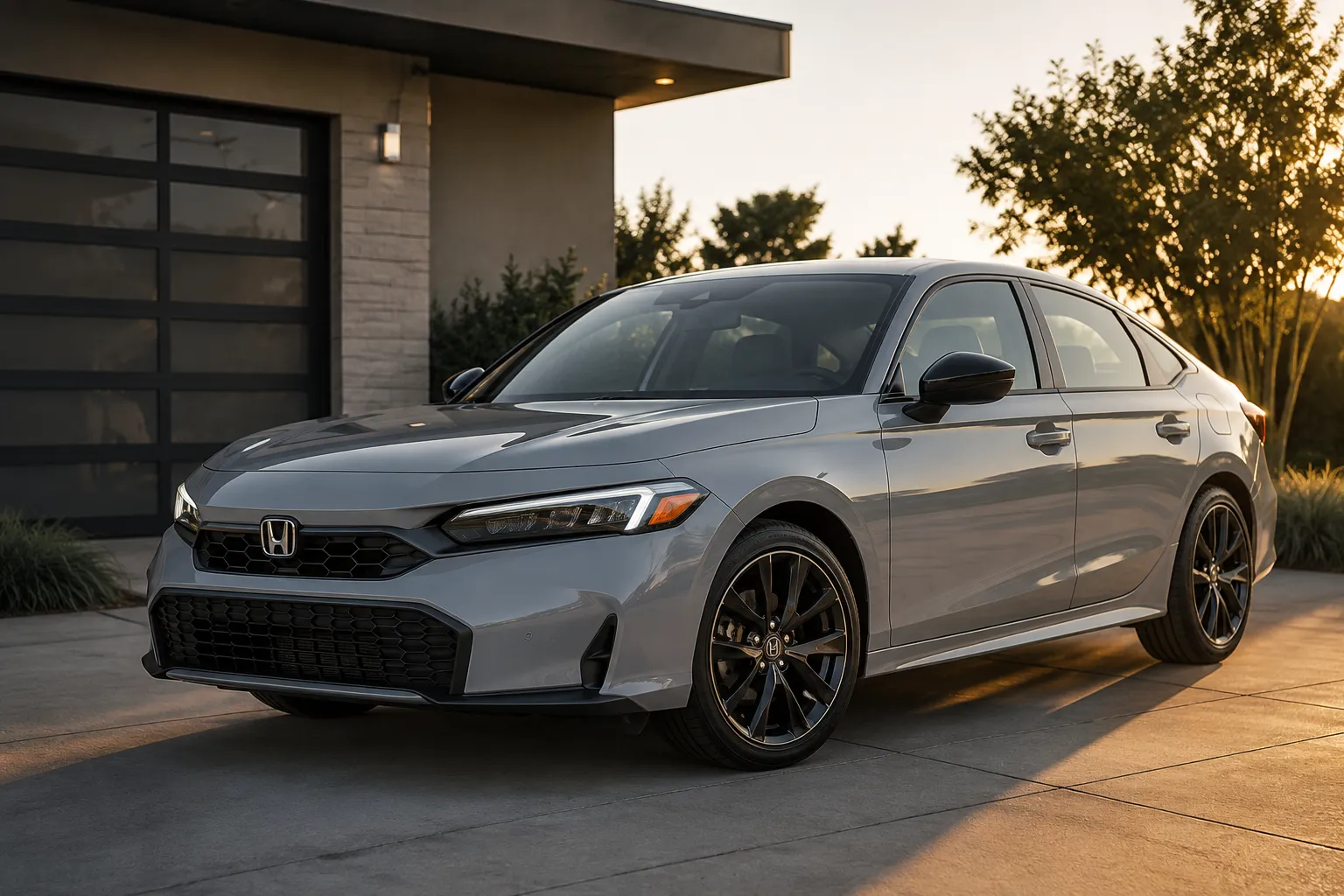
The 2026 Honda Civic and Toyota Corolla take distinctly different approaches to exterior design, and the results reflect each brand’s unique philosophy. The Civic adopts a sleek, mature aesthetic that has earned widespread praise since its 11th-generation debut. Its clean lines, subtle character creases, and athletic proportions give it a premium appearance that belies its affordable price point.
The Civic’s design is understated yet sophisticated, appealing to buyers who appreciate timeless elegance over flashy gimmicks. At the 2026 Chicago Auto Show, the Civic’s interior design and quality were praised, with reviewers noting that it “looks and feels nicer than the Corolla, particularly in the cockpit.”
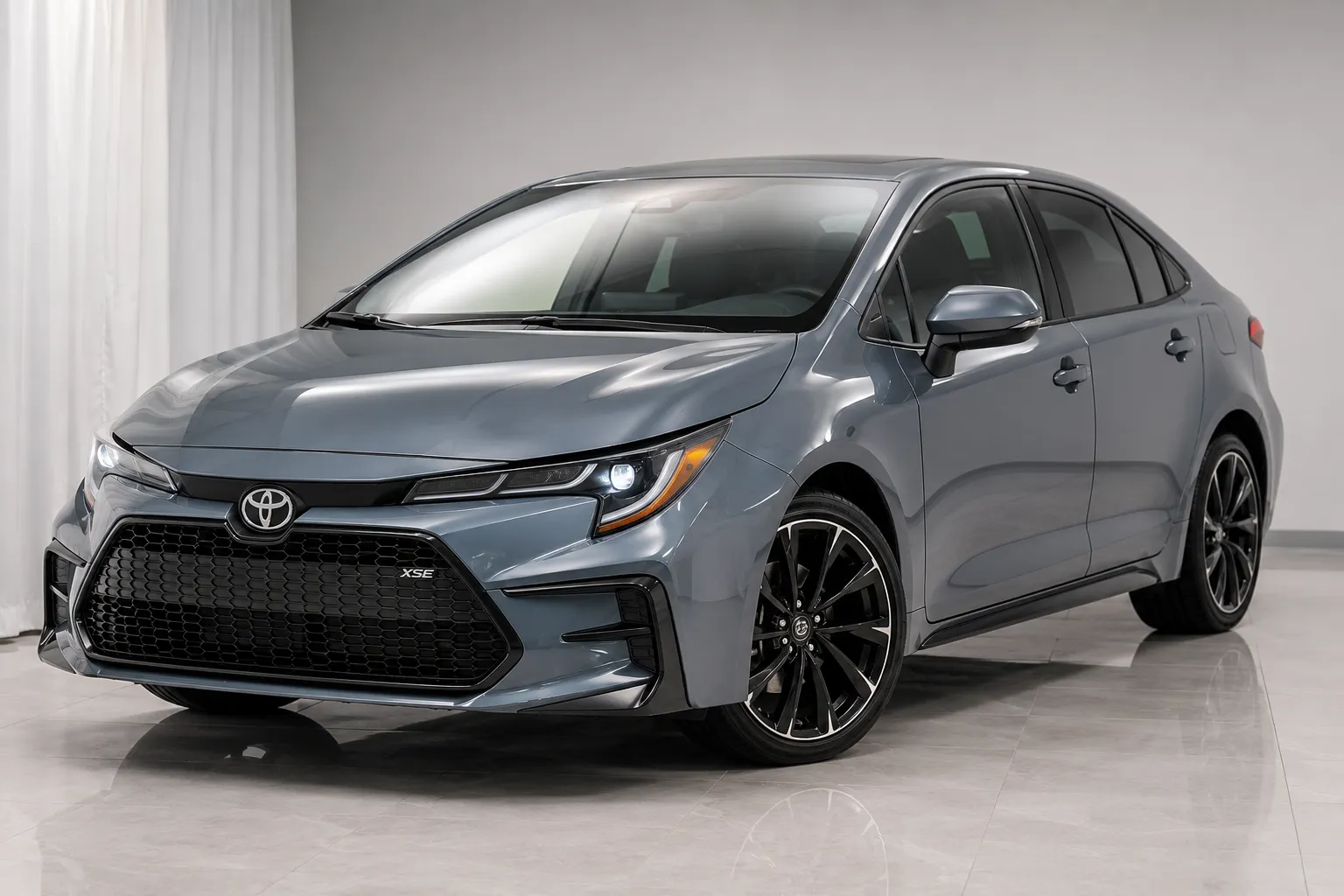
In contrast, the Toyota Corolla has embraced a more aggressive, angular design language. Sharp creases, prominent grilles, and dramatic sculpting give the Corolla a sportier, more youthful appearance. The Corolla Hatchback FX Edition takes this further with a rear wing and white 18-inch wheels, adding a racier edge to the lineup.
The Corolla’s sport grades feature a sport mesh gloss black grille and a rear sport diffuser to give the car a more athletic and powerful feel. While beauty is subjective, the Civic’s more restrained design has aged gracefully since its 2022 debut, whereas the Corolla’s bold styling may polarise opinions.
Both cars offer stylish design differences starting with the front fascia, with the LE grade featuring a horizontal front grille with slits and vertical gradation for a more refined look. Ultimately, the choice between the two comes down to personal preference: understated elegance or aggressive sportiness.
 Honda
Honda
4. Interior Quality, Cabin Ergonomics, and Passenger Comfort
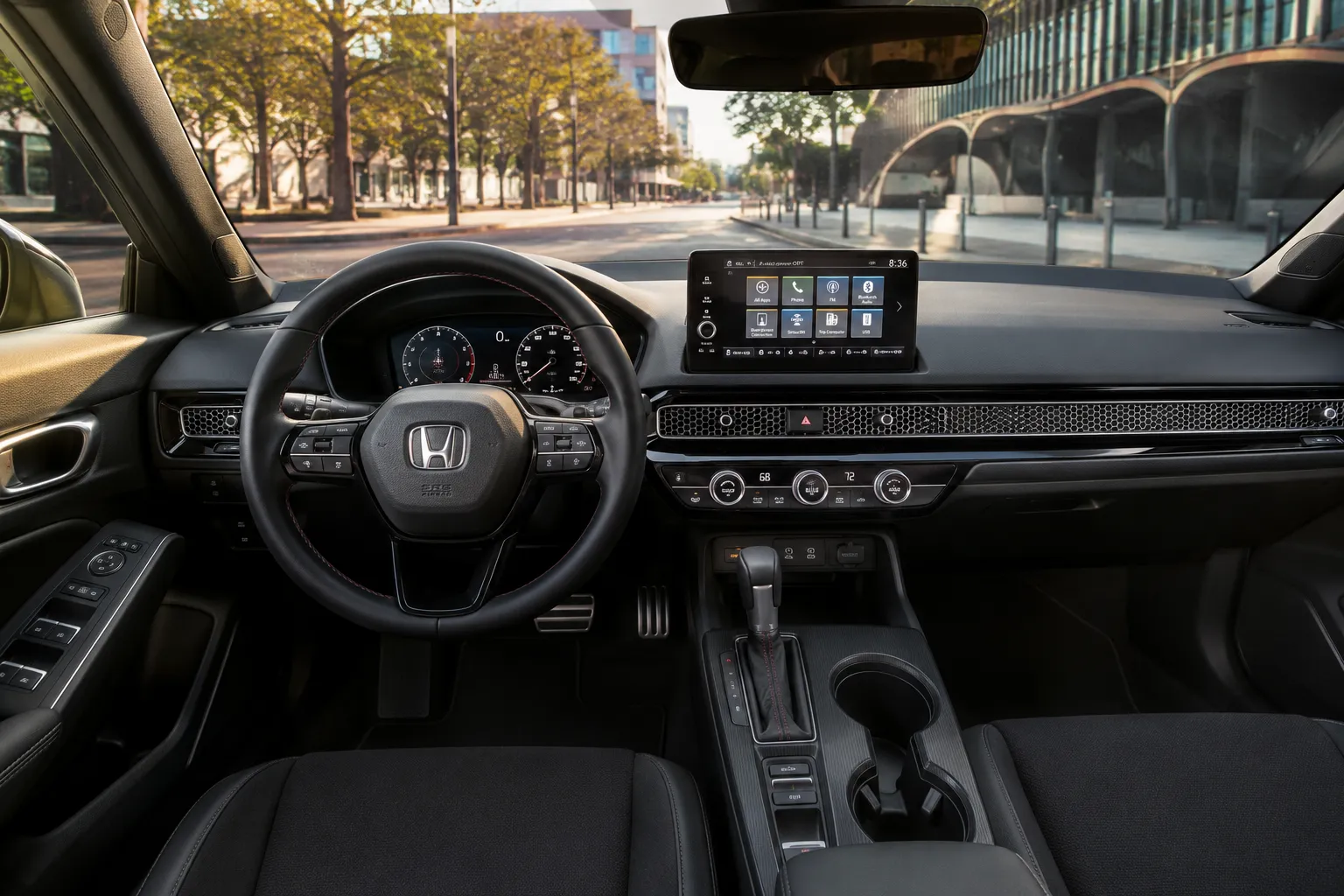
Step inside, and the gap between these two becomes immediately apparent. The Honda Civic’s cabin is widely regarded as the class benchmark, offering a level of design and material quality that rivals vehicles costing significantly more. The cockpit is thoughtfully laid out, with soft-touch materials, elegant detailing, and a sense of cohesion that makes every journey feel special.
Since this generation of Civic debuted as a 2022 model, reviewers have praised its interior design and quality, and it remains the winner in this category. The Civic looks and feels nicer than the Corolla, particularly in the cockpit, where the driver is greeted by a clean, modern dashboard with intuitive controls.
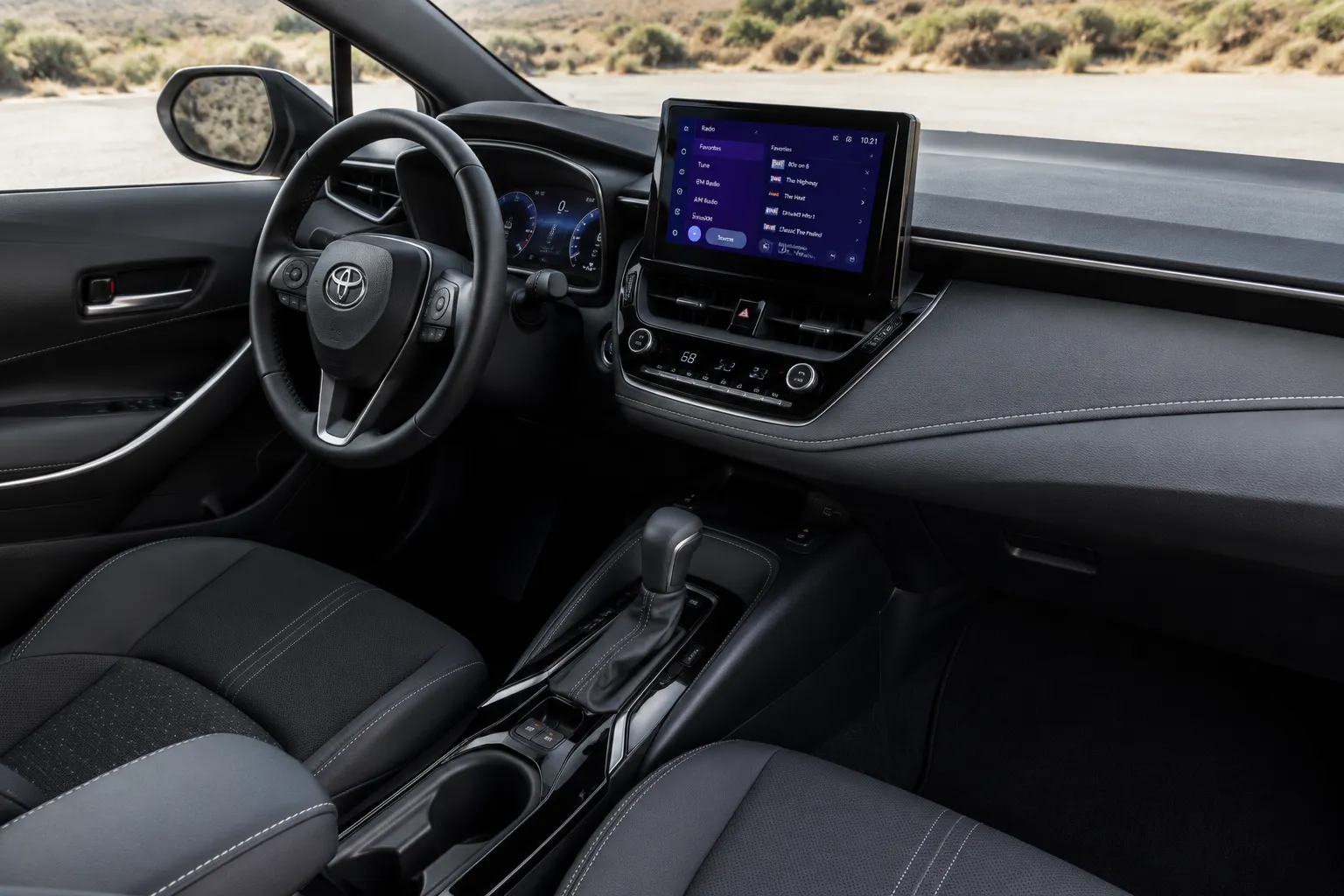
The Toyota Corolla’s interior, while functional and well-built, simply cannot match the Civic’s premium feel. Its materials have a lower-cost look and feel, and the overall ambiance is less inviting. However, Toyota has made strides with the Corolla’s technology, offering larger screens and a more modern digital gauge cluster that partially compensates for the material shortcomings.
The Civic also offers significantly more passenger space, with 99.0 cubic feet of passenger volume compared to the Corolla’s 88.6 cubic feet. This translates to 2.6 more inches of rear-seat legroom than the Toyota, making the Civic the clear winner for families and taller passengers.
In the LE and SE grades, the Corolla features a standard 6-way adjustable fabric driver’s seat and a 4-way adjustable front passenger seat, while the XSE grade upgrades to SofTex-trimmed seating. The Civic, however, offers genuine leather seating on its top trims, whereas the Corolla’s top-of-the-line hybrid gets faux leather.
The Toyota Corolla’s interior, while functional and well-built, simply cannot match the Civic’s premium feel. Its materials have a lower-cost look and feel, and the overall ambiance is less inviting. However, Toyota has made strides with the Corolla’s technology, offering larger screens and a more modern digital gauge cluster that partially compensates for the material shortcomings.
The Civic also offers significantly more passenger space, with 99.0 cubic feet of passenger volume compared to the Corolla’s 88.6 cubic feet. This translates to 2.6 more inches of rear-seat legroom than the Toyota, making the Civic the clear winner for families and taller passengers.
In the LE and SE grades, the Corolla features a standard 6-way adjustable fabric driver’s seat and a 4-way adjustable front passenger seat, while the XSE grade upgrades to SofTex-trimmed seating. The Civic, however, offers genuine leather seating on its top trims, whereas the Corolla’s top-of-the-line hybrid gets faux leather.
 Toyota
5. Engine Options, Transmission, and Driving Dynamics
This is where the Civic truly flexes its muscles. The Honda Civic has long been celebrated for its engaging driving dynamics, and the 2026 model continues that tradition with distinction. According to Cars.com, “there isn’t a four-door car in the $30,000 price range that’s more fun to drive than the Civic.”
Performance Analysis: Honda Civic Acceleration & Handling
The Honda Civic offers a versatile range of powertrains. The base LX trim is powered by a 150-horsepower 2.0-litre four-cylinder engine with 133 lb-ft of torque, paired with a continuously variable transmission (CVT). The Civic Hybrid, available on higher trims, combines a 2.0-litre four-cylinder with two electric motors for a combined 200 horsepower, delivering exceptional performance and efficiency.
The Civic’s steering feel and chassis control are excellent, with a ratio of smiles per mile that rivals even lower-priced sports cars. The Civic Hybrid adds power and fuel efficiency to that winning formula, making it a truly compelling package. The Civic’s driving dynamics have earned it a place on Car and Driver’s 10Best list an incredible 12 times.
Performance Analysis: Toyota Corolla Smoothness & Powertrain
The Toyota Corolla’s gas-powered trims feature a 169-horsepower 2.0-litre four-cylinder engine with 151 lb-ft of torque, also paired with a CVT. The Corolla Hybrid produces 138 horsepower from its 1.8-litre four-cylinder hybrid system.
The Corolla isn’t unenjoyable to drive, and the hybrid Corolla was the sportier of the choices in a recent comparison test with a Hyundai Elantra Hybrid, but it can’t hold a candle to the Civic. Unless you insist on a compact sedan with all-wheel drive – a feature not offered on any Civic – the Honda is the choice for driving fun.
The Corolla’s Dynamic Shift CVT gives a distinct performance feel thanks to a gearset used as a launch gear for start-off acceleration, before seamlessly handing off to the CVT’s pulley system. Synchronization of the increasing engine revs and vehicle speed provides a linear acceleration feel. Drivers can customise their Corolla’s drive feel with NORMAL, ECO, and available SPORT drive modes.
For more insights into long-term ownership and dependability, check out our Honda vs Toyota Reliability guide.
6. Real-World Fuel Economy & Hybrid Efficiency Comparison
Both the Civic and Corolla are among the most fuel-efficient vehicles in their class, but there are meaningful differences between the two. The gas-powered Honda Civic achieves an EPA-estimated 32 mpg city, 41 mpg highway, and 36 mpg combined. The Civic Hybrid improves significantly, delivering an EPA-estimated 49 mpg combined.
The gas-powered Toyota Corolla matches the Civic’s highway rating at 41 mpg but falls slightly behind in combined driving at 35 mpg. The Corolla Hybrid is exceptionally efficient, with EPA ratings of 50 mpg combined for front-wheel-drive models. AWD versions drop to a still-respectable 48 mpg combined.
In real-world driving, the Corolla Hybrid holds a slight edge in fuel economy, but the Civic Hybrid is remarkably close at 49 mpg combined while offering significantly more power. Both cars will save you money at the pump compared to most competitors, with the Corolla Hybrid representing the least expensive new hybrid in America at just over $26,000.
The Civic Hybrid’s 200-horsepower output makes it significantly quicker and more responsive than the Corolla Hybrid, making highway passing and merging far less stressful. You might expect the extra power to mean it’s less efficient, but it gets 49 mpg combined, to the Corolla’s 50 mpg – a negligible difference given the significant performance advantage.
7. Practicality Test: Boot Space, Storage, and Daily Usability
When it comes to practicality, the Honda Civic offers a clear advantage. The Civic’s trunk provides 14.8 cubic feet of storage capacity, a bit more than the Corolla’s 13.1 cubic feet. This extra space can make a real difference when loading up for family road trips or hauling sports equipment.
The Civic is also a few inches longer and slightly wider than the Corolla, translating to 2.6 more inches of rear-seat legroom than the Toyota. For families with growing children or adults who frequently sit in the back, this additional space is a meaningful advantage.
Both cars offer a split-folding rear seat for added cargo flexibility, but the Civic’s larger cabin volume (99.0 cu ft vs 88.6 cu ft) gives it a clear edge in passenger comfort. The Civic’s rear seat reminder is standard on all trims, while the Corolla does not offer this feature.
If you’re shopping for a hatchback, both the Corolla and the Civic are available in hatchback form, but only Honda builds a hybrid version of its hatchback. The Civic hatchback offers 24.5 cubic feet of cargo space, significantly more than the Corolla hatchback’s 17.8 cubic feet. This gives Civic buyers more flexibility in choosing a body style that suits their needs.
8. Technology, Infotainment, and Driver Assistance Systems
Both the Honda Civic and Toyota Corolla come well-equipped with modern tech features, though they take different approaches to infotainment. The Civic features a relatively small 7.0-inch infotainment display on base models, upgrading to a 9.0-inch Google built-in system on higher trims with wireless smartphone connectivity.
The Corolla has an 8.0-inch infotainment touchscreen with an optional 10.5-inch display, with wireless Apple CarPlay and Android Auto standard across the lineup. Using the Toyota system is straightforward, but it misses out on the popular features of the Google-based Honda system.
The Corolla has a small advantage in its tech; its screens are a little bigger and look more modern, and wireless Apple CarPlay and Android Auto are standard. However, it’s not enough to overcome the low-cost look and feel of its interior materials.
Both cars come with comprehensive suites of advanced driver-assistance systems (ADAS). All Civics come with Honda Sensing, a collection of advanced driver-assistance systems that includes Traffic Jam Assist for hands-on semi-autonomous driving functionality at speeds below 45 mph.
New for 2026, the Corolla features a 7-inch digital gauge cluster standard on the LE and SE grades, and a 12.3-inch digital gauge cluster standard on the XSE. Blind Spot Monitor with Rear Cross-Traffic Alert is now standard across all grades.
9. Reliability, Annual Maintenance Costs, and Common Known Issues
Both the Honda Civic and Toyota Corolla have sterling reputations for reliability, but there are subtle differences that may influence your decision. According to iSeeCars, the Honda Civic has an 8.1 out of 10 reliability score and a predicted 13.5-year lifespan. The Toyota Corolla scores 7.8 out of 10 with an 11.3-year lifespan.
The Honda Civic is named the most reliable new car for the money at $27,768 with a predicted 13½-year life span, breaking down to $2,058 annually, or less than half the industry average. The Corolla came in a close second at $25,423 with an 11.3-year lifespan, or $2,258 per year.
When it comes to maintenance costs, the Toyota Corolla is cheaper to maintain, though only by a slim margin. Average annual maintenance for the Corolla lands around $362, among the lowest figures for any new car, while the Civic sits slightly higher in the high-$300s to around $400 depending on trim and engine.
The Corolla’s slight advantage comes largely from its powertrain mix, which leans on simpler, cheaper-to-service hardware. The Corolla’s base engine is a naturally aspirated four-cylinder, one of the simplest and most robust designs on the market, with no turbocharger to add complexity or cost. The Civic’s volume engine is a 1.5-litre turbocharged four-cylinder, which adds parts and a bit of complexity.
Both cars are cheap to repair when something does need attention, and both enjoy some of the best parts availability in the business. Repair frequency for both is low, which is a big part of why they are so inexpensive to own.
For more detailed reliability data, visit the iSeeCars reliability studies and the NHTSA safety ratings.
10. Resale Value and Long-Term Depreciation Analysis
Both the Civic and Corolla hold their value exceptionally well, but the Civic commands a premium in the used market. The Honda Civic has the best resale value among compact cars, retaining 77.3 percent of its value after 5 years (22.7% depreciation). The Toyota Corolla Hatchback retains 74.3 percent (25.7% depreciation).
The Civic’s resale value puts it 10.3 percent above the resale value average for compact cars, which is 66.9 percent. The Honda Civic hatchback ranks #2 for best resale value, retaining 76.8 percent of its value after 5 years.
The Toyota Corolla Hatchback is the #3 ranked compact car with the best resale value, with an average price for a 5-year-old Corolla Hatchback being $19,955. Its resale value is 7.4 percent more than the average resale value for a compact car.
The Civic’s resale value is 9.9 percent higher than the resale value average for compact cars. This stronger resale performance reflects higher demand and perceived value, making the Civic a smarter long-term investment despite its higher initial purchase price.
In Asian markets, the Toyota Corolla remains the most secure resale sedan choice, while the Honda Civic also benefits from strong brand loyalty. Both vehicles consistently rank among the best for value retention, giving buyers confidence that their investment will hold up over time.
Compare resale values and other metrics using the iSeeCars comparison tool.
| Passenger Cabin Volume | Civic: 99.0 cu ft | Corolla: 88.6 cu ft |
| Rear Seat Legroom | Civic: 37.4 in | Corolla: 34.8 in (+2.6" for Civic) |
11. Ownership Cost & Value for Money Breakdown
When comparing the Honda Civic vs Toyota Corolla on ownership costs, the Corolla emerges as the more affordable option upfront, while the Civic offers better long-term value. The base prices for the Honda Civic sedan range from around $25,890 for the LX to about $32,690 for the Si, including the destination charge.
Base prices for the Corolla are lower than the Civic’s, ranging from around $24,320 for the LE to about $30,035 for the XSE, including the destination charge. The Corolla Hybrid LE is the standout value, coming well equipped with a base price of around $26,000. Adding AWD costs an additional $1,400.
The Civic and Corolla share similar popular features, but the Corolla offers them at a lower starting price. For example, wireless smartphone connectivity and a split-folding rear seat are standard on all Corollas, but these features are available only on higher Civic trim levels.
The Corolla is also slightly more fuel-efficient in some configurations, but the margin is very slim. If your goal is to spend the least amount of money possible, the Corolla is the choice between these two.
However, the Civic consistently justifies its higher prices with significantly more driving fun and a much nicer interior. The Civic’s stronger resale value and longer expected lifespan also contribute to better long-term value, offsetting its higher initial purchase price over time.
12. Final Verdict: Which Compact Sedan Should You Buy?
After thoroughly examining every aspect of these two iconic compact cars, the answer to the question “Honda Civic vs Toyota Corolla: which is better?” depends entirely on your priorities.
Choose the Honda Civic if:
- You prioritise driving enjoyment and engagement
- You want a premium-feeling interior with high-quality materials
- You need more passenger and cargo space
- You value stronger resale value and long-term durability
- You want a more powerful and responsive hybrid option (200 hp)
- You appreciate refined, agile handling
- You want an IIHS Top Safety Pick award winner
The Civic is the more expensive option, but it consistently justifies its higher price with superior driving dynamics, a nicer interior, and better long-term value. As Cars.com notes, “there isn’t a four-door car in the $30,000 price range that’s more fun to drive than the Civic.”
Choose the Toyota Corolla if:
- You are on a strict budget
- You prioritise fuel economy above all else
- You need all-wheel drive for snowy or wet conditions
- You value low purchase price and low running costs
- You want the least expensive hybrid on the market
- You prefer a more straightforward, no-nonsense daily driver
The Corolla is not a bad choice by any stretch. It offers exceptional fuel efficiency, a comprehensive list of standard safety features, and Toyota’s legendary reliability. If you must have AWD or have a very strict budget, go for the Toyota.
For most buyers, however, the Civic is the better overall package. It offers more driving enjoyment, a more premium interior, and better long-term value, all while still delivering excellent fuel economy and practicality. As the Honda Information Center puts it, “a longer list of standard comfort, convenience and assistive features plus a much roomier cabin make the Honda Civic a clear winner in this showdown.”
Both cars are excellent choices that will serve their owners well for years to come. The decision ultimately comes down to whether you value driving pleasure and interior quality (Civic) or budget-friendly pricing and fuel economy (Corolla).
📚 Looking for more comparisons? Explore our extensive collection of vehicle comparison guides and expert buying advice to make the right choice for your next car.