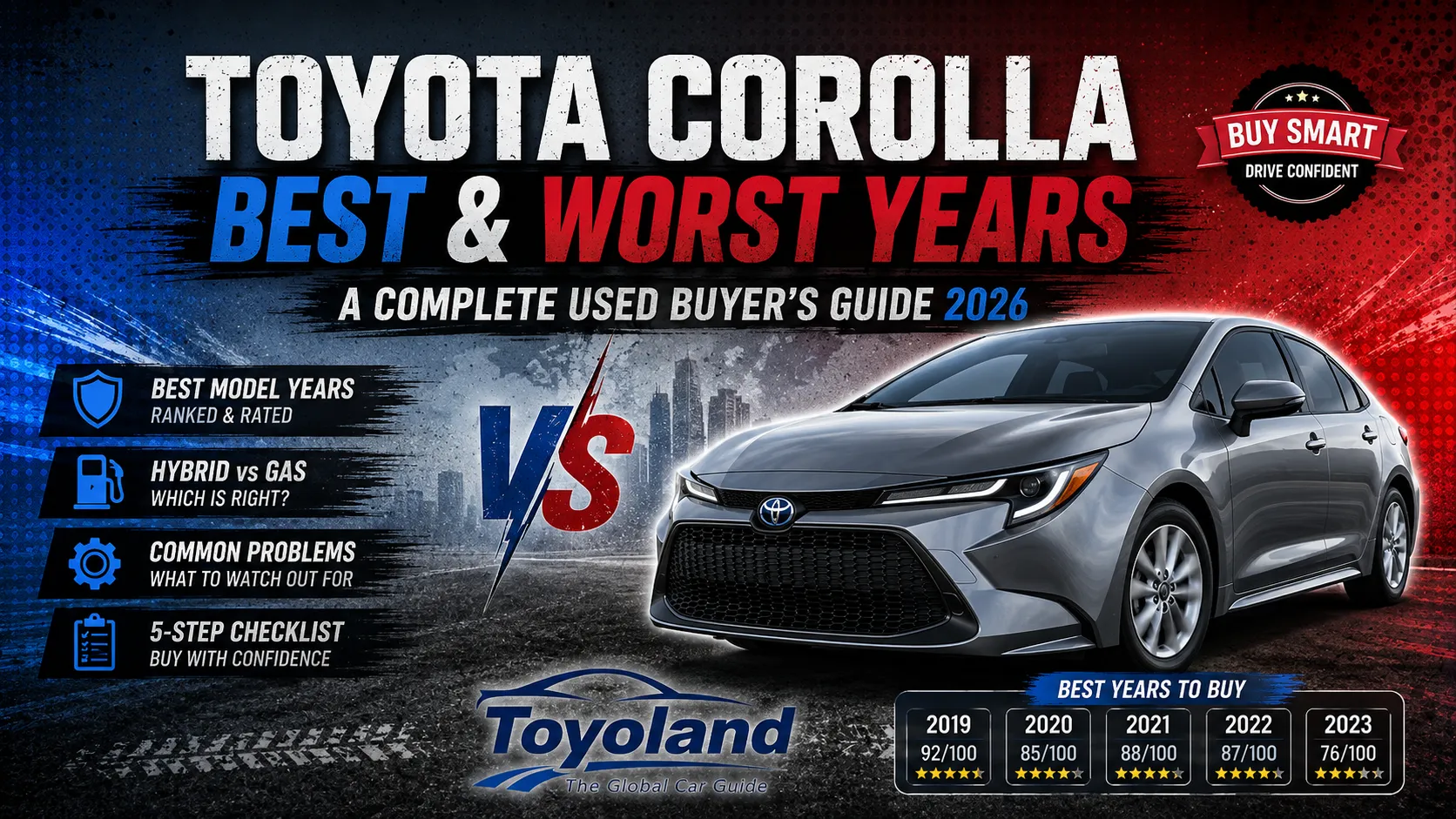

Looking for a used Toyota Corolla in 2026? This guide covers the best model years, common problems, hybrid vs. gas, and the key checks to make before buying. With over 50 million units sold globally, the Corolla holds a legendary reputation for longevity.
However, not every used Corolla is a good deal. High demand means some sellers inflate prices or hide accident damage. This guide focuses primarily on the North American used market (with regional notes for the UK/Europe) and will walk you through:
-
Which generations offer the best value.
-
A verified breakdown of the most reliable model years.
-
Common issues (hybrid batteries, CVT behavior, and infotainment).
-
A 5-step pre-purchase checklist to protect your investment.
Toyota Corolla Generations (Simplified for Buyers)
To avoid chassis-code confusion, here is the simple breakdown:
-
10th Generation (approx. 2007–2013): Affordable but aging. The 2009-2010 models have notable oil consumption concerns. Only consider these if your budget is very tight and you have a mechanic inspect it first.
-
11th-Generation Corolla Sedan (2014–2019): Solid, reliable, and more modern. Available with the 1.8L gas engine. A great budget-friendly choice. (Note: The 12th-generation Corolla Hatchback arrived for 2019 in the U.S. If you are looking at a 2019 Corolla, verify whether it is a sedan or a hatchback, as they belong to different generations).
-
12th Generation (E210, 2019–Present): The current generation. Built on the TNGA platform, offering better handling, more safety features (Toyota Safety Sense), and the introduction of the hybrid powertrain in the US starting with the 2020 model year.
Hybrid vs Gas: Which Powertrain Fits You?
If you are looking at the 12th generation (2020+), you will face the gas vs. hybrid decision. Here is the realistic breakdown:
1.8L Hybrid (Available in the US from 2020 onward)
-
EPA-Estimated Fuel Economy: Up to 52 mpg combined on the 2021 model; exact figures vary by model year and configuration.
-
Best for: City commuters, ride-share drivers, and anyone wanting maximum fuel savings.
-
Note: The system is self-charging; no plug-in required.
2.0L Dynamic Force Gas Engine
-
Highway MPG: ~38-40 mpg (very competitive).
-
Best for: Highway commuters or those who prefer a simpler, non-hybrid setup with a lower initial purchase price.
-
Consideration: Fuel economy on the highway is close enough to the hybrid that it might not justify the hybrid premium for highway-only drivers.
Regional Note (UK/Europe)
-
The Touring Sports (estate) is popular. It offers significantly more cargo space (596L vs. 286L for the hatchback). If you have a family, the estate is highly recommended.
| Length | 182.3 in |
| Width | 70.1 in |
| Height | 56.5 in |
| Wheelbase | 106.3 in |
| Trunk Volume (Sedan) | 13.1 cu ft |
Best Model Years to Buy (With Data)
Here is Toyoland’s used-buyer ranking, informed by J.D. Power Quality & Reliability data and model-year considerations:
Toyota Corolla Best Used Years: J.D. Power Reliability Comparison
|
J.D. Power Quality & Reliability
|
Buyer Verdict
|
|
|---|---|---|
| 2019 | 92/100 | Top pick for value. Final year of the 11th-gen sedan (12th-gen hatchback available) with proven reliability. |
| 2020 | 85/100 | First U.S. Corolla Hybrid model year; inspect battery and infotainment condition carefully. |
| 2021 | 88/100 | Strong used-buy option. Strong balance of age, features and used-market value. |
| 2022 | 87/100 | Excellent. Solid build quality. |
| 2023 | 76/100 | Newer used option. Updated safety and infotainment features. |
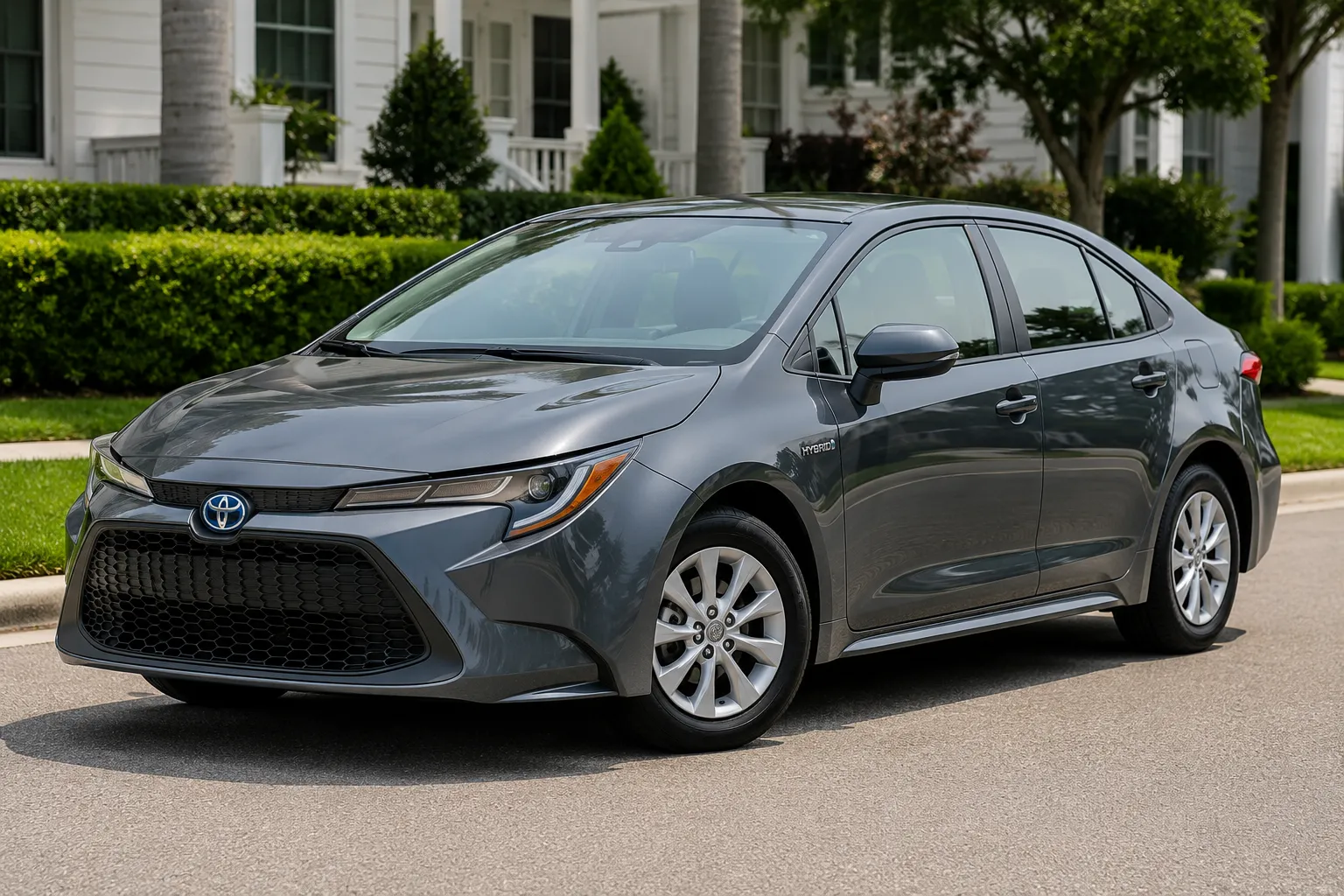
Our Pick: The 2021 Corolla Hybrid hits the sweet spot for our recommendation—combining the newer E210 platform, available hybrid powertrain, and lower used-market age compared to newer models.
2024-2025 – Lightly Used Option
For buyers who prioritize newer technology and lower mileage, 2024–2025 models offer Toyota Safety Sense 3.0 and the newer Toyota Audio Multimedia system. However, because they are newer, they command a higher price. This category is best suited for buyers who want to keep the car for 7-10 years and are willing to pay a premium for minimal wear and tear.
Toyota Corolla Years to Approach With Caution
- 2009–2010 (10th Generation): Certain Corollas from this period were covered by Toyota’s warranty enhancement for excessive engine oil consumption. Used buyers should have a thorough pre-purchase inspection performed, focusing on engine and overall mechanical condition. (Source: NHTSA Technical Service Bulletin).
Common Problems & Reliability Concerns
Even a Corolla has weak points. Here is what to look for:
Hybrid Battery Health (2020+ Hybrids)
- Toyota’s broader reliability record is covered in our Toyota Reliability by Model guide.
- Before buying a used hybrid, it is also worth understanding how long Toyota hybrid batteries last and what affects their lifespan.
-
Lifespan is highly variable. It depends on heat, driving habits, and age—not just mileage.
-
Critical Check: Do not rely on the odometer. A Toyota dealer or qualified hybrid technician can provide a useful battery and hybrid-system health assessment. This is the responsible way to evaluate the battery’s state.
CVT Transmission
-
During the test drive, the CVT should accelerate smoothly without hesitation, unusual noise, or harsh behavior. If you notice anything unusual, have a mechanic inspect the transmission fluid and overall condition.
Infotainment System
-
Test the infotainment system during the viewing, including Apple CarPlay and Android Auto connectivity where equipped. Ensure the touchscreen responds to inputs and all functions work as expected.
Pre-Purchase Inspection Checklist (5 Critical Steps)
Do not skip these steps. This checklist is your best tool against a bad deal.
Step 1: VIN & History Report
-
Locate the VIN (dashboard/driver door).
-
Run a CarVertical or AutoCheck report.
-
Verify: No salvage title, no odometer rollback.
Step 2: Hybrid Battery Assessment (For Hybrids)
-
Ask the seller: “Has the hybrid battery been serviced or tested?”
-
Request a printout from a Toyota dealership showing the battery’s state of health.
Step 3: Visual & Underbody Inspection
-
Rust: Check the underbody and wheel wells.
-
Panel Gaps: Check panel gaps for uneven spacing or misalignment that could indicate previous body repair. Confirm accident history through a vehicle-history report and professional inspection.
-
Tires: Check tire brand, size, tread depth and wear. Uneven or mismatched tires can indicate different replacement dates, alignment issues or previous suspension problems.
Step 4: The Test Drive (Safe Evaluation)
-
Cold Start: Start the engine cold. Listen for knocking or excessive noise.
-
Braking: In a safe, empty parking lot, evaluate brake feel. Does the pedal feel firm? Does the car pull to one side? (Do not perform dangerous emergency stops on public roads).
-
Suspension: Drive over speed bumps. Listen for clunking sounds (worn struts).
Step 5: Service History
-
Look for regular oil changes (refer to the owner’s manual for the specific interval for your market; typically around 7,500-10,000 miles in the US).
-
Verify that the service records match the VIN.
Market Prices (Rough Guide for 2026)
If your budget is a concern, our Best Used Cars Under $20,000 guide lists other reliable options.
Disclaimer: Used car prices are volatile and depend heavily on location, trim, and mileage.
Used prices vary significantly by location, mileage, trim and condition. A 2021 Corolla is generally less expensive than a comparable 2024–2025 model, while hybrid versions can command a premium. Always check local listings (e.g., Autotrader, Cars.com, PakWheels for PK) for current pricing in your area.
How It Compares to Rivals (Used Buyer Perspective)
- For a broader brand-level view, our Honda vs Toyota reliability guide offers useful context.
- See our full Honda Civic vs Toyota Corolla comparison for a closer look at the two compact sedans.
-
vs Honda Civic: The Civic offers sportier handling and a nicer interior. However, the Corolla Hybrid offers much better city fuel economy. Choose Civic for fun, Corolla for fuel savings.
-
vs Mazda 3: The Mazda 3 has a premium cabin. The Corolla has more rear seat space, and Corolla parts and service are widely supported in the U.S. market.
-
vs VW Golf: The Golf has a more premium feel, but the Corolla generally has a reputation for lower long-term running costs.
FAQ - Used Toyota Corolla Buying Guide 2026
Final Verdict
For 2026, our top pick for most US buyers is the 2021 Toyota Corolla Hybrid. It offers the best balance of depreciation, modern safety features, and exceptional gas mileage.
 Toyota
If you want a simpler, cheaper option, a well-maintained 2019 gas Corolla is a strong budget-friendly alternative when properly maintained. Remember: a thorough test drive and a third-party inspection are worth more than any online review.