

Few vehicles wear 200,000 miles as casually as a 4Runner, and the used market prices that reputation in — which makes picking the wrong year doubly expensive. Fortunately, the 4Runner’s history isn’t a fog of mixed results. It’s a story with clear chapters: one of the great reliability runs in modern SUVs, one sharply defined bad patch, and a rust saga it shares with its Tacoma cousin.
What follows sorts every era by the strength of the evidence — Toyota’s own programs and recall record on one hand, owner-reported patterns on the other, and our judgment where the data hands off. For the wider view, our reliability coverage across the Toyota lineup sets the context.
The short version
- Buy with confidence: 2011–2024 — the fifth generation, with 2017–2024 the sweet spot. Fourteen years, one sorted powertrain, no systemic failures.
- Smart older picks: 2000–2002 (the 3.4L legend at its most refined) and 2006–2009 (the quiet post-facelift years; the V8 is a sleeper).
- The firm caution: 2003–2005 — early head-gasket failures, the worst of the frame-rust era, and complaint counts to match.
- Wait or verify: 2025-onward — an all-new turbo/hybrid generation that hasn’t yet earned the old one’s reputation.
Why the fifth generation (2010–2024) became a legend
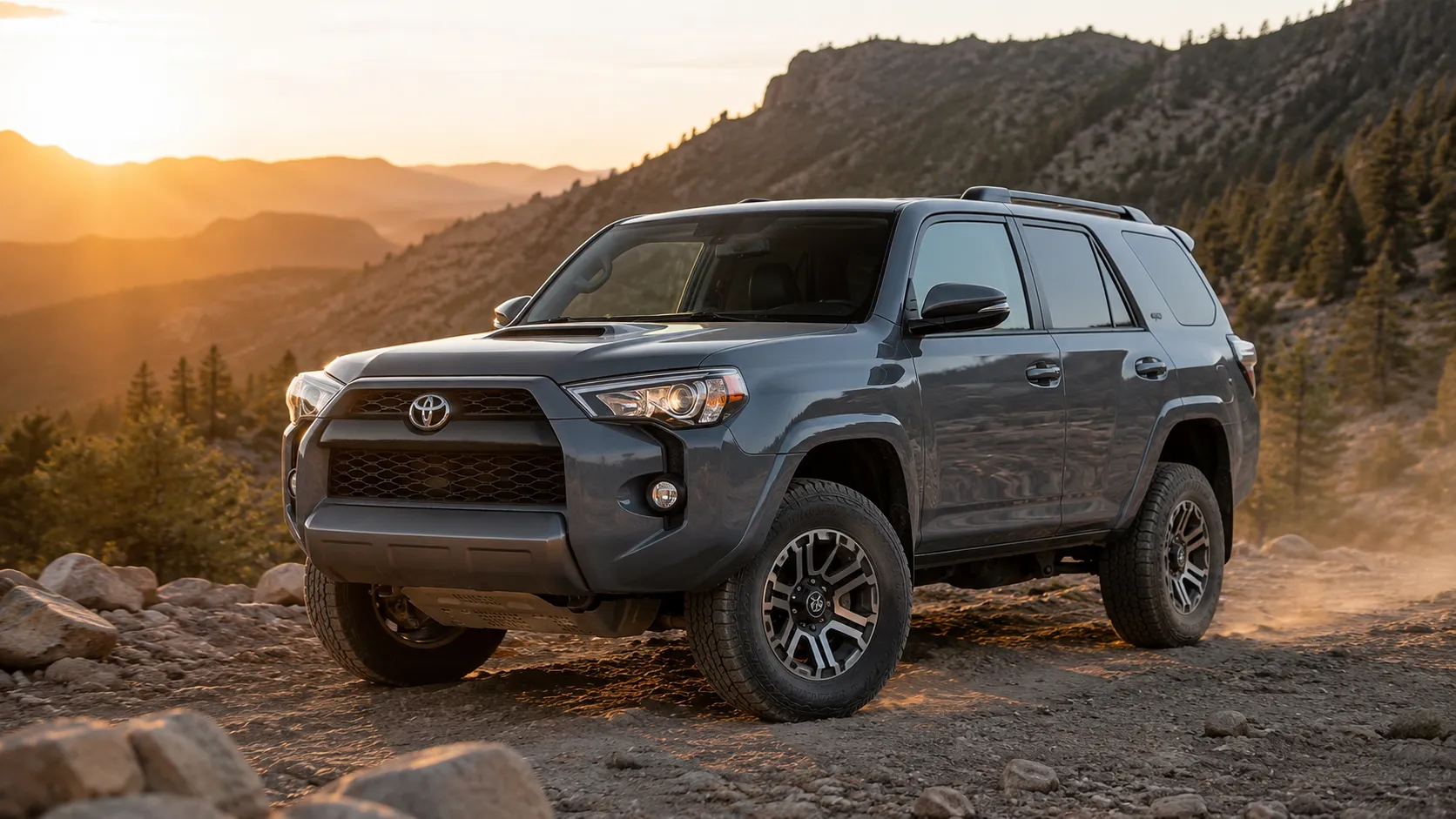
Toyota did something almost nobody does anymore: it left a proven formula alone for a decade and a half. The 4.0-liter V6 and five-speed automatic that anchored the fifth generation weren’t cutting-edge in 2010 and were practically vintage by 2024 — and that’s precisely why these trucks run forever. There is no systemic engine or transmission failure story across the entire run. The complaints that do exist are wear items with a heavy truck’s appetite: brake pads and rotors go quicker than you’d like, and the door-lock actuators — little motors and plastic gears inside the doors — wear out and stop responding to the fob. Annoyances, not heartbreaks.
Within the run, the later the better. The 2017–2024 trucks add Toyota’s TSS-P active-safety suite and benefit from every small refinement of a long production life; 2023–2024 examples are the last and most sorted of the breed, which is exactly why they hold value so stubbornly. The one year that asks for a closer look is 2010 itself — the generation’s first year drew a cluster of brake and steering complaints that the rest of the run never repeated. A clean 2010 is fine; just make it prove it.
 Toyota
The patch to respect: 2003–2005
Every long-lived nameplate has its rough chapter, and this is the 4Runner’s. Three things went wrong at once. The new-that-year 4.0L V6 suffered head-gasket failures in its early builds — the kind of repair that starts conversations about whether the truck is worth fixing. The frames of this era rusted badly enough to land these years inside the same corrosion-program-and-settlement history that made the Tacoma famous; in salt states, frames from this window can rot to the point of structural failure. And the cabin aged poorly too — 2004 in particular is known for cracking dashboards. NHTSA complaint counts tell the story bluntly: 400 to 700-plus per year for 2003–2005, collapsing to around 54 a year by 2008–2009.
None of that makes every 2003–2005 a landmine — a dry-state truck with a documented head-gasket repair and a clean frame can still be honest transportation. But it does mean these years are the only ones in this guide where we’d insist on proof of both engine and frame health before any money moves. The frame-inspection playbook is the same one we lay out in our Toyota Tacoma year guide: professional eyes underneath, and paperwork if a frame was ever replaced.
- Roomy 4th-gen platform with the durable 4.7L V8 available; prices reflect the reputation, so verified trucks can be bargains.
- Both defining risks — head gasket and frame — are provable with records and an inspection.
- Early 1GR-FE head-gasket failures; a failure today usually totals the truck economically.
- The worst of the frame-corrosion era; salt-state frames can be structurally compromised.
- 400–700+ NHTSA complaints per model year, plus 2004's cracking dashboards — the era's quality dip was broad, not one bad part.
The older chapters
1996–2002 (third generation)
The 3.4-liter 5VZ-FE is one of Toyota’s all-time engines, and enthusiasts treat these trucks accordingly. The honest caveat: head gaskets are the known weakness, typically surfacing between 150,000 and 250,000 miles — a $2,500–$3,500 job on an engine that will then happily run to 300,000-plus. A third-gen with the gasket already done is the version to want; 2000–2002 were dependable enough to earn most-dependable-midsize honors in their day. Frame checks still apply.
2006–2009 (fourth generation, post-facelift)
The quiet redemption. Complaint counts fell off a cliff, the head-gasket story faded with the improved engine, and the optional 4.7-liter V8 — the same unit that powered Tundras and Land Cruisers — turned the 4Runner into a 7,300-pound tow rig with a bulletproof heart. If you want fourth-gen character without third-year risk, this is it.
1990–1995 (second generation)
The 3.0-liter V6 of this era is the one engine in 4Runner history to genuinely avoid — head gaskets failed chronically, and often failed again after repair. The four-cylinder versions are the safer survivors, though at this age everything is a condition story.
The 2025 question
The sixth generation replaces the ancient-but-immortal V6 with a 2.4-liter turbo four and an available hybrid, on the same TNGA-F platform as the current Tacoma. It’s a better vehicle in every measurable way — and an unproven one. We apply the same rule here as everywhere in this series: a first-year redesign doesn’t get ranked Best or Worst, because the data to earn either doesn’t exist yet. Worth noting that the closely related 2024 Tacoma’s first year came with documented growing pains, which is reason for patience rather than alarm. If you’re spending fifth-gen money, a 2023–2024 is the conservative play; if you want the new one, buy late-build and keep the VIN checked.
4Runner Buying Snapshot by Era
| Car Name |
Spec Label
|
Spec Value
|
|---|---|---|
| 1996–2002 (3rd gen) | Verdict / Watch for | Good older value / 3.4L head gasket at 150–250k; frame |
| 2003–2005 (4th gen) | Verdict / Watch for | Firm caution / Head gasket + frame rust — proof required |
| 2006–2009 (4th gen) | Verdict / Watch for | Good; V8 a sleeper / Frame inspection still applies |
| 2011–2024 (5th gen) | Verdict / Watch for | Best — esp. 2017–2024 / Brake wear; door-lock actuators |
| 2025+ (6th gen) | Verdict / Watch for | Too new to rank / First-year turbo/hybrid; VIN checks |
Before you buy any 4Runner
- Frame first, always — decisive on anything 1996–2009, worth a look on everything older than a decade.
- Head-gasket evidence on 3rd-gen and 2003–2005 trucks: service records, coolant condition, no sweet exhaust smell, no overheating history.
- 2010: brake feel and steering on the test drive; any related repair records.
- 5th gen: try every door lock from the fob; budget for brakes.
- VIN through NHTSA and Toyota lookups on every year — the 2003–2005 recall cluster especially.
And go in with honest running-cost expectations — the 4Runner’s old-school drivetrain drinks like one. Our fuel cost calculator will tell you exactly what that means for your miles.
The bottom line
A 2011–2024 4Runner is about as close to a sure thing as the used market offers — that’s not hype, it’s fourteen years of receipts. Pay up for 2017–2024 if you can, hunt the 2006–2009 V8 if you want a sleeper, respect the third gen’s gasket history, and hold 2003–2005 to a higher standard of proof than anything else in this guide. Do that, and the 4Runner will do the thing that built Toyota’s reliability reputation in the first place: refuse to die.