
Minivan shopping is the most practical car buying there is — nobody’s chasing a dream here, just eight seatbelts and a vehicle that won’t quit during the school-run years. The Sienna delivers that better than almost anything, but not every year deserves the reputation. Two specific issues separate the good buys from the money pits, and both are the checkable kind.
Here’s the year-by-year picture, built the way we build all of these: Toyota’s own recalls and programs first, consistent owner reports second, our judgment clearly labeled as such. Deciding between a van and something with a liftgate and attitude? The best family SUVs covers the other fork in that road.
Straight to it
- The sweet spot: 2015–2020 — the third generation with its kinks worked out. Proven V6, low complaint counts, honest 200,000-mile track record.
- The modern pick: 2021-onward — hybrid-only, around 36 mpg in a box that seats eight, strong early record.
- Handle with care: 2011–2014 (sliding-door recalls — verify by VIN) and 2004–2007 (the complaint-peak years).
- On any 2007–2016 V6: one small rubber oil line is the difference between a non-event and a dead engine. Details below.
The oil line every Sienna buyer should know about
Toyota’s 3.5-liter V6 of the 2007–2016 era routed pressurized oil through a line with a rubber section — and that rubber section can rupture. When it goes, it isn’t a slow seep; the engine can pump its oil out in minutes, and an inattentive driver can lose an engine over a $10 hose. The failures typically show up past 100,000 miles, owners have reported them across the whole window, and the fix has been known for years: a revised line (the updated design does away with the vulnerable rubber portion), roughly $300–400 installed.
This never rose to a recall — it lives in owner reports and service-bulletin territory — but it’s the single highest-leverage question you can ask a Sienna seller: has the VVT-i oil line been replaced? If yes, with a receipt, you’ve retired the era’s scariest failure mode for the price of a tank of gas. If no, make it the first thing your mechanic does. Either way, glance under the van for fresh oil before you drive it anywhere.
The sliding doors: where the lawyers were right to care
Minivan doors take abuse everywhere, but the early third-generation Siennas had a genuinely documented safety problem: latch and cable defects that could let a sliding door open while the van was moving. Toyota recalled these 2011–2014-era vans — which means the fix is free and the status is checkable in two minutes with a VIN. That’s the whole buying rule: no confirmation, no purchase. Beyond the recalls, power-door motors and cables on everything through about 2015 are ordinary wear items — cycle both doors several times on your test visit and listen for grinding or hesitation, because out-of-warranty door repairs are tedious money.
- Third-gen space and drivetrain underneath — a recall-cleared, line-replaced example is honest value.
- Both defining risks are free or cheap to resolve (recall work free; oil line ~$300–400).
- Documented sliding-door latch/cable recalls — doors could open in motion; completion is non-negotiable.
- Inside the VVT-i oil-line window; 2011's overall complaint counts run high for the generation.
2015–2020: the ones to actually buy
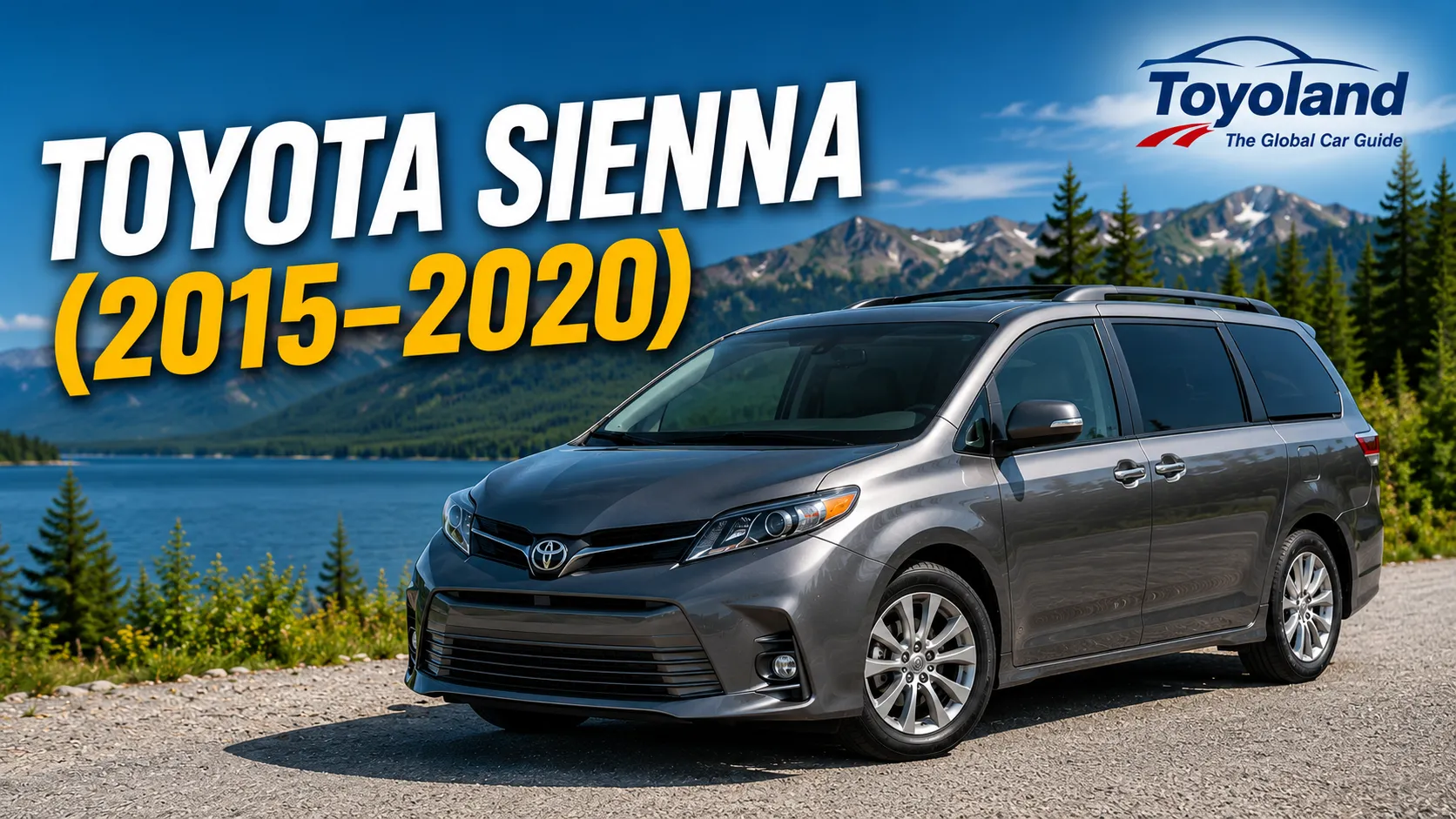
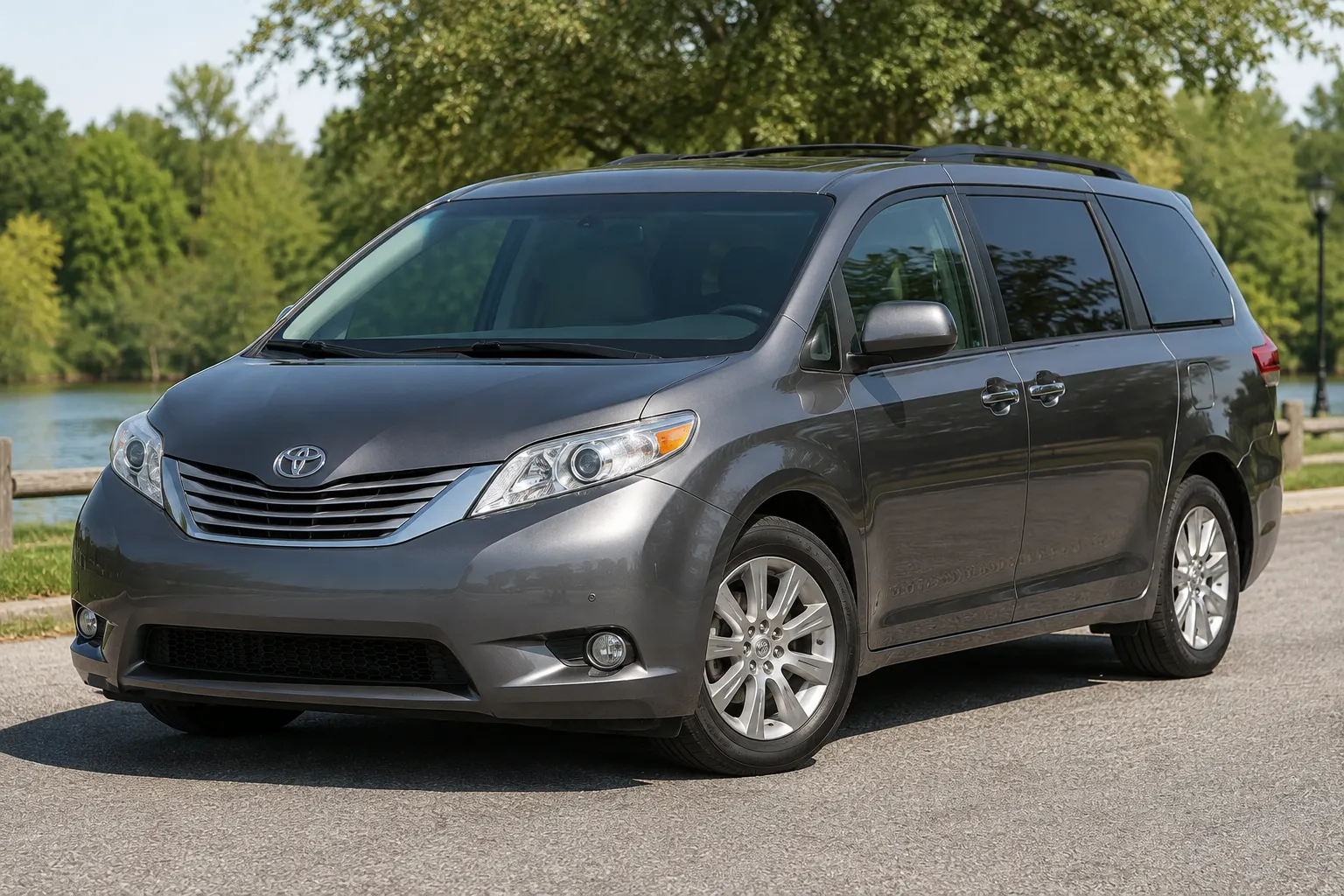
By 2015 the third generation had shed its early troubles, and these six model years are the Sienna at its most convincing: complaint counts drop to near-nothing, the V6 (updated with direct injection and paired to a new 8-speed from 2017) runs deep into the 200,000s with basic care, and all-wheel drive remained a Sienna exclusive in the class. The known costs are the honest kind — door motors eventually, brakes and suspension on schedule. If a family asked us for one used-van answer, it’s a 2017–2020 Sienna with door-service records and that oil-line receipt.
 Toyota
2021 onward: the hybrid gamble that wasn’t
Going hybrid-only was a bet, and it has aged well: the fourth generation returns roughly 36 mpg — double a V6 Sienna’s habit — with a record so far that’s clean beyond a couple of minor, fully remedied recalls (a skid-control software update and a third-row seat-bolt fix). The honest caveat is simply youth: these vans haven’t had time to prove 200,000 miles the way the third gen has. Battery worries shouldn’t stop you — here’s how long Toyota hybrid batteries actually last.
And the fuel math is compelling enough that our fuel cost calculator usually settles the V6-versus-hybrid question in about a minute.
The older vans, honestly
2004–2007 is where the Sienna earned its complaint files — 2004 alone logged over two thousand NHTSA reports and a stack of recalls, including one for a corroded spare-tire carrier that could drop the tire on the highway (a campaign issued years later, so verify it was done). Transmission shudder reports, sticky melting dashboards in hot climates, temperamental doors: none of it is exotic, all of it is age-and-records territory now. 2008–2010 improved but stayed inside the oil-line and dashboard windows. A cheap, well-documented van from these years can still make sense as a third-row beater — just price it like what it is.
Sienna Buying Snapshot by Era
| Car Name |
Spec Label
|
Spec Value
|
|---|---|---|
| 2004–2007 | Verdict / Key checks | Caution / Records; transmission feel; dashboard; tire-carrier recall |
| 2008–2010 | Verdict / Key checks | Situational / Oil line; doors; dashboard |
| 2011–2014 | Verdict / Key checks | Verify-first / Door recalls by VIN; oil line |
| 2015–2020 | Verdict / Key checks | Best used value / Door motors; oil line (to 2016); records |
| 2021+ | Verdict / Key checks | Best modern / Minor recalls closed; young record |
The five-minute Sienna checklist
- VIN through Toyota/NHTSA lookups — sliding-door recalls (2011–2014) and the 2004 tire-carrier campaign are the headliners.
- VVT-i oil line receipt on any 2007–2016 V6 — or budget the job on day one.
- Cycle both power doors repeatedly; grinding or hesitation is a repair quote waiting.
- Hot-climate 2004–2010 vans: check the dashboard surface and windshield glare.
- Cold start and a look underneath for oil; transmission behavior on 2004–2007 test drives.
- Records above all — a documented 2016 beats a mystery 2019 every time.
The bottom line
Buy a 2015–2020 with the door and oil-line boxes ticked and you’ve bought one of the most dependable family vehicles of its era. Stretch to a 2021-plus hybrid if the fuel math moves you and youth doesn’t scare you. Approach 2011–2014 with a VIN report in hand, and the 2004–2010 vans with a records folder or not at all. The Sienna rewards exactly one buyer: the one who checks.