
Ask around a job site and you’ll hear the Tundra legend told in miles: the trucks that hit 250,000 without opening the engine, the one famous million-mile example Toyota bought back to study. Most of that legend is real — and it belongs to a specific engine, in specific years. Because the Tundra of the last few years is a different truck with a different engine, and its opening chapter includes the biggest recall in the nameplate’s history. Buying used means knowing exactly where one story ends and the other begins.
So here’s the honest map, drawn the way we draw all of these — Toyota’s own recalls and programs first, consistent owner patterns second, our judgment labeled as judgment. The wider context lives in our reliability coverage across the Toyota lineup.
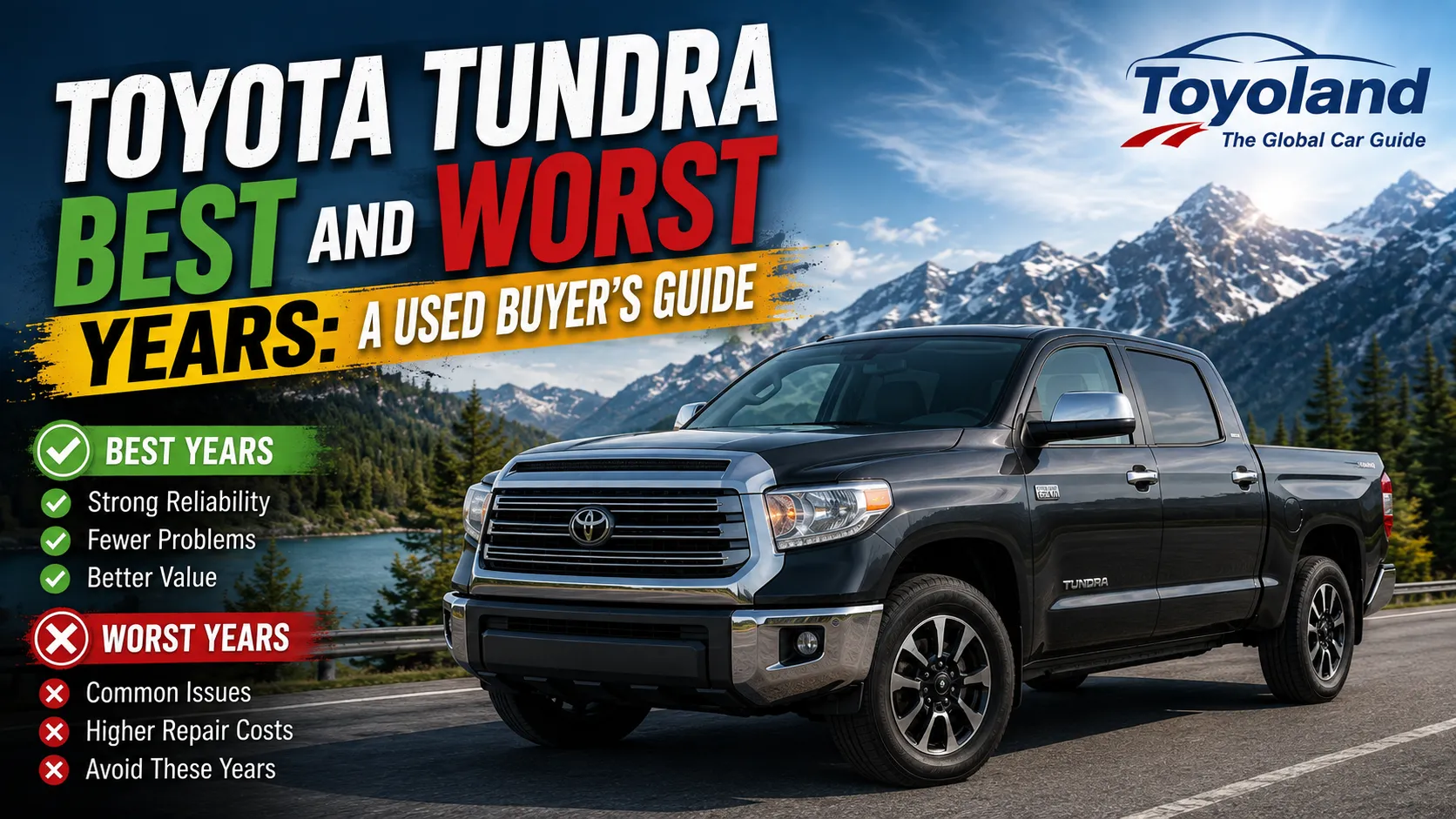
The short version
- Buy with confidence: 2015–2021 — the matured 5.7L V8 era, with 2021 the last and most refined V8 year.
- Solid earlier picks: 2009 and 2013 — the second generation at its most sorted (know the air-pump story).
- Handle with care: 2007–2008 (first-year items plus the frame era) and 2022–2024 (the twin-turbo recall years — a VIN check is non-negotiable).
- 2025 onward: redesigned engine internals, but a record too young to rank. If you need certainty, the V8 is still where it lives.
Why the 5.7 era became the legend
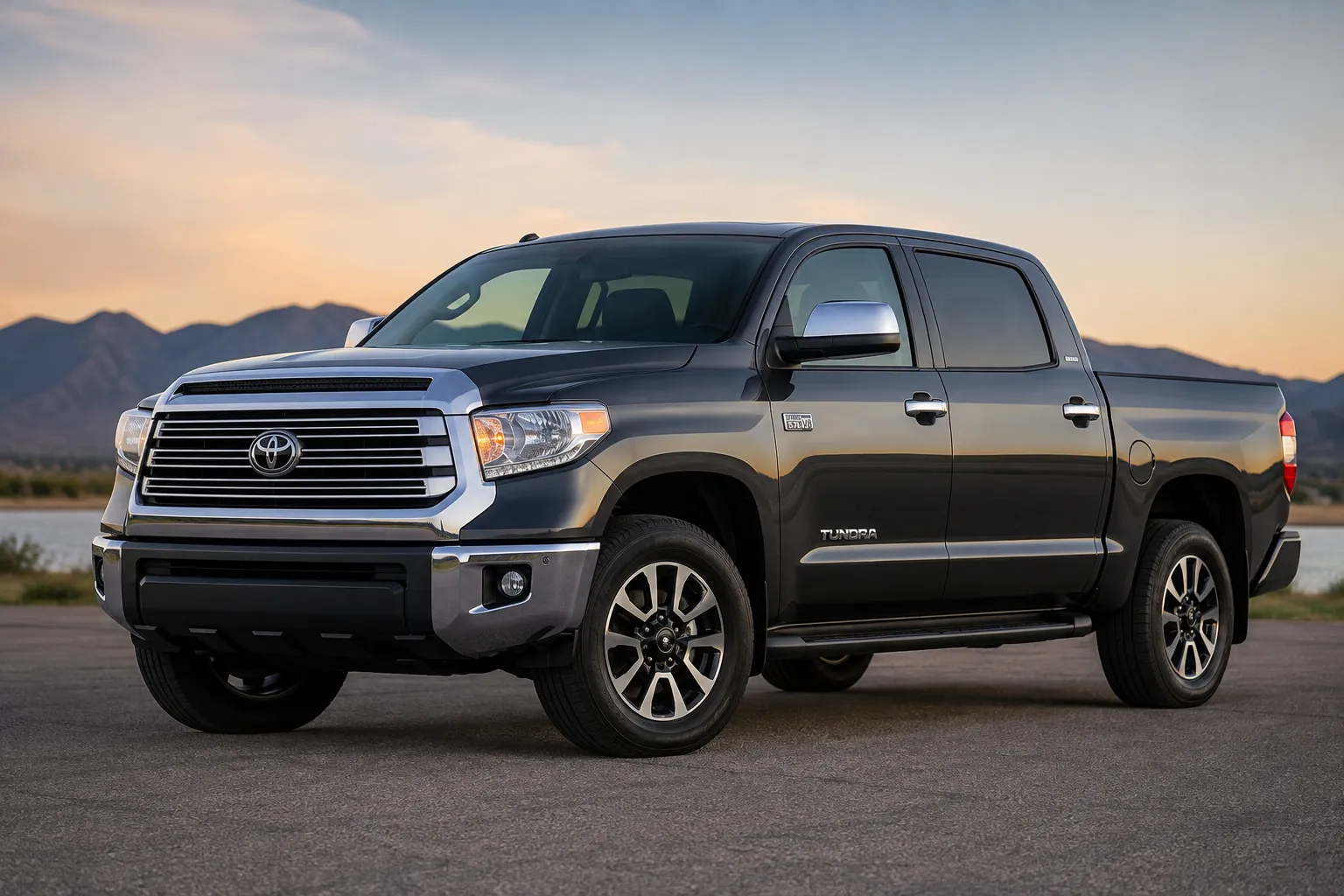
From 2007 through 2021, the Tundra’s spine was the 3UR-FE — a 5.7-liter V8 that Toyota barely touched for fourteen years, bolted to a six-speed automatic that shifts like it’s in no hurry to die. That combination is the reason used Tundras cost what they cost: no cylinder-deactivation tricks, no small-displacement turbo stress, just an engine loafing at a fraction of its capability. The trade was always fuel — mid-teens economy on a good week — but the durability record it bought is about as clean as full-size trucks get.
Within the V8 years, the later the better. The 2014 refresh brought the third-generation body on the proven drivetrain (which is why a heavy refresh year never turned into a problem year), 2015 added integrated trailer brake control, 2018 made Toyota’s TSS-P safety suite standard, and 2015–2021 is the window where everything is sorted at once. The 2021, as the V8’s swan song, is the one that holds value most stubbornly — deservedly.
 Toyota
The second generation’s two honest weaknesses
Early 5.7 trucks (2007–2008 especially, with echoes through 2013) have two recurring stories, and neither is folklore. The first is the secondary air-injection pump — an emissions component that pushes air into the exhaust on cold starts. When it fails, the truck can drop into limp mode, and the out-of-warranty fix runs $2,000–$3,000 or more, which is why the aftermarket bypass industry exists. It’s a reported pattern rather than a recalled defect, concentrated in 2007–2013; a truck with a documented pump replacement (or a quality bypass, if your state’s emissions rules allow it) has already paid this tax. The second is cam-tower oil seepage — a weep from where the cam towers meet the heads on early engines. It looks alarming, rarely threatens the engine, and costs real labor money to properly reseal; many owners monitor it for years instead. Neither weakness touches the bottom end that makes these engines famous.
And on anything from this era or earlier, the frame conversation applies. Certain second-generation Tundras received corrosion coverage extensions after the same rust scrutiny that engulfed the Tacoma — the programs have aged out, so it’s an inspection question now. The playbook is identical to the one in our Toyota Tacoma year guide: professional eyes underneath any salt-state truck, and paperwork if a frame was ever replaced.
- Modern platform gains — power, towing tech, efficiency — over the V8 it replaced.
- The defining risk is documented, scoped, and free to resolve: recall completion means a new engine or a passed inspection on Toyota's dime.
- Market-wide discounting of these years creates genuine value on verified trucks; the hybrid sat outside the original scope.
- 24V-381 + 25V-767 cover 200k+ units for debris-induced main-bearing failure — an open recall is a stall risk Toyota itself documented.
- First-years-of-platform teething (wastegate rattle reports, infotainment) and a twin-turbo long-term record still being written.
2022–2024: the recall you have to understand
The all-new 2022 Tundra retired the V8 for a 3.4-liter twin-turbo V6 — and in May 2024, Toyota recalled roughly 102,000 of the 2022–2023 trucks (along with the related Lexus LX600) because machining debris left inside some engines during production can circulate and damage the main bearings. A damaged bearing announces itself with knocking and rough running and can end in a stall; Toyota’s remedy on affected VINs escalated to the extraordinary step of replacing the engine. A follow-up campaign in 2025 expanded coverage to certain 2024 builds, pushing the combined scope past 200,000 units. Two scope details matter to a buyer: the i-FORCE MAX hybrid was excluded from the original recall, and engines built after the mid-2024 bearing redesign aren’t part of the story.
Here’s the counterintuitive part: a 2022–2023 truck with the recall completed — meaning a brand-new engine or a documented clean inspection — can be one of the smarter buys on the lot, because the market discounts these years indiscriminately. The rule is simply absolute: VIN first. Run it through Toyota’s and NHTSA’s lookups before you discuss price, and walk away from any affected truck where the work hasn’t been done. Beyond the recall, these were first years of an all-new platform, with the usual teething reports (a turbo wastegate rattle here, infotainment gremlins there) thinning out through 2024 — the familiar pattern we’ve tracked on every Toyota redesign.
Tundra Buying Snapshot by Era
| Car Name |
Spec Label
|
Spec Value
|
|---|---|---|
| 2000–2006 (1st gen) | Verdict / Watch for | Situational / Frame era; age; records |
| 2007–2008 (2nd gen) | Verdict / Watch for | Caution / Air pump, cam towers, frame, first-year items |
| 2009–2013 (2nd gen) | Verdict / Watch for | Good / Air pump history; frame on salt-state trucks |
| 2015–2021 (3rd gen V8) | Verdict / Watch for | Best — esp. 2021 / Honest wear items; thirst |
| 2022–2024 (twin-turbo) | Verdict / Watch for | Caution / Engine recall — VIN check absolute |
| 2025+ (current) | Verdict / Watch for | Too new to rank / Redesigned bearing; young record |
What about 2025 and newer?
Current production carries the redesigned bearing and, as of this writing, sits outside the recall scope — encouraging, and not the same thing as proven. Our rule across this series doesn’t bend for any badge: a powertrain earns its reputation in owners’ hands over years, and the twin-turbo hasn’t had them yet. We don’t rank 2025+ Best or Worst. If you’re choosing between a lightly-used 2025 and a clean 2021 V8 at similar money, the V8 is still the certainty purchase; the new truck is the bet that Toyota’s fix closed the book.
Before you buy any Tundra
- 2022–2024: VIN through Toyota and NHTSA lookups — engine recall status decides everything. Confirm completion paperwork, not verbal assurance.
- 2007–2013: cold-start listen for the air-injection pump (and check for codes); ask about pump or bypass history.
- Early 5.7s: look for cam-tower weep down the block sides; price any proper reseal into your offer.
- 2013 and older: frame inspection, salt-state trucks especially — the Tacoma rules apply here.
- All years: records over odometer, every time.
And budget honestly: the V8’s thirst is the one bill that never goes away. Our fuel cost calculator turns “mid-teens mpg” into an actual monthly number before you commit.
The bottom line
The used Tundra decision is really one question: proven or new? A 2015–2021 V8 with records is about as close to a guarantee as full-size trucks offer, and it’s the version of the truck that built the legend. The twin-turbo years can be bargains precisely because of the recall — but only VIN-verified, work-completed examples deserve your money. Respect the frame on anything older, respect the air pump on the middle years, and the Tundra will keep doing the thing that made Toyota’s reliability reputation — outlasting its payments by a decade.