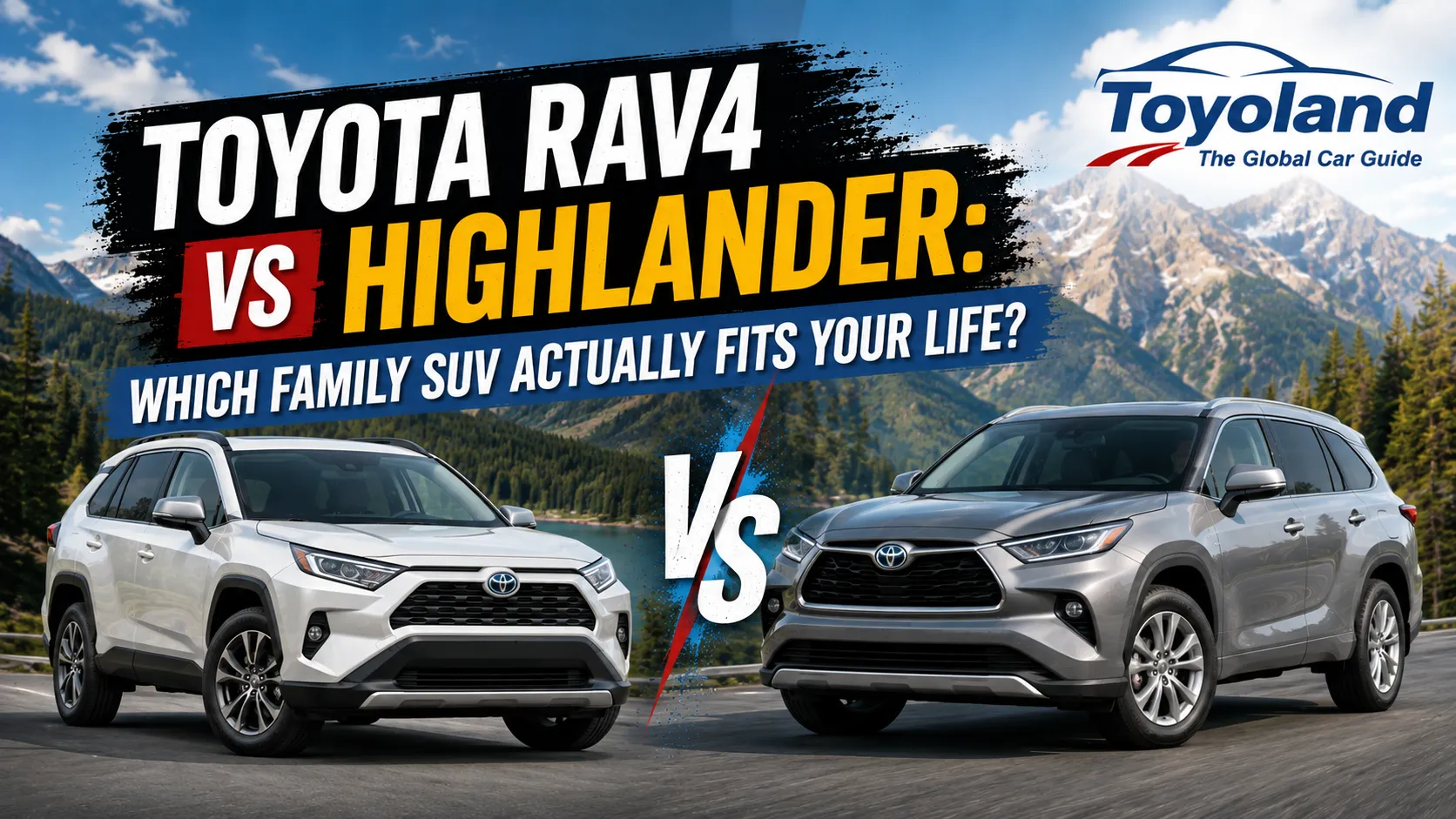

Every Toyota dealership hosts the same conversation daily: a family stands between a RAV4 and a Highlander, both wearing the badge they came for, separated by a size class and about ten thousand dollars. Here’s the secret that shortcuts an hour of trim-sheet reading — this decision has almost nothing to do with features and almost everything to do with one question: how often will actual humans sit in the third row? Answer that honestly and the rest of this page is just confirmation.
The short version
- Third row never or rarely → RAV4. Same reliability reputation, better economy, easier to park, and you keep $8–10k.
- Third row monthly or more → Highlander — the smallest Toyota where that row is genuinely usable.
- Third row daily, growing kids → Grand Highlander, which exists precisely because families kept asking the Highlander to be bigger.
- Buying used? The year matters as much as the model — the second half of this page carries those picks.
Size: fourteen inches is a lifestyle
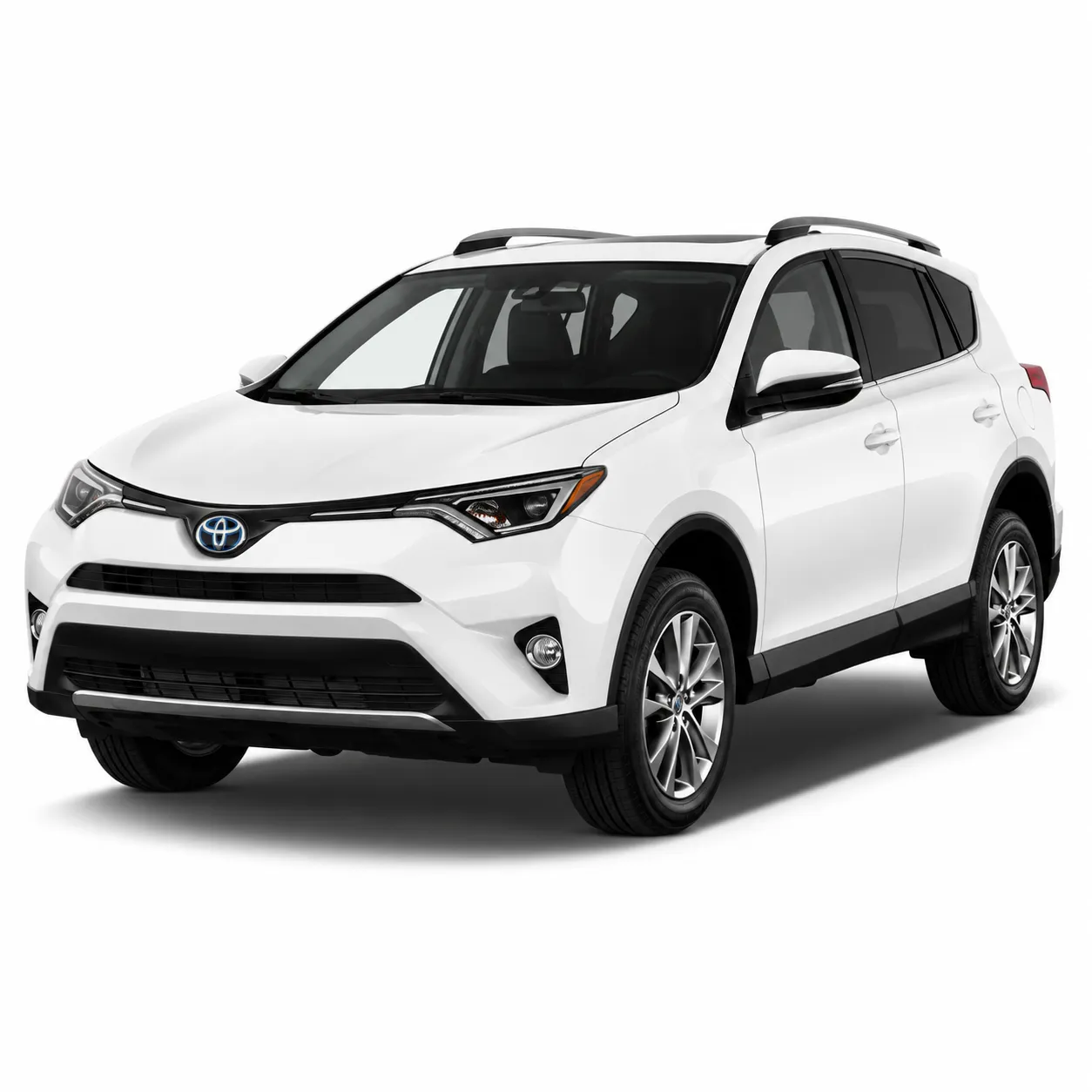
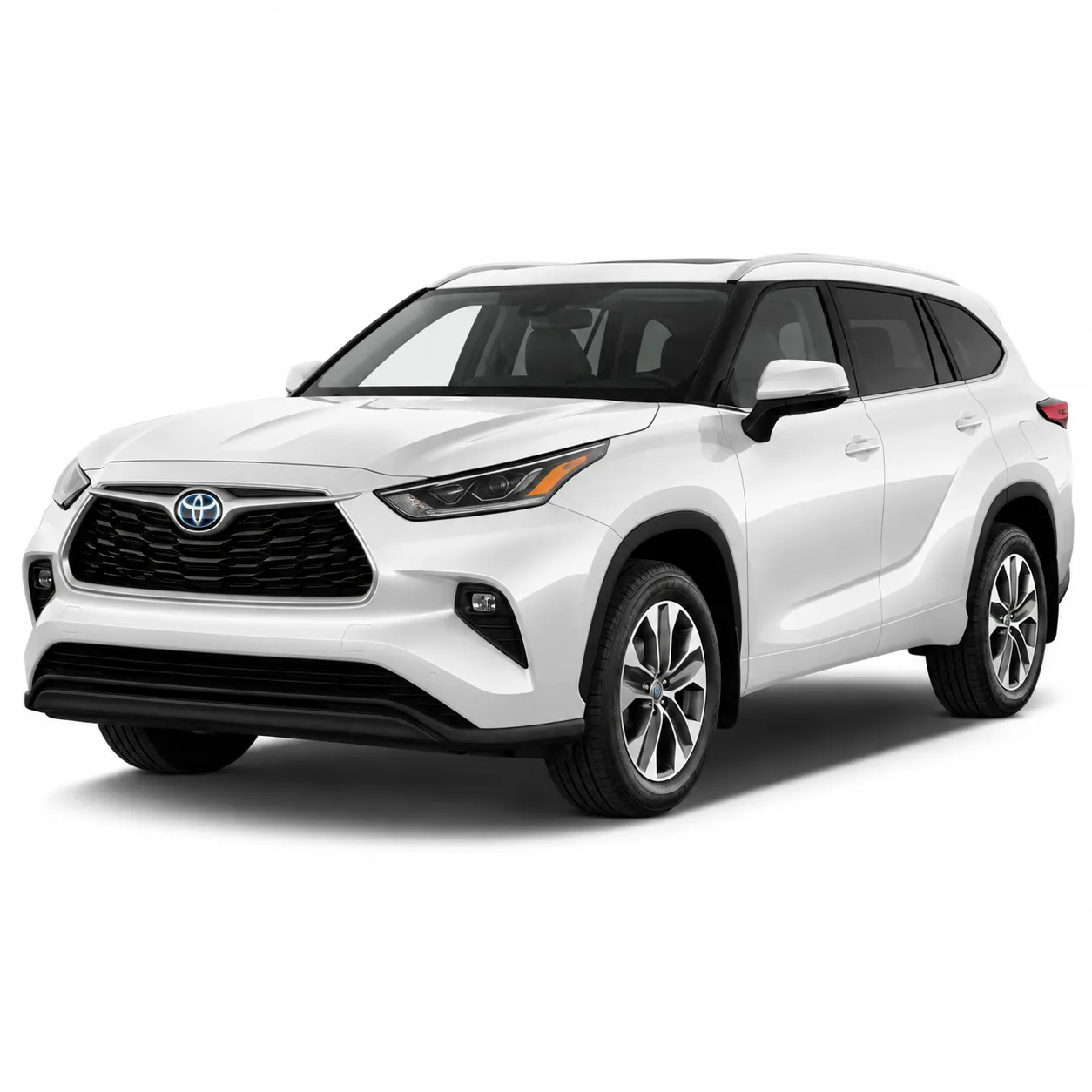
On paper it’s simple — the RAV4 runs about 181 inches long, the Highlander about 195 — but those fourteen inches are the whole personality difference. The RAV4 slots into compact spaces, U-turns where the Highlander three-points, and feels one size smaller than its cabin suggests; behind its second row sits 37.8 cubic feet of cargo, which is enormous for the class and, in daily five-seat use, often more usable than a Highlander with its third row up. The Highlander spends its extra length on the thing the RAV4 simply cannot offer: a real third row and the wider body that makes three-across seating civilized. Neither is the better car; they’re different answers to different households.
 Toyota
 Toyota
Powertrains and fuel: the hybrid era decides
The 2026 RAV4 went all-in — the redesigned sixth generation is hybrid-only, either the standard system (front- or all-wheel drive) or a plug-in version with roughly fifty miles of electric range, returning economy in the high-30s-and-beyond that used to require a dedicated eco-car. The Highlander offers both paths: a 2.4-liter turbo for traditionalists and a hybrid whose mid-30s economy is remarkable for something this size (the Grand Highlander adds a 362-hp Hybrid Max for buyers who want the space and the shove). The practical gap: at typical family mileage, the RAV4 Hybrid’s advantage over a gas Highlander is real money every month — our fuel cost calculator turns your actual commute into the exact figure in about a minute.
Price: what the $8–10k actually buys
New, the ladder is clean: RAV4 from around $33.5k, Highlander from around $41k, Grand Highlander from around $44k — and the gaps hold proportionally in the used market. That difference isn’t padding; it buys the third row, the wider cabin, and the bigger towing envelope. Which is exactly why the honest question matters: paying Highlander money to carry air in row three is the most common mis-purchase in the family-SUV world, and the RAV4-plus-savings answer (or RAV4-plus-roof-box, for the twice-a-year camping argument) usually wins the rematch.
- 'Rarely' households gain economy, parking ease and $8–10k by choosing RAV4 — with cargo space that often beats a row-three-up Highlander.
- 'Monthly+' households get the segment's most proven three-row formula — and the hybrid version runs mid-30s mpg.
- 'Daily' households have a purpose-built answer in the Grand Highlander rather than a stretched compromise.
- Occasional-use arguments ('holidays', 'someday') consistently overweight row three versus a roof box or a second trip.
- Under-buying hurts too — daily-carpool families in a RAV4 end up trading early; honesty cuts both ways.
Buying used: the years matter as much as the model
Here’s where we differ from every dealer comparison page: whichever model wins your household, the year you buy decides how the ownership actually goes — both nameplates have golden windows and years that need homework. On the RAV4 side, our RAV4 best and worst years guide carries the verdicts and the RAV4’s problems page the specific checks (including the fuel-pump-recall VIN sweep).
On the Highlander side, our Highlander best and worst years guide maps the years — including why the hybrid is the lower-risk drivetrain — and the Highlander’s problems page teaches the five-minute oil-line check and the program-era VIN logic that separate a great used Highlander from an expensive one.
RAV4 vs Highlander at a Glance
| Car Name |
Spec Label
|
Spec Value
|
|---|---|---|
| Seats / rows | RAV4 / Highlander | 5, two rows / 7–8, three rows |
| Length | RAV4 / Highlander | ~181 in / ~195 in |
| 2026 powertrains | RAV4 / Highlander | Hybrid-only (std or plug-in ~50 mi EV) / 2.4T gas or hybrid |
| Economy | RAV4 / Highlander | High-30s+ / Mid-30s hybrid, low-20s gas |
| Cargo | RAV4 / Highlander | 37.8 cu ft behind row 2 / Large seats-folded; Grand up to 97.5 |
| New from | RAV4 / Highlander | ~$33.5k / ~$41k (Grand ~$43.9k) |
The bottom line
Count the humans, honestly, over a real year. Five or fewer, nearly always: RAV4, and enjoy the economy, the parking and the savings. Six-plus with any regularity: Highlander — or Grand Highlander if row three is daily life. There’s no reliability tiebreaker to agonize over; both wear the reputation for the same reasons, provided you buy the right year with the right checks. For the method behind that last part, our used Toyota buying guide is the companion page — and the best family SUVs holds the wider field if you’re still browsing.