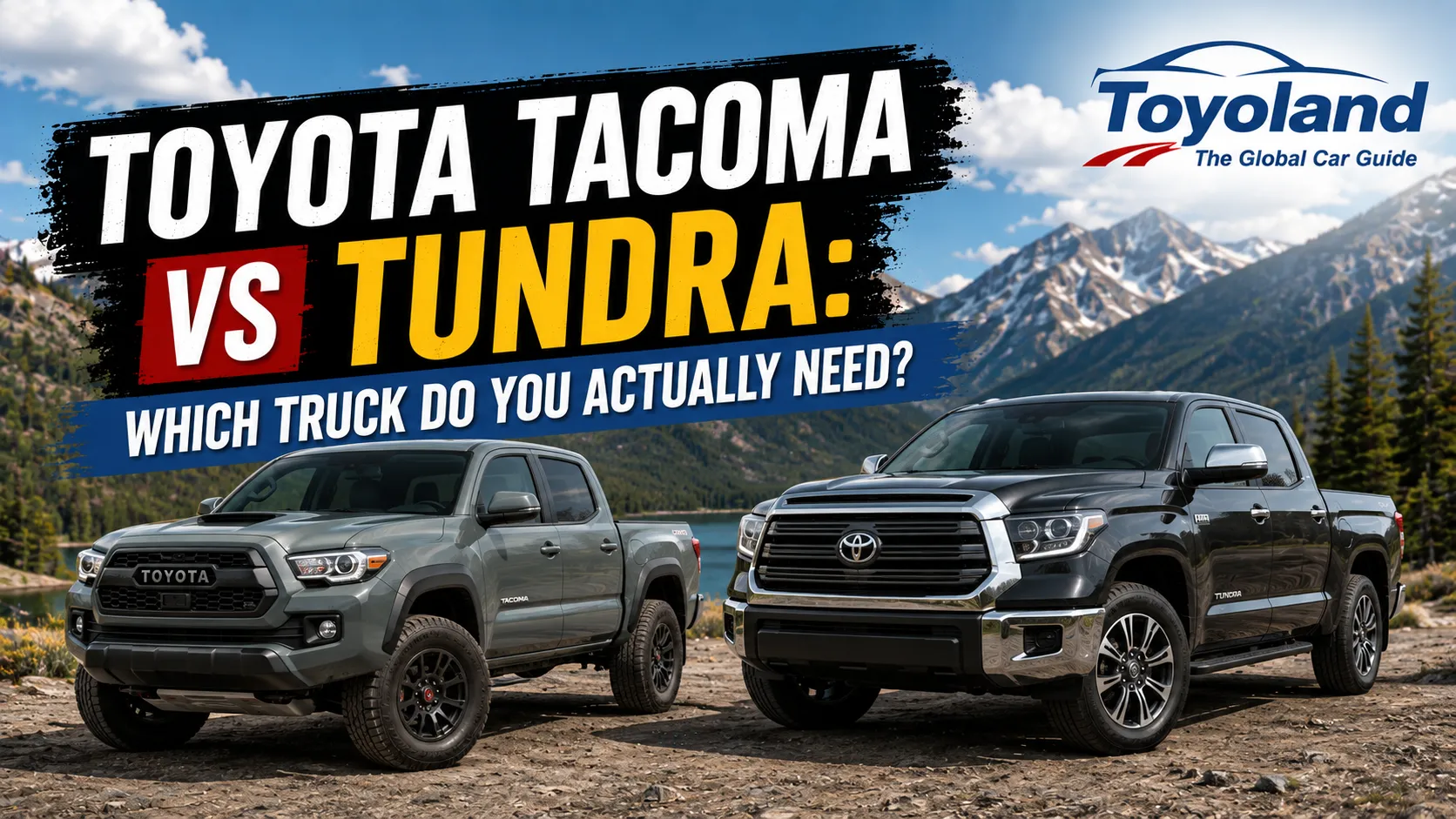
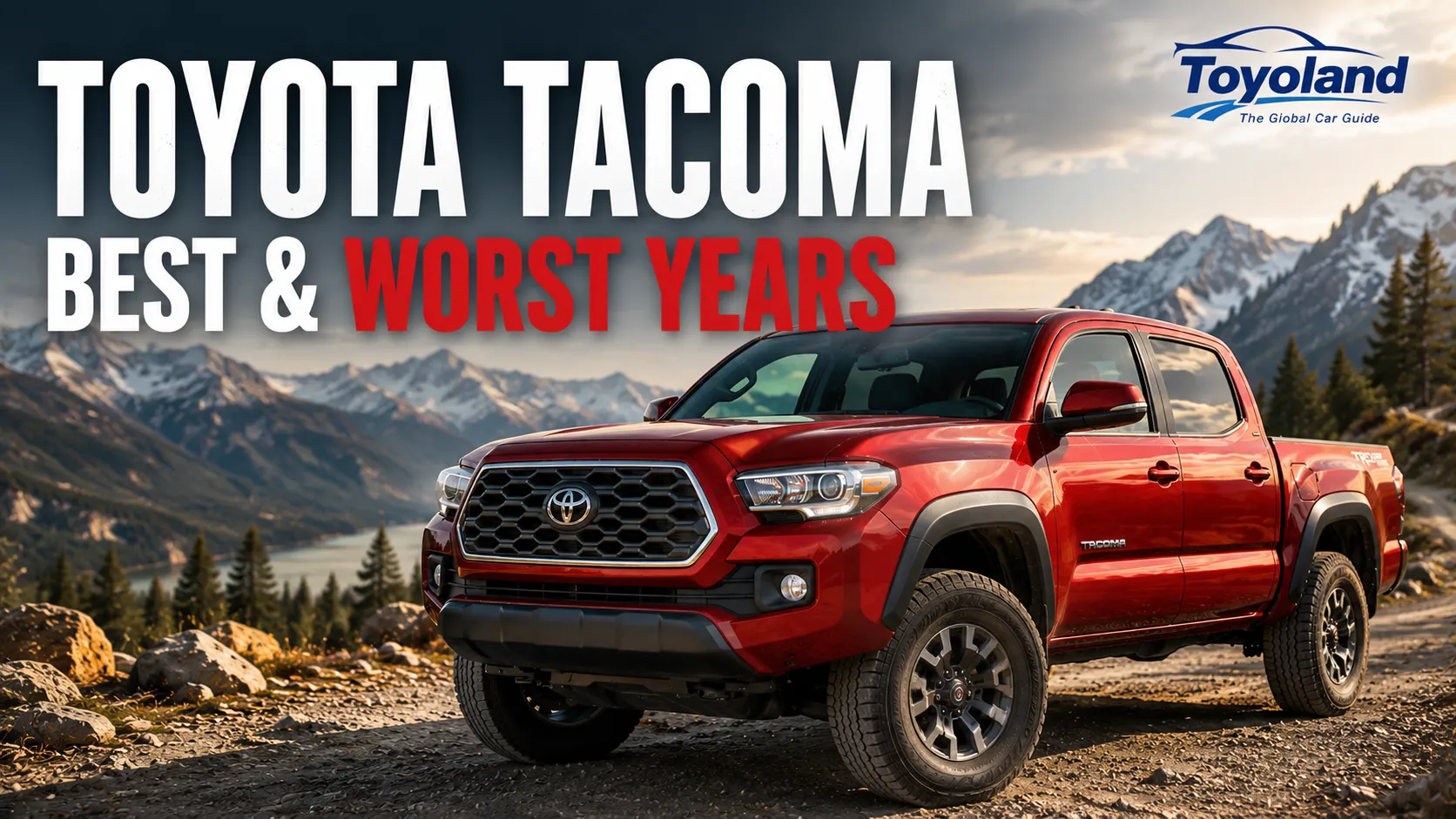

No used truck holds its value like a Tacoma, and few vehicles inspire the same loyalty — which is exactly why buying the wrong year stings twice: you pay the Tacoma premium and inherit the problems. The good news is that the Tacoma’s trouble spots are unusually well-defined. They cluster around two things: a documented frame-rust era on older trucks, and a first-year-of-generation pattern that has repeated like clockwork — in 2016 and again in 2024.
This guide is for someone shopping a used Tacoma in 2026. As with all our year guides, we separate what Toyota has documented (programs, recalls, bulletins) from what owners report, from our editorial verdicts — the same discipline behind our reliability coverage across the Toyota lineup.
The quick answer
- Best modern used pick: 2018–2023 — the matured third generation, with 2020–2023 the standouts (2020’s record is notably clean).
- Best older value: 2013–2015 — the proven 4.0L V6 second generation at its most sorted.
- Caution: 2016–2017 (first-year transmission and oil-leak complaints — recalibrated via TSBs, not recalled), 2005–2010 (the frame-rust era — inspection-dependent), 2011–2012 (recall-heavy 2011; 2012’s costly air-injection pump), and early 2024 (first-year turbo/8-speed teething, plus a documented brake-hose recall and transmission TSB).
- 2024–2025 fourth generation overall: too new to rank on long-term reliability — improving through 2025, but history says let a redesign mature.
Tacoma generations at a glance
- 1st gen (1995–2004): simple, tough, now ancient — frame condition is the whole ballgame.
- 2nd gen (2005–2015): bigger and more refined; early years carry the rust saga, late years (2013–2015) are the classic buy.
- 3rd gen (2016–2023): new 3.5L V6; rocky 2016–2017 start, excellent 2018–2023 finish.
- 4th gen (2024–present): all-new on TNGA-F with a 2.4L turbo, 8-speed, and the i-FORCE MAX hybrid option — the pattern’s newest first years.
Tacoma Buying Snapshot by Era
|
2005–2010
|
2013–2015
|
2016–2017
|
2018–2023
|
2024–2025
|
|
|---|---|---|---|---|---|
| Verdict / Key issue / Action | Caution / Frame rust (documented) / Professional frame inspection | Best older value / Age items only / Records + VIN check | Caution / Transmission complaints (TSB) / Verify recalibration; highway test | Best modern / Minimal (white paint CSP) / Confirm 23TE08 if white | Too new to rank / Brake-hose recall + trans TSB (documented) / VIN + TSB check |
The best Tacoma years to buy
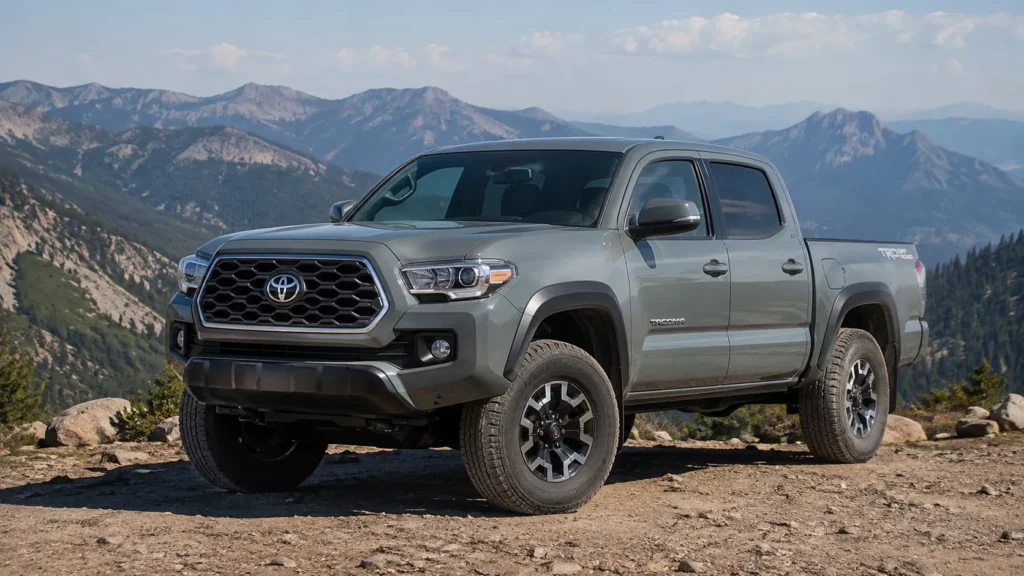
2018–2023: the modern sweet spot
By 2018, Toyota had worked through the third generation’s launch items — the transmission recalibrations were in the field, the early leaks addressed — and the trucks from here through 2023 combine the 3.5L V6’s efficiency with a settled build. 2020–2023 stand out, with 2020 showing a notably clean complaint record, updated infotainment, and standard active safety. TRD Off-Road and TRD Pro versions of these years are the ones that hold value best. One documented note even here: certain 2016–2022 trucks with peeling white paint qualify for a free repaint under Toyota’s Customer Support Program 23TE08 — if you’re looking at a white truck, ask whether the repaint was done, because it affects value.
 Toyota
2013–2015: the proven older value
The last years of the second generation are the classic used-Tacoma recommendation: the durable 4.0L V6, conventional automatics, and a decade of refinement — after the recall-heavy early 2010s and before the 2016 redesign. Clean examples regularly run past 250,000 miles. These trucks often surface in searches for the best used cars under $20,000, though Tacoma pricing means good ones push the top of that budget.
The years that deserve caution
2005–2010: the frame-rust era — documented, region-dependent
This is the Tacoma’s most famous problem and it is thoroughly documented: severe frame corrosion on these trucks led Toyota to run frame inspection and replacement programs and to settle major litigation. Those programs have ended by age, so today it is a pure inspection question. In salt-belt states, do not buy without a professional look at the frame (bring a screwdriver-poke skeptic, not an optimist); in dry states, these trucks can be honest workhorses. Editorial: not an avoid — a condition gate. A rust-free 2005–2010 with records is a better truck than a neglected newer one.
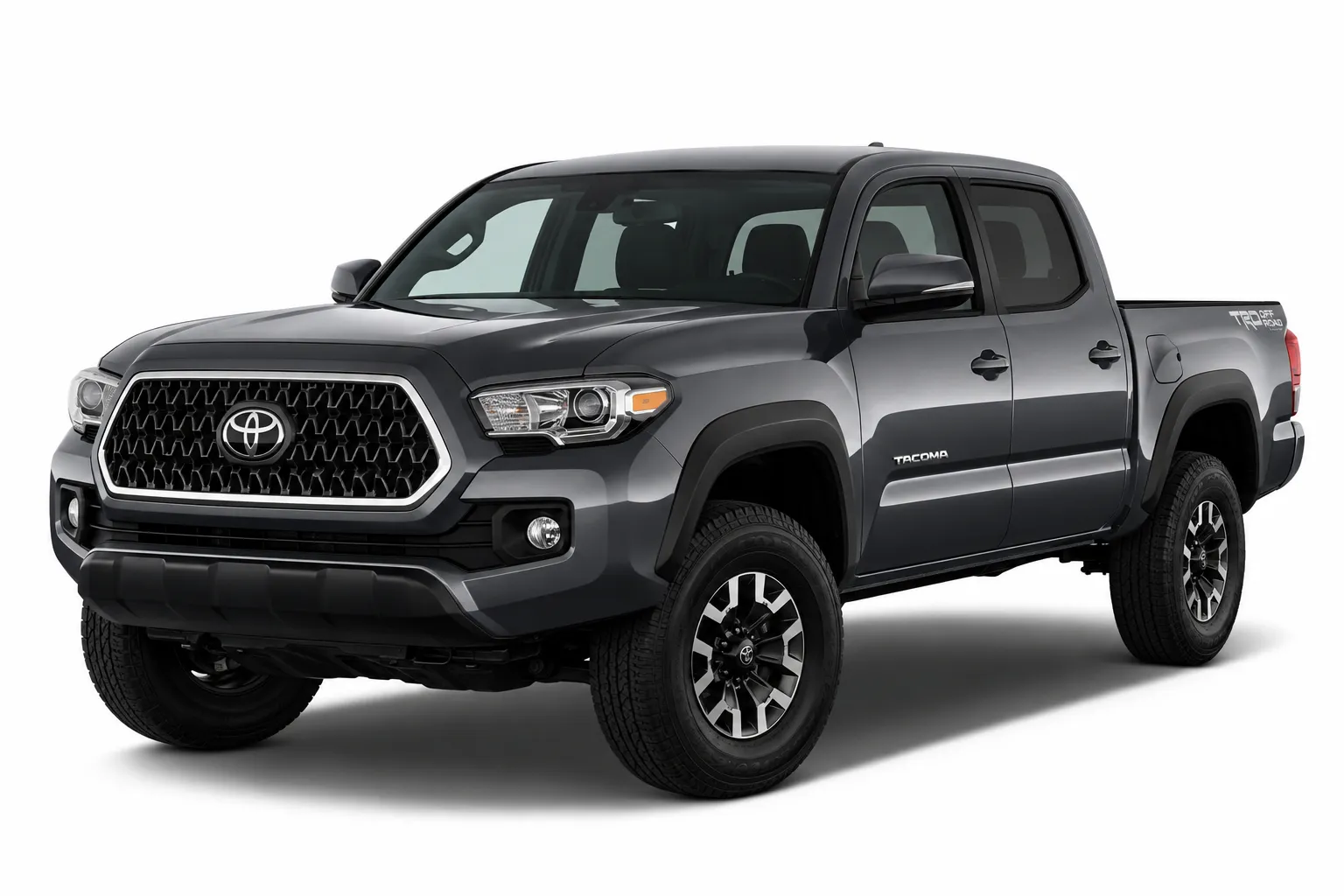
2016–2017: the third generation’s rough start
The 2016 redesign brought the 3.5L V6 and a new 6-speed automatic — and immediately, consistent owner complaints: gear hunting between fifth and sixth on the highway, shudder, hesitation, plus timing-cover oil leaks, a leaking third brake light (later recalled), and assorted first-year items. Toyota responded with transmission recalibrations and service bulletins — not a recall — and largely resolved the behavior by 2018. Reported tier applies: these are complaint patterns with TSB responses, not a defect finding across all trucks. The practical read: 2016–2017 trucks sell at a visible discount; one with the recalibration done, no leak history, and a clean test drive can be a value play — but the 2018+ trucks are worth the premium for most buyers.
- Modern safety/tech arrival and the efficient 3.5L V6; discounted pricing versus 2018+.
- The complaint items have known fixes — recalibrations and TSBs are verifiable by VIN.
- Certain 2016–2022 white trucks qualify for free repaint under CSP 23TE08.
- Reported gear-hunting/shudder and timing-cover oil leaks concentrated in these years (TSB-tier, not a recall).
- Third-brake-light water leak (recalled) and assorted first-year items — VIN check essential.
2011–2012: two specific items
2011 drew a cluster of safety recalls (verify completion by VIN, as ever). 2012’s known weak point is the secondary air-injection pump, a reported failure pattern that can cost $2,000–$3,000+ out of warranty. Neither makes these bad trucks; both belong on your checklist.
2024–2025: the newest first years
The all-new fourth generation repeats the pattern. Two items are documented: a rear brake hose recall covering 100,000-plus 2024–2025 4WD trucks, and a transmission service bulletin for the new 8-speed in which manufacturing debris can stick pressure-control solenoids — with the remedy being replacement of the transmission and torque converter. Owner-reported teething complaints were highest on early 2024 builds and have visibly improved into 2025. Editorial: we don’t rank the fourth generation Best or Worst — its long-term record is simply too young. If you want one, a later-build 2025 with the recall closed and TSB checked is the sensible way in; if you want certainty, the 2018–2023 trucks are the proven quantity.
The used-Tacoma inspection checklist
- Frame (all years, decisive on 2005–2010): professional inspection for rust perforation, plate repairs, or replaced frames — and ask for the paperwork if a frame was replaced under Toyota’s program.
- Transmission (2016–2017): highway test for gear hunting; confirm recalibration TSBs by VIN. (2024: confirm the solenoid TSB status and brake-hose recall closure.)
- Oil leaks (2016–2017): timing-cover area.
- Air-injection pump (2012 especially): listen at cold start; check codes.
- White paint (2016–2022): peeling qualifies for CSP 23TE08 repaint — verify status.
- Records + VIN recall check (all years): the strongest predictor, as always.
Budget honestly, too: mid-size trucks aren’t economy cars — run your numbers with our fuel cost calculator before committing.
Final verdict
The Tacoma rewards patience with generations: buy the mature years, not the pioneering ones. For most buyers in 2026 that means a 2018–2023 truck first, a clean 2013–2015 for older value, with 2016–2017 a verified-discount play, 2005–2010 an inspection gate, and 2024–2025 a wait-or-verify. That pattern — and the truck’s underlying durability — is exactly consistent with what underpins Toyota’s reliability reputation. Buy the right year on condition, and a Tacoma will likely outlast your want for it.