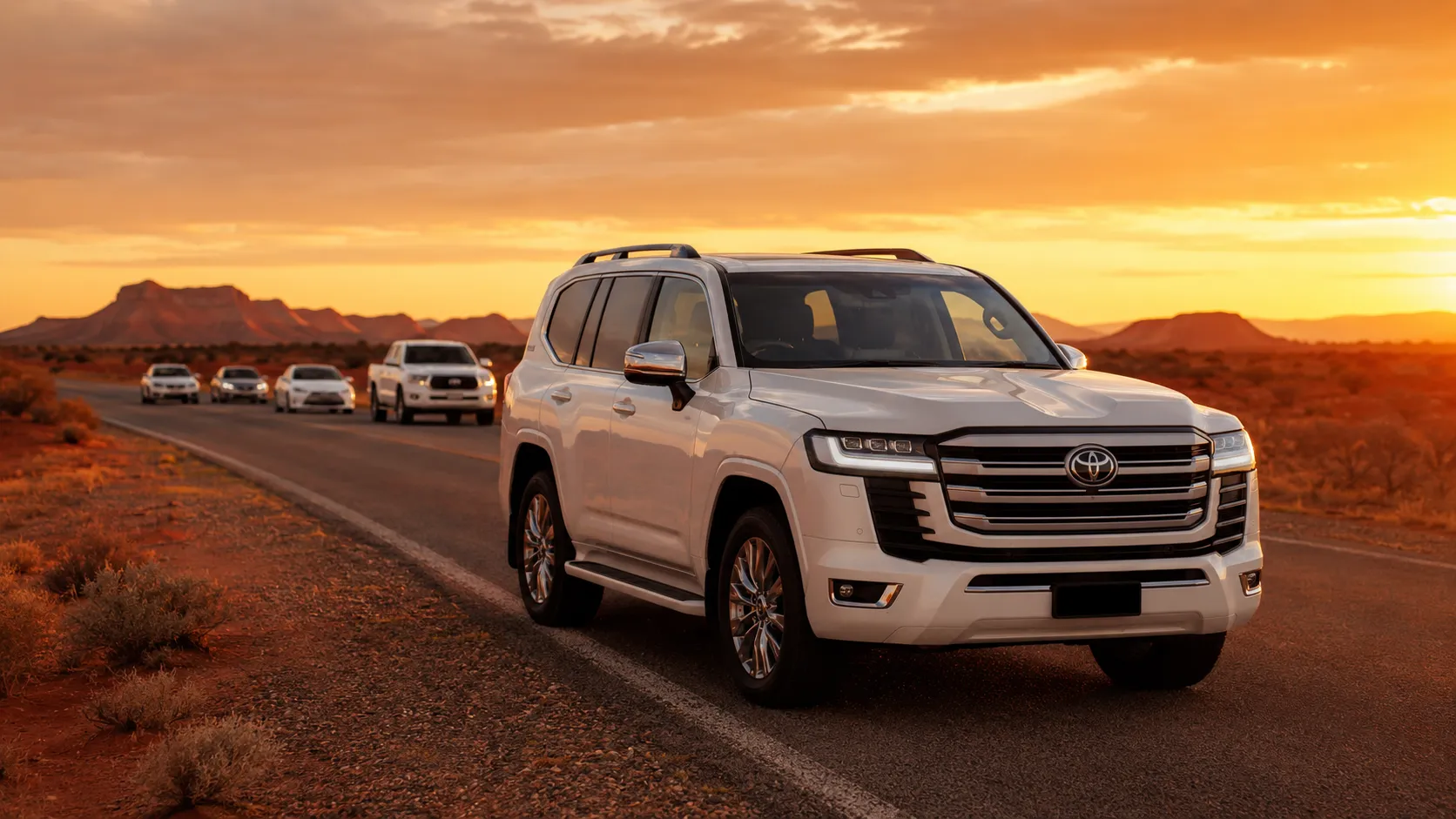
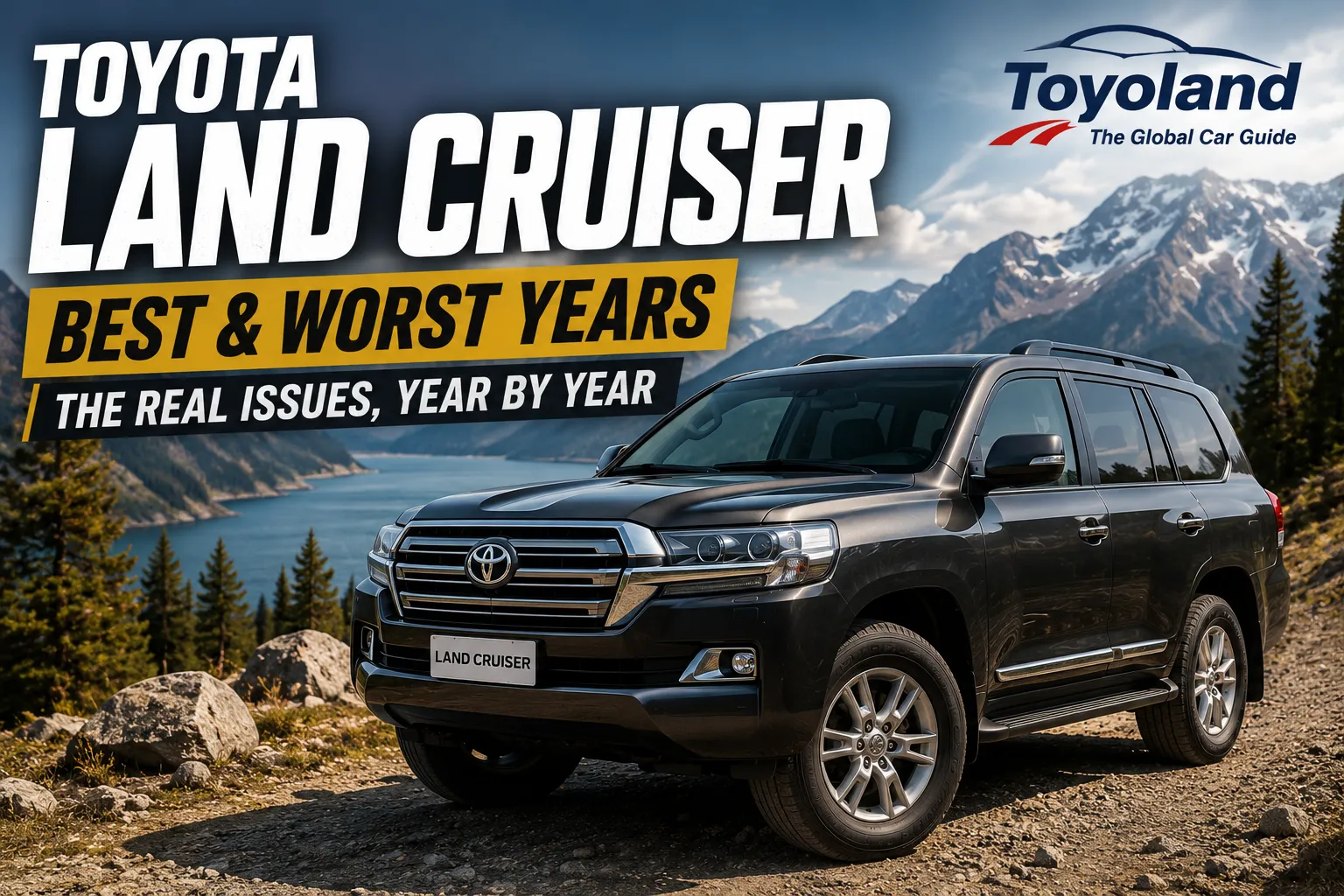

People don’t really buy Land Cruisers — they adopt them. These are vehicles owners keep for twenty years and 300,000 miles, which changes the math of choosing one: a weak model year isn’t a three-year lease mistake, it’s a decades-long relationship with the wrong truck. The good news is that seventy years of production have made the pattern unusually legible. Each generation has a golden window and a soft spot, and the gap between them is worth real money.
One housekeeping note before the map, because it confuses everyone: the Land Cruiser sold new in America since 2024 is the J250 — the smaller, Prado-family truck — while the big J300 flagship isn’t offered in the U.S. at all. This guide covers what an American buyer can actually put in the driveway; the global flagship gets its own review, linked below.
The short version
- The definitive buy: 2016–2021 (final 200 Series) — the proven 5.7 V8, full modern kit, and a complaint record so clean it’s almost boring. 2020–2021 are the peak of the whole nameplate.
- Smart money older: 2005–2007 (sorted 100 Series) and 2012–2015 (mid-200s).
- The enthusiast play: a head-gasket-done 80 Series (1991–1997).
- The careful zone: 1999–2002 — with the 2000 the one genuinely troubled year in the modern record.
- The new J250 (2024+): promising, characterful, and too young to rank.
2016–2021: the peak of the breed
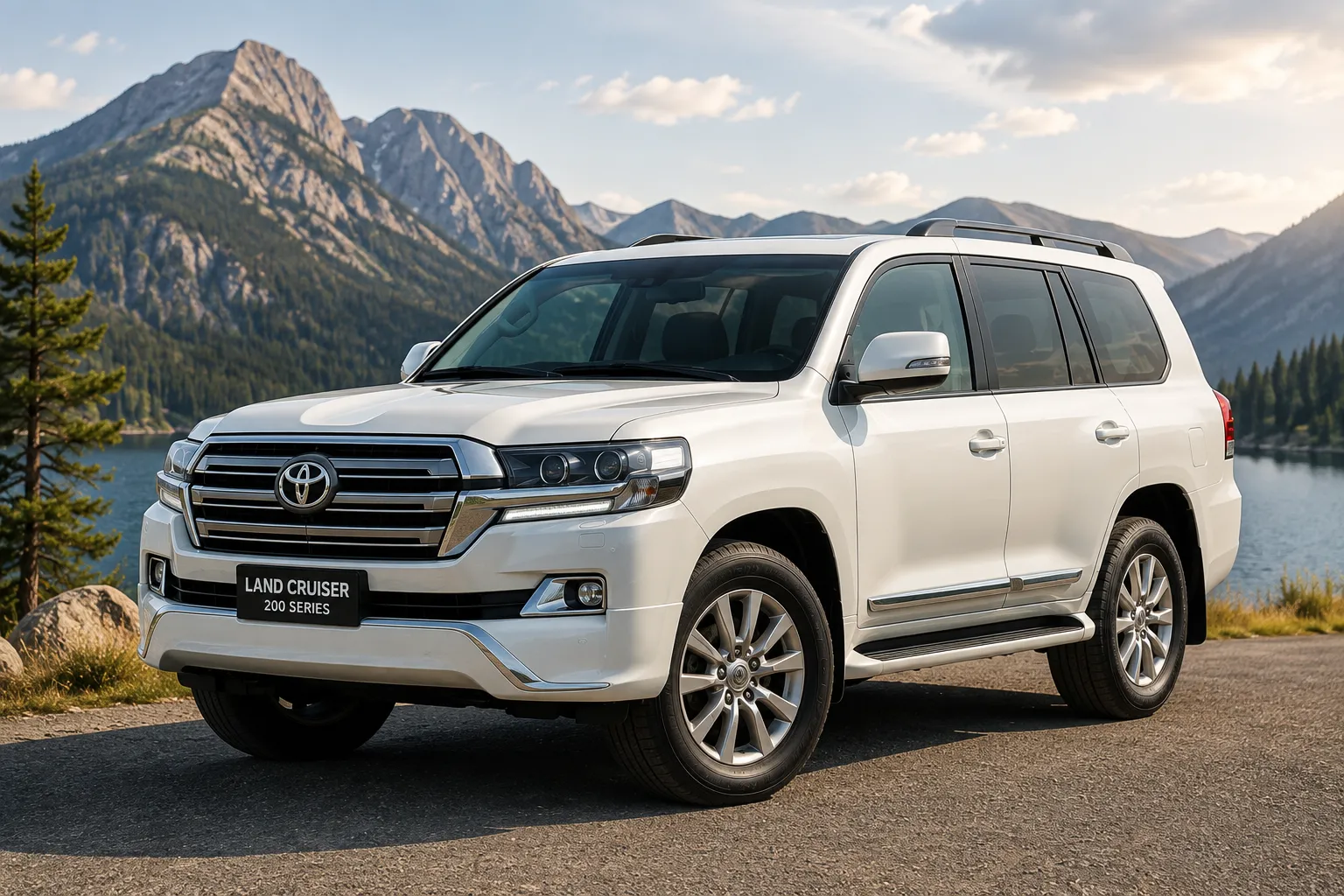
When Toyota retired the 200 Series from America after 2021, it ended the truck at its absolute best. The 2016 refresh brought an eight-speed automatic (a few early shift complaints, quickly settled), updated safety equipment, and fifteen years of accumulated refinement on the 5.7-liter V8 — an engine we’ve covered at length in the Tundra, where the same 3UR-FE built its quarter-million-mile reputation. By 2020–2021 the complaint databases go quiet in a way almost no vehicle achieves: these are among the cleanest model years we’ve examined for any nameplate, period. They’re priced like it — final-year 200s barely depreciate — but for a vehicle you’ll keep into the 2040s, the 2016–2021 window is the definitive answer.
 Toyota
2008–2015: the early 200s, with two checks
The first 200s are formidable trucks with two known seep stories. The one to take seriously is the coolant valley leak — a plate atop the V8’s valley whose sealant can give up anywhere from 50,000 to 250,000 miles with no pattern; the classic presentation is a quart of coolant vanishing monthly with no visible drip, and the proper fix is an engine-out-scale labor job. Slow, mysterious coolant loss on any 2008–2011 is therefore a diagnosis-first situation, not a top-up-and-hope one. The second is cam-tower seepage, the same early-5.7 weep we cover on the Tundra’s year guide — cosmetic-to-monitor for many owners, labor money to fully fix. Add the 2010’s engine knock/oil-consumption complaint bump and the era’s Takata-campaign VIN checks, and you have the whole homework list. Trucks that pass it, especially 2012–2015s, are decades-keepers.
The 100 Series: golden late, careful early
The 100 Series (1998–2007) put the immortal 4.7-liter 2UZ-FE V8 under the hood, and the engine itself almost never makes trouble — but the early years around it did. 1999–2000 cars logged head-gasket and coolant-loss reports, and the 2000 stacks the era’s worst of everything: transmission failures reported around 108,000 miles, chassis rust attacking weld points and mounts, Active TRAC electronics that fight repair, and persistent starting complaints. The 2002 added its own overheating/power-loss cluster with worst-case bills around $6,000. None of this means every early 100 is doomed — it means a 2000 without exhaustive records is the one Land Cruiser we’d simply pass on, and its neighbors need proof.
Then the generation grew up. 2005–2007 cars shed the era’s complaints (2005–2006 brake-feel gripes aside — test and move on) and represent the 100 at its sorted best: old enough to be attainable, young enough to be honest. One shared-era quirk worth knowing: the starter motor on the 2UZ lives in the engine’s valley, so a $15 contact failure becomes a real labor bill — a known tax, not a defect, and a done-starter is a selling point on any 100.
- Same immortal 2UZ-FE V8 as its siblings — the engine itself is rarely the complaint.
- Every reported weakness is inspectable: transmission behavior, weld-point rust, electronics function.
- The era's reports stack on this one year — transmission failures around 108k, chassis rust at structural points, Active TRAC gremlins, starting complaints.
- Repair economics on a 25-year-old luxury truck escalate fast; an undocumented 2000 is the one Land Cruiser to simply pass on.
The 80 Series: the legend, priced accordingly
The 1991–1997 80 Series is the one collectors fight over — solid axles, available lockers, and the 1FZ-FE straight-six that shrugs at abuse. Its single famous weakness is the head gasket, which typically surfaces between 200,000 and 250,000 miles (loss of compression on cylinder six is the classic diagnosis; some owners see coolant vapor at the exhaust without overheating). Plenty of originals sail past 300,000 untouched, but the buying logic is simple at today’s prices: an 80 with a documented gasket job has had its one surgery; one without carries it as a future line item. Distributor O-rings and the oil-pump cover account for the era’s minor oil seeps. Condition, rust, and originality now matter more than any of it — these have crossed from used trucks into collector territory.
The new J250: promise, not proof
The 2024-onward U.S. Land Cruiser is a different proposition — smaller, hybrid-only with the 2.4-liter turbo i-FORCE MAX, and priced to bring the badge back to earth. It’s also a first-generation product built on the same modern powertrain family whose Tacoma and Tundra debuts we’ve tracked closely, and our series rule doesn’t bend for heritage: too new to rank. If you want the modern one, buy late-build and keep the VIN checked; if you want the global flagship experience the U.S. doesn’t sell, our Land Cruiser 300 review covers that truck for international readers.
And if what you actually want is the body-on-frame Toyota experience at half the money, our 4Runner year guide is the honest cross-shop.
Land Cruiser Buying Snapshot by Era
| Car Name |
Spec Label
|
Spec Value
|
|---|---|---|
| 80 Series (1991–1997) | Verdict / Watch for | Enthusiast pick / Head gasket 200–250k — prize a done one |
| 100 early (1998–2004) | Verdict / Watch for | Caution / 2000's cluster; 1999–2000 gaskets; 2002 overheating; records or walk |
| 100 late (2005–2007) | Verdict / Watch for | Good older value / 2005–06 brake feel; rust + records |
| 200 early (2008–2015) | Verdict / Watch for | Good→very good / Valley-plate coolant loss; cam-tower weep; Takata VIN |
| 200 final (2016–2021) | Verdict / Watch for | Best — the peak / Near-clean record; pay for certainty |
| J250 (2024+) | Verdict / Watch for | Too new to rank / First-gen hybrid turbo; VIN hygiene |
Before you buy any Land Cruiser
- 2008–2011: coolant-level history and any mystery loss — valley-plate diagnosis before purchase, not after. Cam-tower weep check. Takata/era campaigns by VIN.
- 1998–2004: records-heavy or walk — transmission behavior, rust at frame welds and mounts, electronics function, cooling history on 2002s. Starter history is a bonus question.
- 80 Series: gasket documentation (or price it in); rust and originality inspection worthy of the money involved.
- 2016–2021: enjoy the shortest checklist in this guide — records, VIN sweep, and condition.
- All years: these are 5,500-plus-pound V8 machines — run the fuel math honestly before adopting one.
Our fuel cost calculator will translate 13–17 mpg into a monthly number faster than a dealership will.
The bottom line
The Land Cruiser earns its mythology — but the mythology is really about specific windows: gasket-done 80s, late 100s, and above all the 2016–2021 send-off, which may be the single most dependable vehicle era we’ve covered in this series. Respect the 2000, diagnose the valley leak before it’s your problem, treat the new J250 with first-generation patience, and this is the rare vehicle that genuinely outlasts its owner’s plans — the purest expression of what built Toyota’s reliability reputation in the first place.