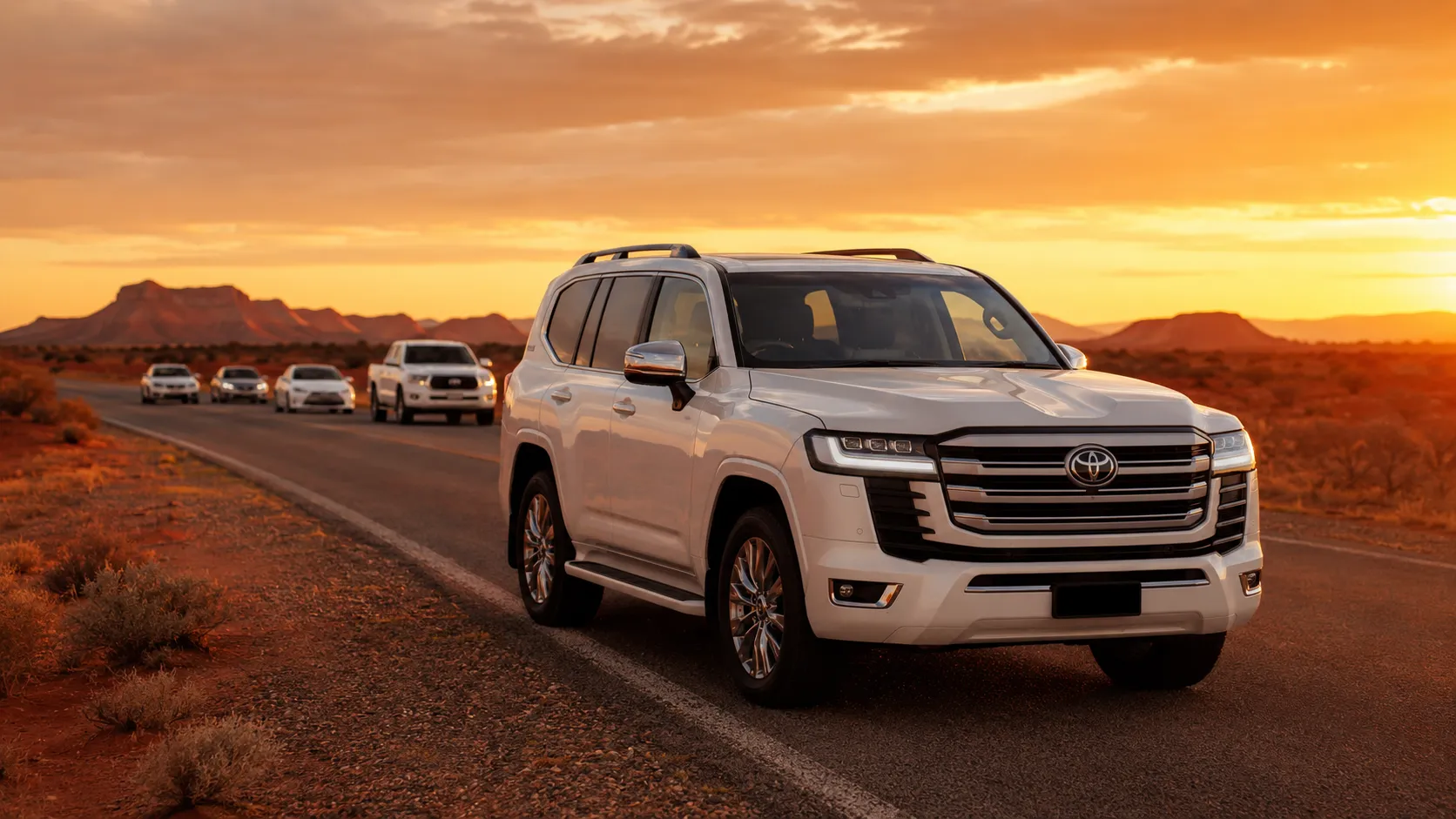
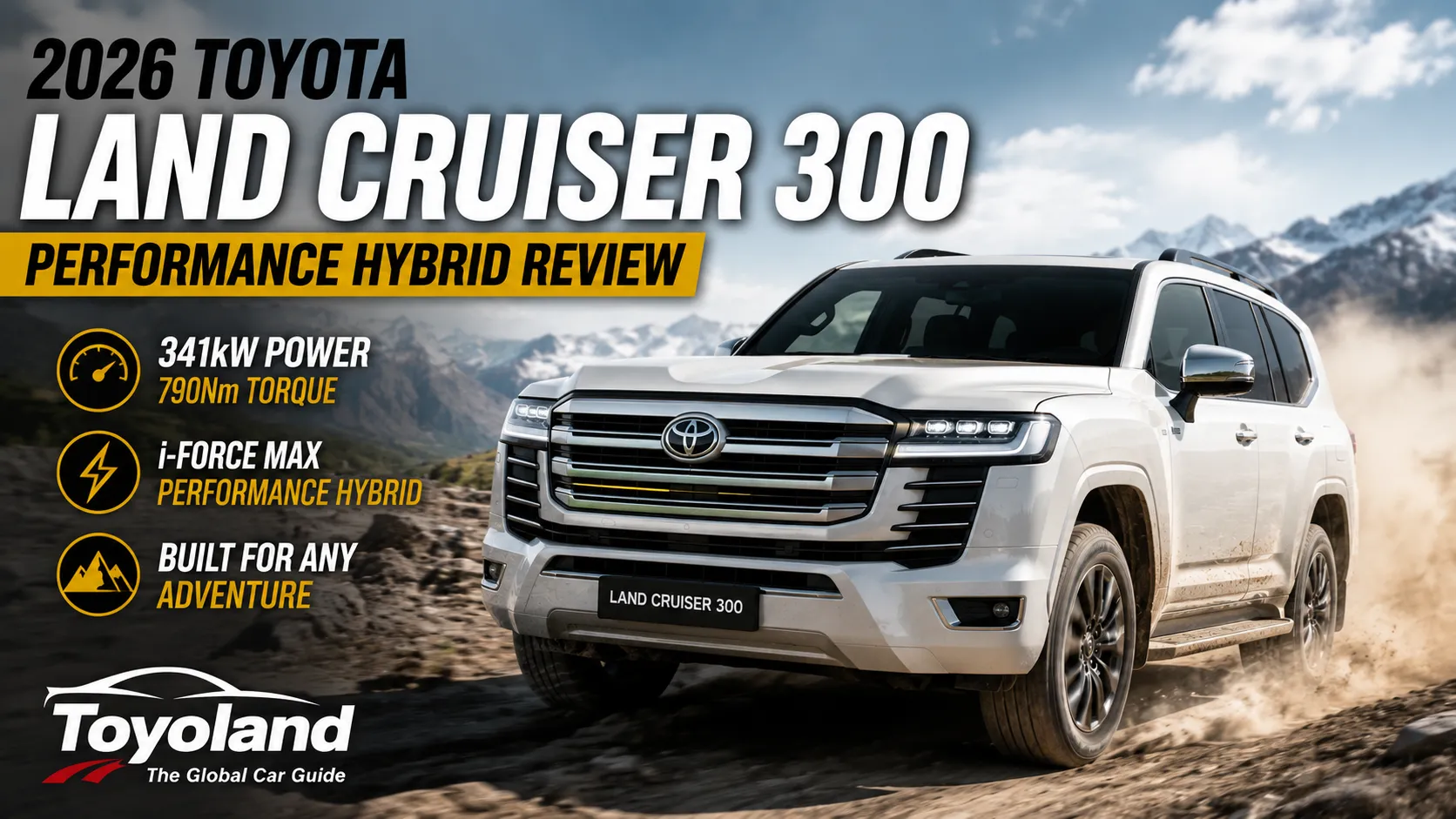

The 2026 Toyota Land Cruiser 300 Performance Hybrid review confirms that Toyota’s first electrified LandCruiser is a revolutionary milestone that fundamentally redefines what buyers can expect from a large off-roader. This electron-enhanced 4WD delivers historic power figures that make it the most formidable production LandCruiser ever to grace Australian roads, prioritising brute force and urban prestige over hypermiling fuel metrics.
1. The New Core Philosophy of the 300 Series Performance Hybrid
The all-new 2026 Toyota Land Cruiser 300 Hybrid marks a revolutionary milestone for Toyota. Toyota has long championed a ‘multi-pathway’ approach to reducing emissions, and now even the iconic LandCruiser has been swept up in the shift towards electrification. However, this isn’t the conventional hybrid you typically associate with the Toyota badge; instead, this powertrain adopts a fundamentally different philosophy that prioritises raw muscle over fuel savings, representing a significant departure from traditional setups.
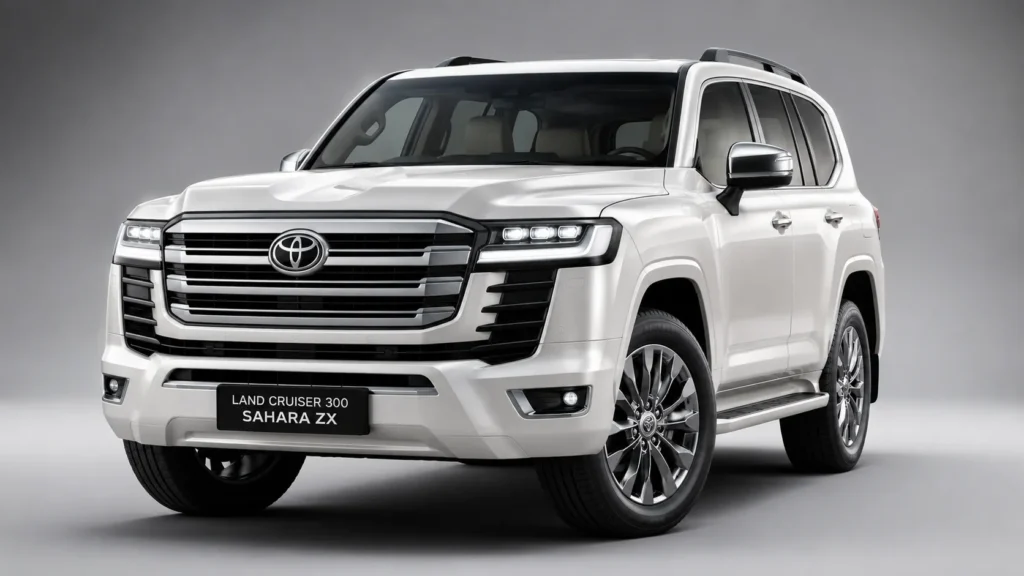
The Toyota LandCruiser 300 Hybrid 2026 changes represent a paradigm shift in how the brand approaches electrification. Toyota has dubbed this system the ‘Performance Hybrid’ because it uses electrical assistance as a performance enhancer rather than a range maximiser, with CO2 reductions coming as a mere byproduct of the electrification process. This is a crucial distinction that sets the LandCruiser apart from other hybrid SUVs on the market and demonstrates Toyota’s commitment to preserving the vehicle’s core character.
By electrifying the 300 Series LandCruiser, Toyota wants to extend the appeal of its plus-sized off-roader in a completely different direction. While the Hybrid tag might make you think this is one for the tree huggers, the reality couldn’t be more different. Rather, the hybrid powertrain holds more allure to those who want a large SUV that can genuinely sprint – and it delivers on that promise in spades, offering performance that would have been unthinkable in a vehicle of this size just a few years ago.
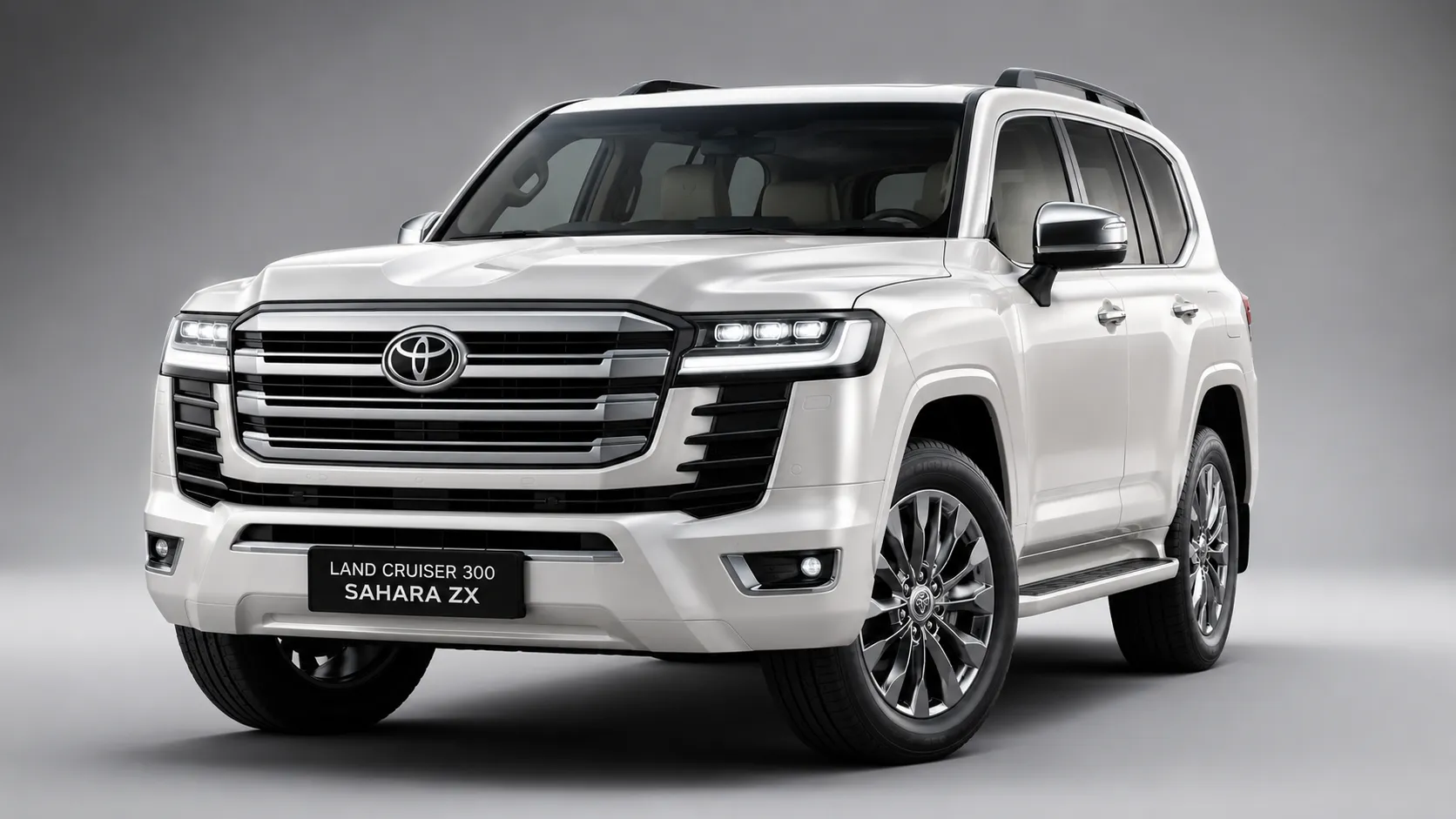
The 2026 Toyota LandCruiser 300 Series Hybrid price reflects this performance-first approach and positions the vehicle at the absolute pinnacle of the LandCruiser range. The electrified powertrain is exclusively available in the top-tier GR Sport and Sahara ZX grades, carrying an $8,900 premium over their diesel equivalents. For that substantial outlay, buyers receive a vehicle that redefines what a large off-roader can achieve in terms of outright performance and driving satisfaction.
2. The V35A-FTS Twin-Turbo V6 Powertrain Integration
At the heart of the 2026 Toyota Land Cruiser 300 Performance Hybrid review sits the proven V35A-FTS 3.4-litre twin-turbo petrol V6, which has been extensively re-engineered to accept the i-Force Max hybrid system. This powertrain, also seen in the Toyota Tundra pickup, represents a significant evolution of Toyota’s V6 architecture and demonstrates the brand’s commitment to performance-oriented electrification that doesn’t compromise the vehicle’s fundamental capabilities.
The integration is remarkably clever and mechanically sophisticated, showcasing Toyota’s engineering excellence. A single 36kW electric motor-generator is placed directly between the engine and the 10-speed automatic transmission, providing seamless assistance without compromising the vehicle’s mechanical four-wheel-drive system. This parallel hybrid configuration means the motor can assist the engine during acceleration, provide electric-only propulsion at low speeds, or act as a generator to recharge the 1.8kWh nickel-metal hydride battery pack, offering remarkable flexibility in various driving scenarios.
The battery itself is mounted beneath the rear luggage area in a waterproof tray, surrounded by high-strength steel to protect it from the impacts Toyota knows LandCruiser drivers are likely to subject it to while bush-bashing. This placement ensures the 2026 Toyota LandCruiser 300 Series Hybrid price doesn’t come at the cost of off-road durability. The engineering team has gone to extraordinary lengths to ensure that the electrical systems can withstand the punishment that LandCruiser owners routinely subject their vehicles to, maintaining the legendary durability that defines the nameplate.
3. Staggering Horsepower and Torque Performance Outputs
The performance metrics of the 2026 Toyota Land Cruiser 300 Hybrid are truly staggering and represent a quantum leap forward for the LandCruiser nameplate. The 3.4-litre V6 alone produces an impressive 305kW and 650Nm, but with the addition of the 36kW/250Nm electric motor, the system outputs swell to an astonishing 341kW and 790Nm. This level of performance places the hybrid LandCruiser in territory previously reserved for high-performance luxury SUVs.
To put this in proper perspective, that’s a massive 114kW more power and 90Nm more torque than the 3.3-litre turbo-diesel V6 that powers the rest of the 300 Series lineup. This makes the 2026 Toyota Land Cruiser 300 Performance Hybrid review subject the most powerful LandCruiser ever sold in Australia – a title that carries significant weight among the enthusiastic off-road community and demonstrates Toyota’s commitment to pushing the boundaries of what’s possible.
The torque figure is particularly significant and transformative for the driving experience. With 790Nm available from extremely low rpm, the Performance Hybrid delivers effortless acceleration that the diesel simply cannot match. This is a vehicle that can haul a fully-laden caravan up a mountain pass without breaking a sweat, yet also sprint away from traffic lights with surprising urgency. The 2026 LandCruiser 300 GR Sport Hybrid specs confirm that this is a vehicle built for those who demand the absolute best in performance and refuse to compromise on capability.
- 341kW/790Nm output; 6.5-second 0-100km/h sprint; Smooth petrol-electric handover; Instant low-down electric assist.
- Twin-turbo petrol V6 recall history in US markets; Pronounced differential whine in low range.
4. Slick Gear Shifts via the 10-Speed Automatic Transmission
The gearbox is a crucial component in delivering this stratospheric performance and ensuring the driving experience lives up to the impressive power figures. The 10-speed torque-converter automatic transmission, shared with the diesel variants, has been extensively recalibrated to handle the immediate torque delivery of the hybrid system. The results are genuinely impressive and contribute significantly to the vehicle’s refined character and driving pleasure.
Shifts are incredibly slick, with the transmission responding to throttle inputs with genuine enthusiasm and precision. The gearbox works in concert with the electric motor to fill any torque gaps during shifts, ensuring seamless power delivery that makes the 2026 Toyota Land Cruiser 300 Performance Hybrid review feel far more refined than its 2.7-tonne kerb weight would suggest. The torque-fill function effectively eradicates the twin-turbo lag that can sometimes plague petrol engines, creating a driving experience that feels both effortless and engaging, while ensuring the 2026 Toyota Land Cruiser 300 Hybrid feels incredibly smooth.
The 10-speed unit also allows the engine to operate at its most efficient point more often, which partially offsets the fuel consumption penalty of the petrol engine. However, in typical driving, you’re unlikely to tap into all 10 gears while abiding by the speed limit. The transmission’s calibration prioritises smoothness and responsiveness over constant gear hunting, resulting in a driving experience that feels both effortless and engaging regardless of the situation.
5. Blistering Acceleration and Real-World Throttle Response
The performance figures are nothing short of remarkable for a vehicle of this size and weight, demonstrating the effectiveness of the hybrid system’s integration. The 2026 Toyota Land Cruiser 300 Hybrid can sprint from 0-100km/h in just 6.5 seconds – a time that would have been considered hot-hatch territory just a decade ago. This is a 2.7-tonne off-roader that accelerates with the urgency of a performance car, defying expectations at every turn.
Flatten the accelerator, and there’s just the briefest of pauses as the transmission kicks down and the powertrain summons up all 790 Newtons. The immediate torque fill from the electric motor helps overcome the inherent lag of a twin-turbo setup, making the Performance Hybrid feel more responsive than the diesel in every situation. The instant low-down electric assistance transforms the driving experience from a standstill, providing a level of responsiveness that simply wasn’t possible with conventional powertrains.
The throttle response is particularly impressive off the line, with the electric motor providing instant torque to get the heavy SUV moving before the petrol engine has fully spooled up. This makes the 2026 Toyota Land Cruiser 300 Performance Hybrid review subject feel far more agile in urban traffic than its size would suggest. The feeling of effortless acceleration is genuinely addictive, encouraging you to stretch the V6’s legs whenever conditions permit and making every journey more engaging.
| Exterior Dimensions | |
| Length | 5005mm |
| Width | 1980mm |
| Height | 1945mm |
| Wheelbase | 2850mm |
6. Uncompromised Wading Depth and Water Protection Infrastructure
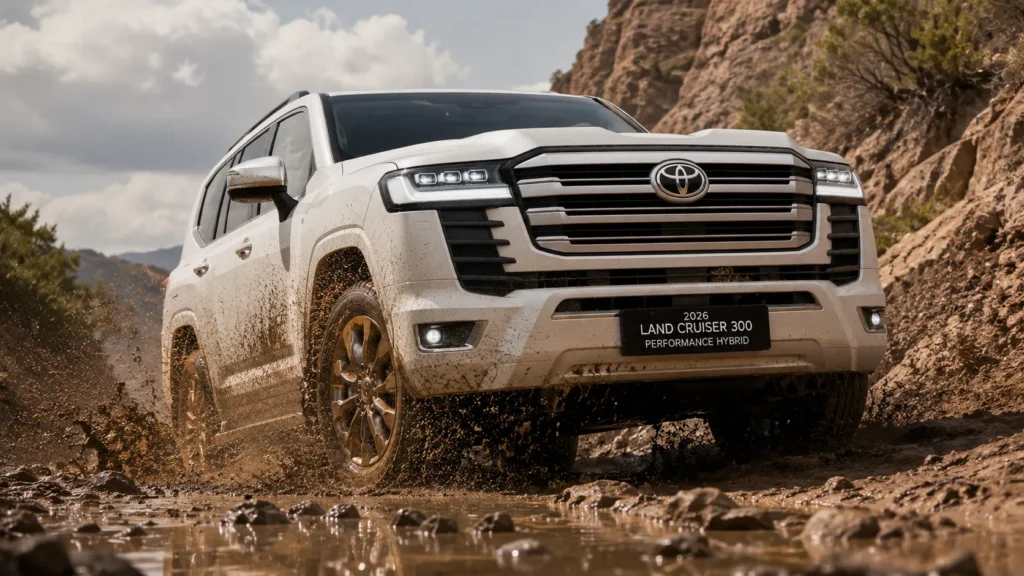
Despite the addition of high-voltage electrical components, the 2026 Toyota LandCruiser 300 Performance Hybrid retains the same 700mm wading depth as its diesel counterparts. This is a critical capability for serious off-roaders who regularly encounter river crossings and flooded trails, and it demonstrates Toyota’s commitment to maintaining the LandCruiser’s legendary capability in all conditions.
The 1.8kWh nickel-metal hydride battery pack is housed in a completely sealed, waterproof tray that protects it from water ingress during deep wading. Toyota engineers have gone to extraordinary lengths to ensure that the electrical systems can withstand the punishment that LandCruiser owners routinely subject their vehicles to. The battery is also surrounded by high-strength steel to protect it from impacts, ensuring long-term durability even in the most demanding conditions.
Ground clearance is trimmed slightly to 231mm – a mere 1mm loss compared to the diesel. This negligible difference means the Performance Hybrid tackles rough terrain with the same confidence as its conventionally-powered sibling. The approach and departure angles remain unchanged at 24 degrees, while the ramp breakover angle sits at 21 degrees. These figures ensure the 2026 Toyota Land Cruiser 300 Hybrid is just as capable off-road as the diesel variants, with no meaningful compromises in its ability to tackle challenging terrain.
| Off-Road Dimensions | |
| Ground Clearance | 231mm |
| Wading Depth | 700mm |
7. Heavy-Duty Towing Capacity Metrics Maintained
Perhaps the most critical metric for many LandCruiser buyers is towing capacity, and Toyota has ensured that the 2026 Toyota Land Cruiser 300 Hybrid delivers exactly the same braked towing capacity as the diesel: 3,500kg. This is no small feat and demonstrates the engineering excellence that has gone into the Performance Hybrid, ensuring that it remains a practical choice for those who need serious towing capability.
The additional weight of the hybrid system (115kg more than the diesel) could have compromised the vehicle’s towing capability, but Toyota has reinforced the chassis and cooling systems to maintain this crucial figure. The structural reinforcements ensure that the hybrid can handle the same loads as the diesel without any compromise in safety or capability, providing peace of mind for those who regularly tow heavy loads.
The 2026 Toyota Land Cruiser 300 Performance Hybrid review confirms that the vehicle retains its full 3,500kg braked towing capacity, making it just as capable of hauling large caravans and horse floats as the diesel. The extra torque from the hybrid system actually makes towing more effortless, with the electric motor providing additional grunt when pulling away from a standstill. This is a significant advantage for those who regularly tow heavy loads, making the hybrid a compelling choice for towing enthusiasts.
| Capacity & Towing | |
| Boot Capacity | 910L |
| Fuel Tank | 98L |
| Weight | 2715kg |
| Braked Towing | 3500kg |
| GVM | 3380kg |
| GCM | 6750kg |
8. Off-Road Mastery via the Advanced e-KDSS Suspension System
The GR Sport variant of the 2026 Toyota Land Cruiser 300 Hybrid benefits from Toyota’s advanced e-KDSS (Kinetic Dynamic Suspension System) electronic control. This sophisticated system automatically disconnects the front and rear stabiliser bars when off-road, allowing for maximum wheel articulation to keep all four wheels planted on uneven terrain. This technology represents a significant step forward in premium off-road capability.
In practice, this means the GR Sport can tackle technical obstacles with confidence, maintaining traction where lesser vehicles would have a wheel hanging in the air. The electronic control system is far more sophisticated than the hydraulic KDSS system found in previous LandCruisers, responding to terrain changes in milliseconds and providing unparalleled off-road capability. The system’s rapid processing ensures that wheel travel is maximised exactly when it’s needed most.
The Sahara ZX, meanwhile, features a Torsen limited-slip differential on the rear axle that provides excellent traction in slippery conditions without the complexity of a locking differential. Both variants retain the full-time four-wheel-drive system with low-range gearing, ensuring that the 2026 LandCruiser 300 GR Sport Hybrid specs include genuine off-road credentials that meet the expectations of serious off-road enthusiasts.
- Permanent 4WD with low-range transfer case; Locking centre diff & rear Torsen LSD; 3,500kg towing.
- Ground clearance trimmed by 1mm down to 231mm; Overly sensitive off-road proximity sensors.
9. Multi-Terrain Select Operations and Under-Floor Electronic Assists
Both hybrid variants come equipped with Toyota’s Multi-Terrain Select system, offering five modes that optimise the vehicle’s response to different surfaces. From Auto, Dirt, Sand, Mud, and Rock configurations, the 2026 Toyota Land Cruiser 300 Performance Hybrid review confirms that the system works brilliantly to deliver maximum traction in any condition, adapting the vehicle’s behaviour to suit the terrain.
The Crawl Control system effectively acts as a low-speed off-road cruise control, maintaining a set speed while the vehicle manages throttle and braking to navigate tricky obstacles. This is particularly useful when tackling steep descents or crossing rocky terrain, where it allows the driver to focus entirely on steering. The system takes the stress out of technical off-road driving, making it more accessible to less experienced drivers.
The Multi-Terrain Monitor provides a surround-view camera display that helps drivers place their wheels precisely, avoiding obstacles and choosing the best line. This is especially valuable given the size of the 300 Series, as it removes the guesswork from tight off-road manoeuvres. The system provides a clear view of the vehicle’s surroundings, making technical off-road driving far less stressful and more enjoyable.
10. The Fuel Economy Reality Check vs Diesel Counterparts
Here’s the elephant in the room that every buyer must confront: the Performance Hybrid is actually thirstier than the diesel. The claimed combined fuel consumption is 10.0L/100km – significantly higher than the diesel’s 8.9L/100km. This is the inevitable trade-off for the additional performance on offer and must be carefully considered by potential buyers.
In urban driving, the discrepancy is even more pronounced and potentially painful for those who do significant city driving. The hybrid’s urban cycle efficiency sits at a staggering 15.7L/100km – 2.6L/100km above that of the diesel. This means that if you do mostly city driving, you’ll be visiting the bowser far more often than you would with the diesel, and your running costs will be substantially higher over time.
It’s important to remember that this is a “Performance Hybrid,” which means the electrical assistance prioritises improved performance on and off-road, rather than trying to save fuel. The Toyota Land Cruiser 300 Hybrid vs Diesel fuel economy comparison makes it crystal clear: if you’re buying this for economy, you’ve fundamentally missed the point of what this vehicle is designed to achieve. It’s built for those who prioritise driving pleasure and performance above all else. If you are looking for fuel efficiency, you might want to check out our top picks for the Best Hybrid Cars and explore the wider market of the Best SUVs available today.
- Standard 5-year unlimited km warranty; Renowned long-term resale value legacy.
- 10.0L/100km combined fuel consumption; High 15.7L/100km urban burn rate; $4,500 total 5-year service cost.
 Toyota
11. Touring Range Limitations and Downsized Fuel Tanks
The touring capability of the new 2026 Toyota Land Cruiser 300 Hybrid faces a fuel consumption penalty that is compounded by a downsized fuel tank that further compromises long-distance capability. The Performance Hybrid’s tank capacity shrinks to 98 litres – down from the diesel’s 110-litre tank. This combination of higher consumption and reduced capacity results in a significantly reduced touring range that must be considered by serious overlanders.
While the diesel can theoretically cover an impressive 1,235km on a single tank, the hybrid’s range drops to just 980km. For serious outback touring enthusiasts, this 255km reduction is a meaningful compromise that could be the difference between reaching the next fuel stop or not. It’s a sacrifice that must be carefully considered when planning remote area travel.
The range penalty is particularly significant for those planning remote area travel, where fuel stops can be hundreds of kilometres apart. The reduced range means more frequent refuelling stops and potentially carrying additional fuel, which further reduces the already limited payload capacity. This is a logistical consideration that cannot be overlooked for serious overlanding enthusiasts.
12. Premium Interior Luxury Layouts in VX and ZX Trims
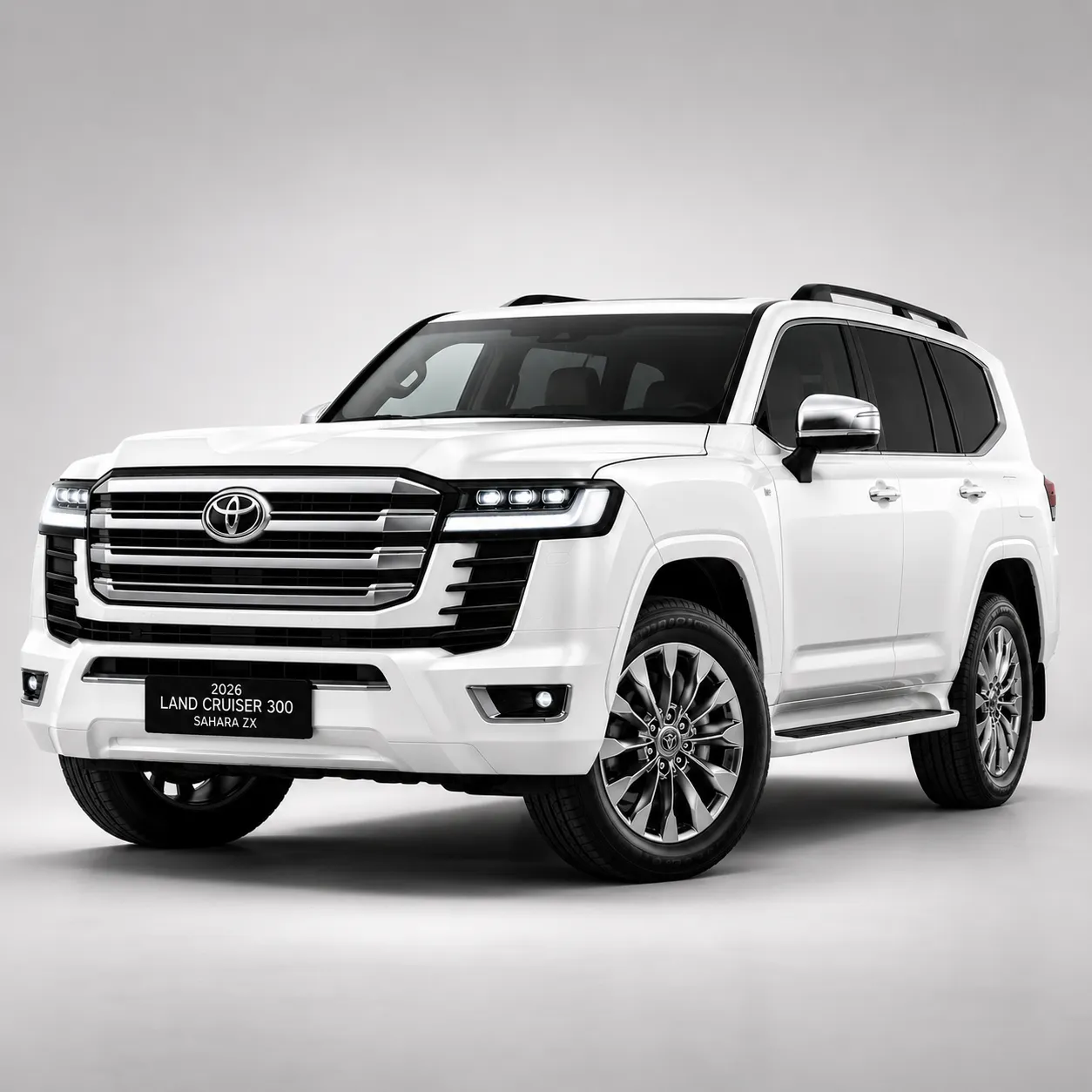
Inside, the Performance Hybrid variants mirror their diesel counterparts in spec, blending premium and rugged aesthetics in a way that somehow works despite the inherent contradictions. The seats are leather-accented, plush, and comfortable, with heating and ventilation for both front and rear outboard seats. This ensures that all occupants enjoy a premium experience regardless of where they’re seated.
- Premium leather-accented heated/ventilated seats; Dual 11.6-inch rear entertainment monitors; Massive centre coolbox.
- No 7-seat layout option; Reduced 910L boot capacity; Non-sliding tight second-row bench.
The VX and Sahara trims feature a 12.3-inch digital instrument cluster and a matching 12.3-inch infotainment touchscreen with wireless Apple CarPlay and Android Auto. The Sahara ZX adds dual 11.6-inch rear entertainment screens for passengers, ensuring that everyone on board enjoys the journey. The technology package is comprehensive and delivers a modern driving experience that meets contemporary expectations.
However, there are significant compromises that buyers must accept. The hybrid battery placement means no third-row seats – a meaningful limitation for families who need seven seats. Whether you are comparing this to the standard options found in modern Best Family Cars or looking for the absolute pinnacle of comfort in Best Luxury Cars, the layout has its limits. The second row also lacks legroom for tall passengers, with a 185cm individual finding it tight behind their own driving position. The rear bench doesn’t slide, so there’s no way around this spatial constraint, making it a genuine consideration for taller families.
13. Concert-Like Audio Processing and Practical Cabin Power Options
The 14-speaker JBL sound system, standard on Sahara ZX, delivers concert-like audio processing that rivals dedicated luxury vehicles. The system is capable but not mind-blowing – perhaps the one area where the LandCruiser doesn’t quite match the premium competition’s audio offerings. However, it still provides an enjoyable listening experience for most buyers.
More practically, the 2026 Toyota Land Cruiser 300 Hybrid gains a 200V/1500W rear auxiliary power outlet capable of powering small electrical appliances. This is a genuine game-changer for camping enthusiasts, allowing you to run a portable fridge or charge devices without needing a separate generator. The utility of this feature cannot be overstated for those who enjoy extended outdoor adventures and need reliable power.
USB-C ports are provided for all rows, and there’s even a 220V three-pin plug for powering standard electrical devices. The cabin is comprehensively equipped for modern life, with ample connectivity and power options for all occupants. The combination of audio quality and practical power options makes the cabin a genuinely pleasant place to spend time on long journeys.
2026 Toyota LandCruiser 300 Performance Hybrid vs Competitors: Specs & Metrics
|
Land Cruiser 300 Hybrid
|
Nissan Patrol V8
|
Land Rover Defender
|
|
|---|---|---|---|
| Engine | 3.4L Twin-Turbo V6 Hybrid | 5.6L V8 | 3.0L Inline-6 Mild Hybrid |
| Power | High (Electric Boost) | Classic V8 Power | Balanced |
| Fuel Economy | Excellent | Very Low | Moderate |
| Off-Road | Superior (Reliability) | Good | Advanced Tech |
14. Final Choice: Selecting the Performance Hybrid or Traditional Diesel
The decision between the Performance Hybrid and the diesel ultimately comes down to priorities and intended use. If you value outright performance and refinement above all else, the hybrid is the clear winner. The instant torque, effortless overtaking, and silky-smooth drivetrain make it the most desirable 300 Series to drive by a significant margin. Ultimately, the 2026 Toyota Land Cruiser 300 Hybrid offers a driving experience that truly elevates the LandCruiser nameplate.
However, if you prioritise fuel economy, touring range, and payload capacity, the diesel remains the better choice. It’s cheaper to run, has greater range, and offers seven-seat options that the hybrid simply cannot provide. The traditional diesel also benefits from a proven track record of reliability that the new hybrid system has yet to establish, providing peace of mind for long-term ownership.
For buyers planning serious outback adventures or extended remote touring, the diesel’s superior economy and range make it the practical choice. The 2026 Toyota Land Cruiser 300 Performance Hybrid review reveals that while it’s the most desirable 300 Series to drive, the oil-burner remains the comfort pick for traditional LandCruiser buyers who value capability over outright performance. The choice ultimately depends on your specific needs and driving patterns.
Before making your final decision, we strongly recommend consulting our comprehensive Toyota Reliability Guide to understand the long-term ownership implications of both powertrains. This will help you make an informed choice that aligns with your specific needs and driving patterns, ensuring you select the vehicle that best suits your lifestyle.
Toyota LandCruiser 300 Hybrid FAQs