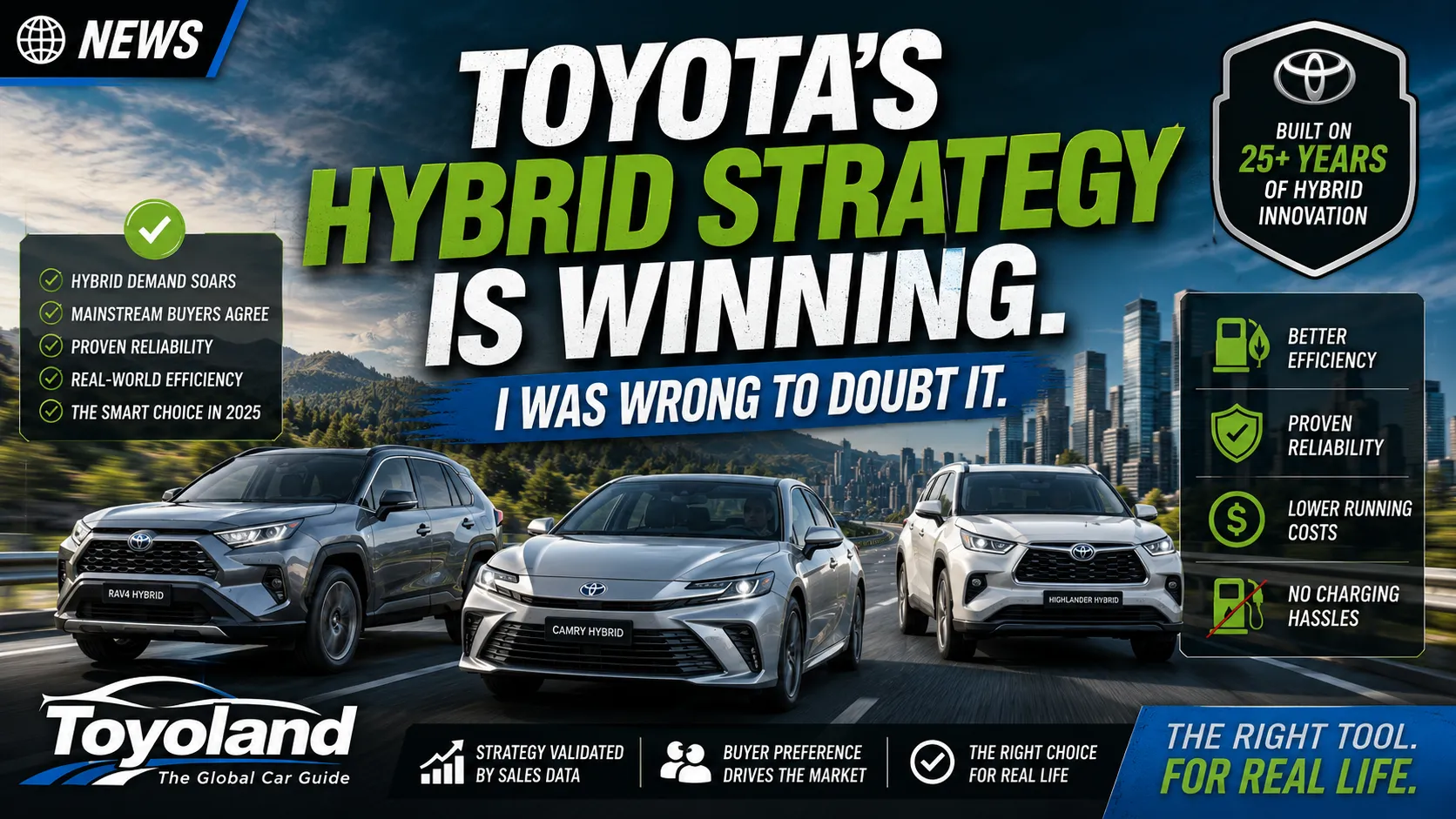

The Toyota hybrid strategy 2025 is becoming a major topic in the automotive world, proving that hybrid vehicles are here to stay.
Toyota’s hybrid-first electrification strategy is not working because Toyota got lucky. It is working because the company made a specific prediction about mainstream buyer behaviour in specific markets and that prediction has proven more accurate than the alternative narrative that nearly all of its major competitors bought into. That is worth examining properly.
What Toyota Actually Predicted
The core of Toyota’s argument was never that EVs would fail. It was that the transition from combustion engines to battery electric vehicles would take longer and follow a more complicated path than the industry consensus of 2020–2022 suggested, particularly in markets with limited charging infrastructure, large rural populations, and mainstream buyers who prioritise affordability and convenience over technology.
Japan, North America, Southeast Asia, and Australia — Toyota’s core markets — all fit that description better than the Netherlands or Norway, where EV adoption has been fastest and where much of the optimistic EV transition narrative was being written. Toyota was reading its actual customers rather than extrapolating from the markets that made EV advocates most comfortable.
The Success of Toyota Hybrid Strategy 2025
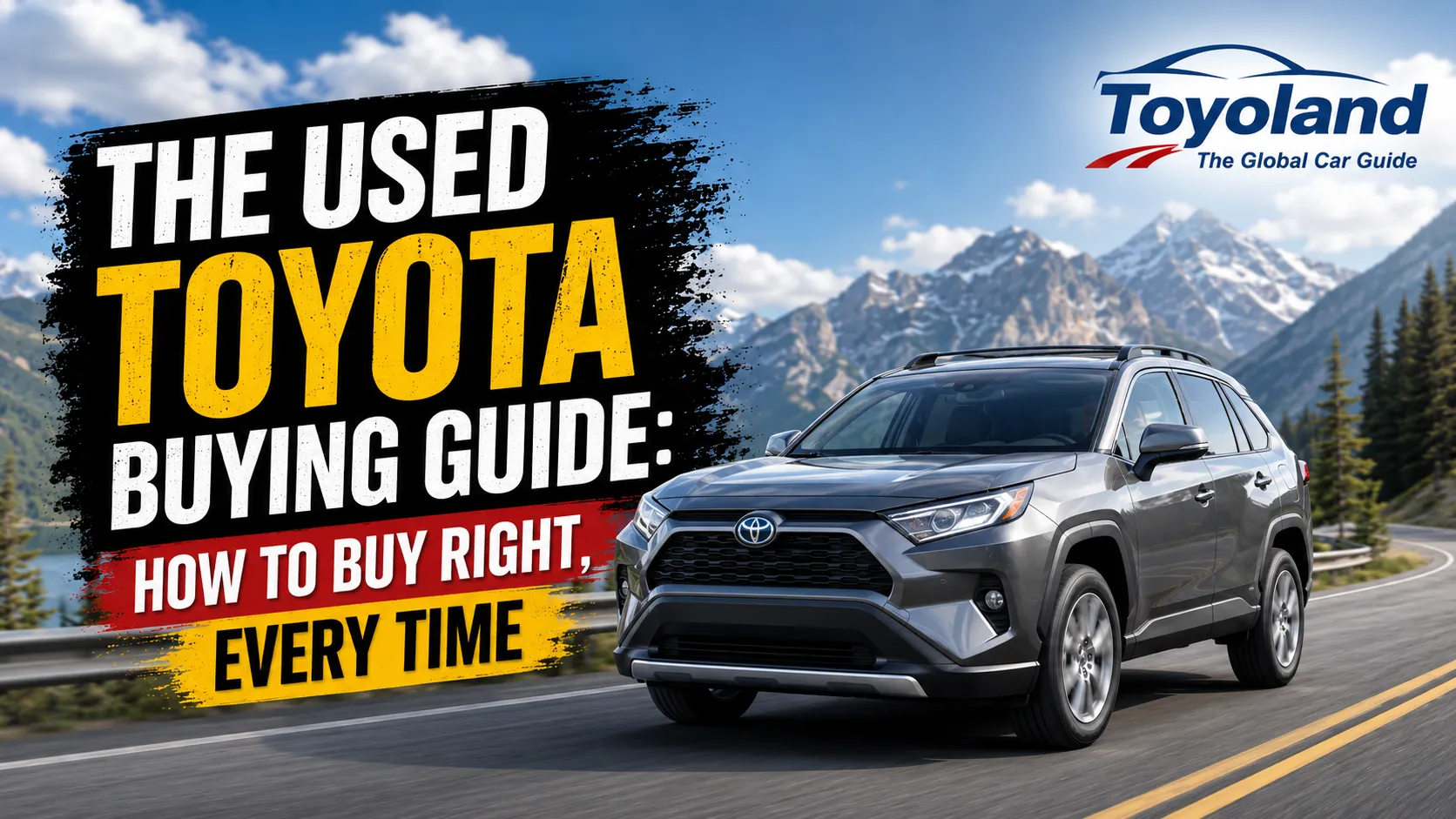
I drove a RAV4 Hybrid earlier this year and asked a Toyota dealer contact about waiting times. Months, he told me. Not because production is low — Toyota is producing RAV4 Hybrids in very large numbers — but because demand is running ahead of even expanded supply. For more updates, visit Toyota Global.
These are not niche numbers. These are mainstream product volumes reflecting genuine buyer preference in the world’s most important automotive markets. And the common thread across all of these buyers is not that they are opposed to EVs in principle — most of them are not. It is that the hybrid works for them right now, without compromise, and they are not willing to wait for EV infrastructure to catch up to their lives.
Where Toyota Has Genuinely Got It Wrong
Fairness requires saying this too. Toyota’s full battery electric vehicle development has been slower than it should have been. A manufacturer with Toyota’s engineering resources and battery chemistry expertise should have entered the BEV market more competitively than it did. As we noted in our Toyota Reliability Guide, consistency is key.
What the Competition Got Wrong
The manufacturers who committed most aggressively to EV-only futures in 2020–2022 are now managing the awkward process of rolling back those commitments. The lesson is not that EVs are a failed technology. It is that predicting the pace of technology adoption in mass markets is genuinely difficult.
Final Verdict
If you are not in a situation where EV ownership is clearly practical, then a Toyota hybrid is one of the most rational vehicle choices available in 2025. I was wrong to be as skeptical of Toyota’s strategy as I was in 2021. The data has updated my view, and this is why the Toyota hybrid strategy 2025 continues to dominate the market.