
I will start with an admission. In 2021, when Toyota’s leadership made a very public case that hybrid vehicles would remain relevant for longer than the EV transition narrative suggested, I thought they were rationalising their slow battery electric development. I wrote as much, carefully hedged but essentially skeptical. Four years later, the sales data has made me reconsider that skepticism, and I think intellectual honesty requires acknowledging that publicly.
Toyota’s hybrid-first electrification strategy is not working because Toyota got lucky. It is working because the company made a specific prediction about mainstream buyer behaviour in specific markets and that prediction has proven more accurate than the alternative narrative that nearly all of its major competitors bought into. That is worth examining properly.
What Toyota Actually Predicted
The core of Toyota’s argument was never that EVs would fail. It was that the transition from combustion engines to battery electric vehicles would take longer and follow a more complicated path than the industry consensus of 2020–2022 suggested, particularly in markets with limited charging infrastructure, large rural populations, and mainstream buyers who prioritise affordability and convenience over technology.
Japan, North America, Southeast Asia, and Australia — Toyota’s core markets — all fit that description better than the Netherlands or Norway, where EV adoption has been fastest and where much of the optimistic EV transition narrative was being written. Toyota was reading its actual customers rather than extrapolating from the markets that made EV advocates most comfortable.
The Hybrid Sales Numbers Are Not Subtle
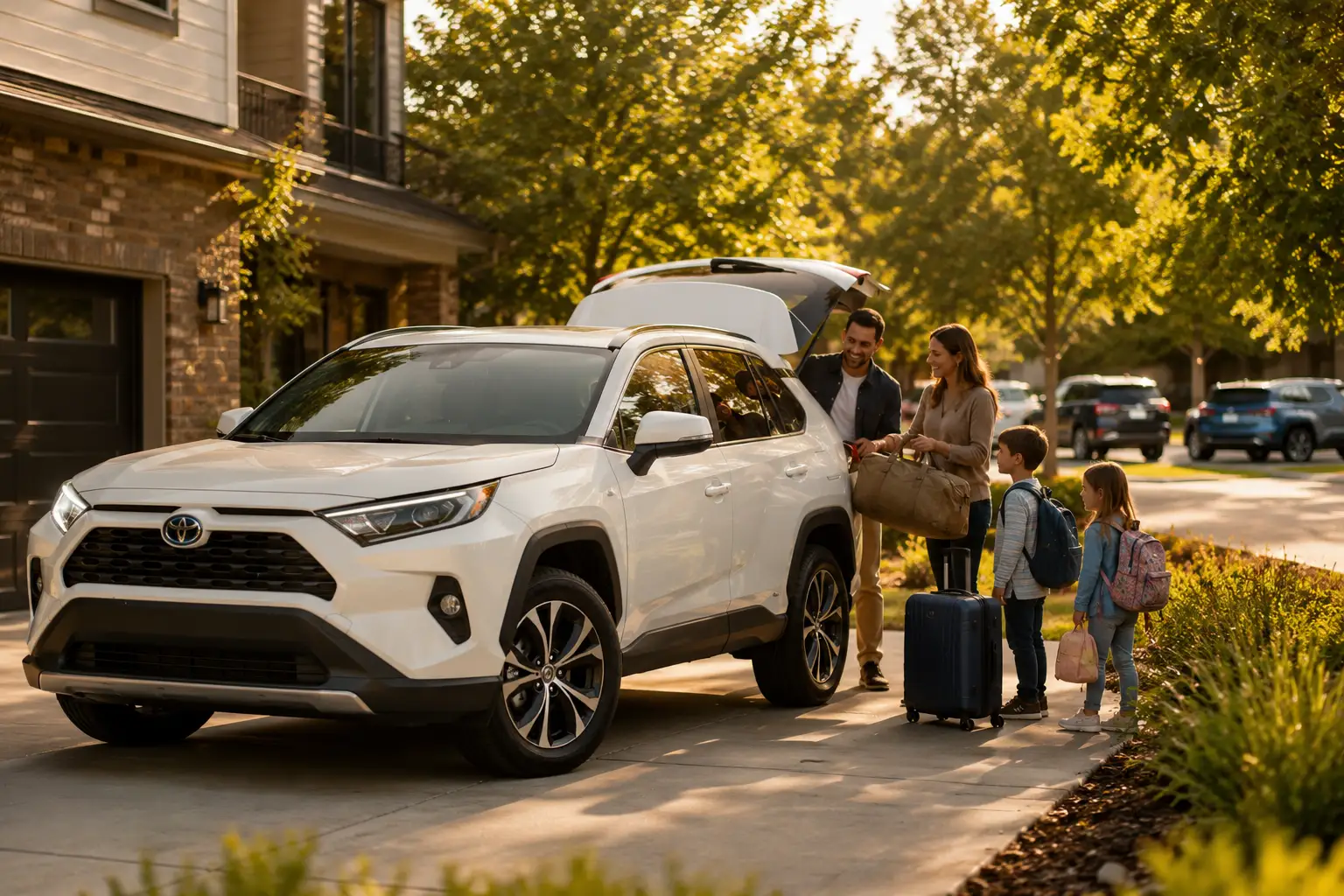
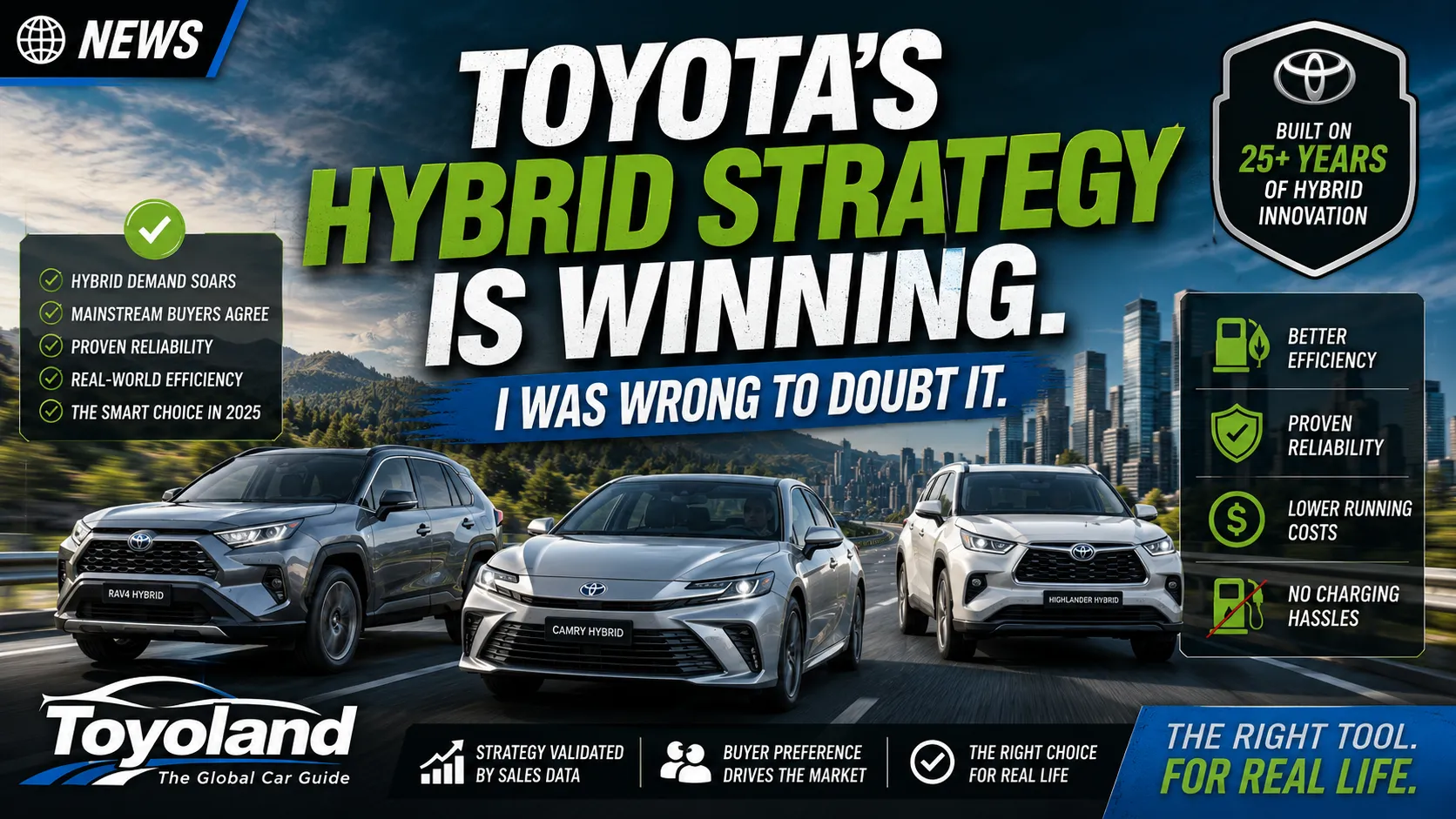
I drove a RAV4 Hybrid earlier this year and asked a Toyota dealer contact about waiting times. Months, he told me. Not because production is low — Toyota is producing RAV4 Hybrids in very large numbers — but because demand is running ahead of even expanded supply. The Camry’s move to hybrid-only in North America has been absorbed by the market without the sales decline that some analysts predicted. The Highlander Hybrid is one of the most demanded three-row SUVs in its segment.
These are not niche numbers. These are mainstream product volumes reflecting genuine buyer preference in the world’s most important automotive markets. And the common thread across all of these buyers is not that they are opposed to EVs in principle — most of them are not. It is that the hybrid works for them right now, without compromise, and they are not willing to wait for EV infrastructure to catch up to their lives.
The hybrid works for most buyers right now, without compromise. They are not willing to wait for EV infrastructure to catch up to their lives.
Where Toyota Has Genuinely Got It Wrong
Fairness requires saying this too. Toyota’s full battery electric vehicle development has been slower than it should have been, and the first-generation bZ4X had launch quality issues that were genuinely damaging to the brand’s EV credibility. A manufacturer with Toyota’s engineering resources and battery chemistry expertise should have entered the BEV market more competitively than it did.
The solid-state battery technology Toyota has been publicly developing for years is genuinely promising — the energy density and charging speed improvements that solid-state chemistry offers would address the most significant remaining barriers to mainstream EV adoption. But ‘promising’ and ‘available’ are different things, and Toyota has been talking about solid-state batteries for long enough that some skepticism about production timelines is reasonable.
The hybrid strategy is working. The BEV strategy needs to improve faster than it has. Both things are true about the same company.
What the Competition Got Wrong
The manufacturers who committed most aggressively to EV-only futures in 2020–2022 are now managing the awkward process of rolling back those commitments without appearing to have lost faith in the technology. Ford’s EV division losses have been significant. General Motors has delayed multiple electric vehicle launch timelines. Volkswagen Group is in the midst of a serious restructuring that reflects in part the demand shortfall for its EV models relative to aggressive projections.
None of these companies made bad decisions because they were incompetent. They made decisions based on a market trajectory that appeared credible in 2021 and proved more optimistic than reality. The lesson is not that EVs are a failed technology. It is that predicting the pace of technology adoption in mass markets is genuinely difficult and that the manufacturers who built flexibility into their electrification strategies are doing better than those who committed irrevocably to a single timeline.
For Buyers: What This Actually Means
If you are considering a Toyota hybrid in 2025, the strategic validation of the powertrain is an additional data point in what was already a strong argument. The hybrid system has over 25 years of real-world refinement behind it. The fuel economy advantage over petrol equivalents is meaningful and consistent. The reliability record is excellent. And the absence of any charging infrastructure requirement means the vehicle works without compromise for essentially every buyer in every location.
My honest view: if you are not in a situation where EV ownership is clearly practical — reliable home charging, predictable daily range, good local charging infrastructure for occasional long trips — then a Toyota hybrid is one of the most rational vehicle choices available in 2025. Not because it is exciting. Because it is the right tool for the majority of real-world situations that the majority of buyers face.
I was wrong to be as skeptical of Toyota’s strategy as I was in 2021. The data has updated my view. That is how this is supposed to work.