
I want to be direct about something before we get into the numbers: the European automotive industry’s response to Chinese brands has been embarrassing. Not the tariffs — those are at least an honest acknowledgement that something serious is happening. I mean the years of dismissiveness that preceded them. The briefings I sat through where senior executives from established European brands waved off BYD and NIO as local curiosities that would not travel. The confident predictions that European engineering heritage and brand equity would insulate the market.
Living and working in Milan and driving regularly through Germany, France, and the UK, I have watched this narrative collapse in real time. The Chinese brands now arriving in European showrooms are not what those executives imagined. They are genuinely competitive products — and in some specific areas, they are better than what European manufacturers are offering at the same price.
What Changed and When
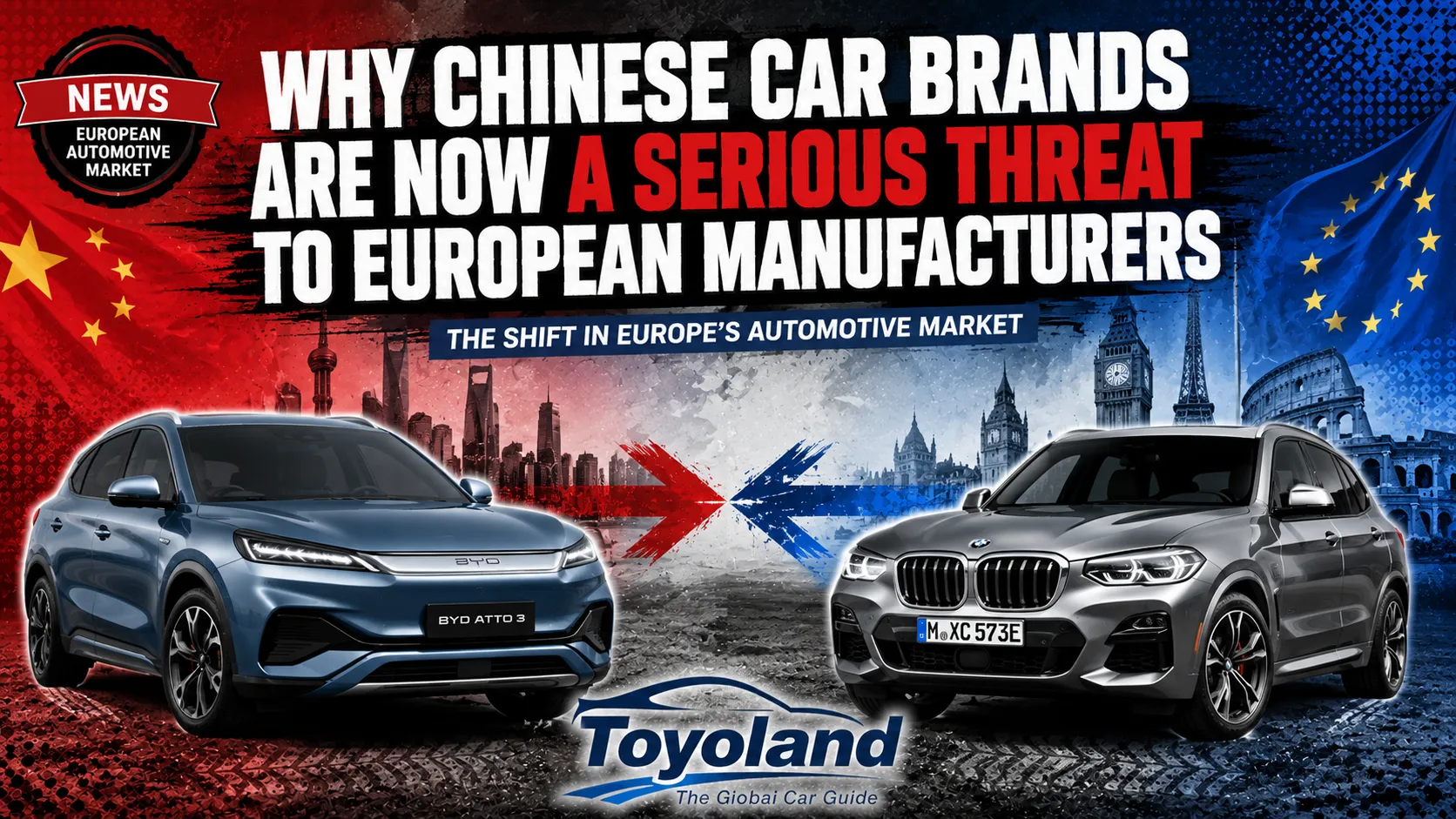
The inflection point was roughly 2022–2023, when enough Chinese-market vehicles had been refined through multiple generations to produce something that could be presented to European buyers without embarrassment. The Atto 3 I drove in late 2023 was not perfect — the infotainment had some quirks and the ride tuning clearly had not been calibrated for German Autobahn conditions. But the cabin materials were genuinely good, the EV drivetrain was smooth, and the standard feature list at its price point was difficult to argue with.
That matters because the argument European brands have historically used — that their products justify their premium through quality and refinement — gets harder to make when a Chinese alternative at 20% less money has leather seats, a panoramic roof, and a charging speed that matches the European competition.
The argument that European brands justify their premium through quality gets harder to make when a Chinese alternative costs 20% less and comes with leather seats standard.
The Tariff Response: Honest but Insufficient
The EU’s decision to impose additional import tariffs on Chinese EVs — ranging from 17% to 38% on top of the existing 10% duty — is a legitimate policy response to what Brussels characterises as state-subsidised competition. I am not going to pretend the subsidy question is simple, because it is not. Chinese manufacturers have received significant state support. But so have European automotive manufacturers, in various forms, over many decades. The moral clarity here is murkier than the tariff announcement suggested.
What the tariffs have done practically is restore pricing competitiveness for European brands in the short term. What they have not done is address the underlying technology and cost structure gap. BYD is building a factory in Hungary. SAIC already has European manufacturing discussions underway. The tariff wall that currently protects European brands is a temporary measure, not a structural fix. European manufacturers have perhaps five years to close the gap before local Chinese production makes the tariffs irrelevant. That is not a long time in the automotive development cycle.
Where Chinese Brands Are Genuinely Ahead
This is the part that the European automotive press tends to underplay, and frankly it does buyers a disservice. In two specific areas, several Chinese brands are offering something that established European manufacturers are not.
The first is software and connectivity integration. The in-car software experience in current BYD and NIO vehicles — the over-the-air update capability, the voice assistant integration, the connected services — is more developed than what most European brands offer at equivalent price points. Volkswagen Group has been transparent about its struggles with software development. BMW and Mercedes are better, but the gap with Chinese competitors in software sophistication is real and acknowledged internally by people I have spoken with at European manufacturers.
The second is value specification. A BYD Atto 3 or Seal at its European price point offers a standard specification level that a comparable European brand would charge significantly more to match. Heated seats, a large touchscreen, a good sound system, and comprehensive safety technology are not optional extras — they come as standard. This is not a gimmick. It is a fundamental difference in how the vehicle is priced and positioned.
Where European Brands Still Lead
Driving dynamics, frankly. I drove the BYD Seal on a mixed route through Bavaria and it handled the motorway sections impressively but became noticeably less confident on the more demanding Alpine roads where a BMW or Mercedes would have felt at home. The chassis tuning and steering calibration in Chinese EVs currently on the European market reflects priorities shaped by Chinese urban driving conditions, not European B-roads. This gap is closeable — and some brands are working on it specifically for European variants — but it exists now.
Driving dynamics, frankly. I drove the BYD Seal on a mixed route through Bavaria and it handled the motorway sections impressively but became noticeably less confident on the more demanding Alpine roads where a BMW or Mercedes would have felt at home. The chassis tuning and steering calibration in Chinese EVs currently on the European market reflects priorities shaped by Chinese urban driving conditions, not European B-roads. This gap is closeable — and some brands are working on it specifically for European variants — but it exists now.
What Buyers Should Actually Do
If you are currently in the market for an EV in the €30,000–€45,000 range and you live in a major European city with reasonable BYD or MG service coverage, these vehicles deserve a test drive rather than dismissal. The value proposition is real. The quality has improved substantially. And you will negotiate better on a European brand when the salesperson knows you have genuinely considered the alternative.
If you live somewhere with limited Chinese brand service infrastructure, or if your driving involves a lot of demanding rural or mountain roads, I would not push you toward an early adoption position. The established European brands still offer better chassis dynamics and better service security in those conditions.
The one thing I would not do is what too many European buyers are still doing — dismiss Chinese brands without driving them. That was the mistake the European manufacturers made for five years, and it cost them more than they have publicly acknowledged.