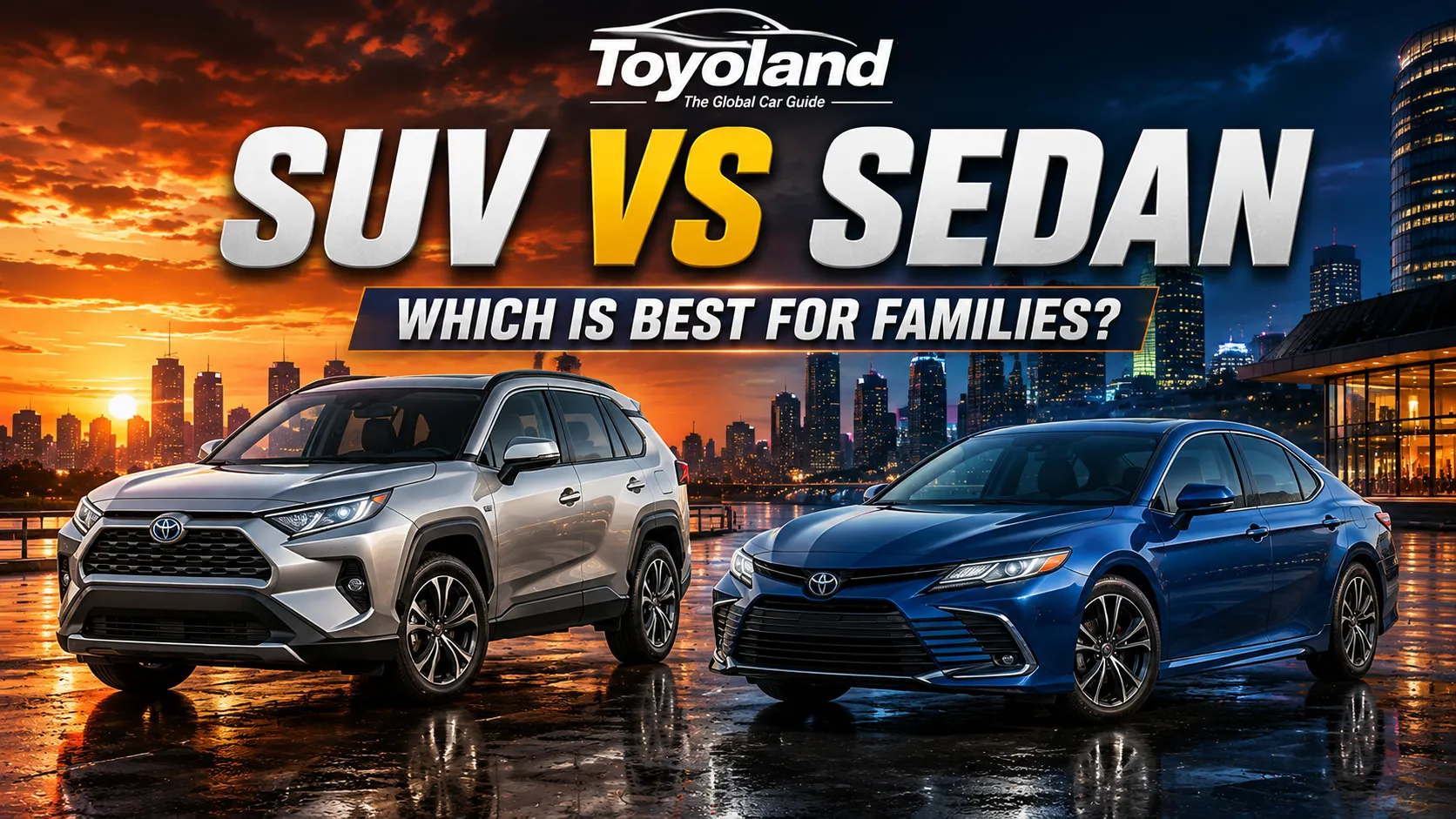

Almost every family car search I’ve ever been part of starts the same way: not with a brand, not with a budget, but with a quiet domestic disagreement. One person wants the SUV — the height, the space, the feeling of safety. The other misses how a good sedan drives, winces at the fuel bills, and suspects the whole SUV thing is fashion wearing a practicality costume. I’ve sat on both sides of that kitchen-table debate, I’ve owned both kinds of car through different seasons of life, and I’ve helped enough families work through it to know something important: there is no universally correct answer, but there is almost always a correct answer for you. This guide is about finding it — honestly, without the tribalism, and with a few truths both camps tend to leave out.
First, an honest accounting of what each does best
The case for the SUV
Start with the thing SUV owners mention before anything else, and it isn’t the boot: it’s the getting in and out. The higher hip point means you slide sideways into the seat rather than dropping down into it — a small mercy that becomes a large one with a baby carrier in your arms, a toddler who’s gone boneless in protest, or a parent with a stiff back or knees. Loading a child into a car seat at waist height instead of crouching to sedan level, several times a day, for years: this alone sells more SUVs than any brochure ever has, and it’s a completely legitimate reason.
Then comes the space, and specifically the shape of the space. Sedan boots can be large on paper, but they’re accessed through a letterbox and interrupted by hinges. An SUV’s tall, square load bay with a wide hatch swallows the awkward cargo of family life — the pram that folds but never quite small enough, the balance bike, the flat-pack furniture — without the three-dimensional puzzle solving. Add the commanding view of traffic, easier all-around visibility for many drivers, genuine advantages in snow or on rough rural roads for all-wheel-drive versions, and typically better towing ability, and the SUV’s case is strong and rational.
The case for the sedan
The sedan’s advantages are quieter but they compound every single day. Physics is the first: a lower, lighter, more aerodynamic body means better fuel economy from the same engine, more agility, shorter stopping distances, and a lower centre of gravity that makes the car feel planted where a tall SUV leans. If you enjoy driving even a little, a good sedan simply feels better down a winding road, and that pleasure doesn’t wear off.
The second advantage is money, and it appears everywhere at once. Like-for-like, the sedan version of a car is usually cheaper to buy than the SUV equivalent, cheaper to fuel, often cheaper to insure, and cheaper on tyres and brakes over the years. None of these gaps is huge alone; together, across a decade, they add up to a sum that would fund a very nice family holiday or two. The third advantage is urban life: a sedan is easier to park, easier to place in narrow lanes, and fits multi-storey spaces and tight garages that make bigger SUVs sweat. If your driving is mostly city and suburb, you’d be surprised how often the “practical” SUV is the less practical choice in practice.
The myths both sides should retire
“SUVs are automatically safer.” It’s more complicated than height. Modern sedans and SUVs both achieve superb crash-test results, and the sedan’s lower centre of gravity brings its own stability advantages while the SUV’s mass and ride height bring theirs. The honest summary: within the same generation and price bracket, choose the specific model with the best safety ratings and equipment, not the body style. A well-specified recent sedan is safer than a dated SUV, and vice versa.
“You need an SUV for a family.” Generations of families were raised in sedans and estates, and a modern midsize sedan holds two child seats and a boot full of luggage perfectly well. What you need is enough space for your family — which brings us to the questions that actually settle this.
“Sedans are what people settle for.” Walk through a premium car park: plenty of people who could buy anything choose sedans for how they drive and carry themselves. Neither body style is the compromise. The compromise is buying the wrong one for your life.
The six questions that actually decide it
Forget image, forget what the neighbours drive. Answer these honestly and your body style usually chooses itself.
- 1. How often do you carry bulky, awkward cargo? Weekly pram-and-more chaos points to the SUV’s square boot. Occasional big loads that a folded rear seat can handle point sedan.
- 2. Who gets in and out of this car? Small children in car seats, or older relatives, several times daily: the SUV’s seat height is a genuine quality-of-life upgrade. Mostly able-bodied adults: neutral.
- 3. Where do you park? Tight city spaces, narrow garage, multi-storeys: sedan, or at most a compact crossover. Driveway and supermarket car parks: either.
- 4. What are your roads and winters like? Rough rural lanes, snow, occasional trailers: SUV, ideally all-wheel drive. Paved and mild: the sedan gives up nothing.
- 5. How much do running costs matter? If fuel and insurance budgets are tight, the sedan’s everyday savings are real and permanent. If the budget absorbs them easily: neutral.
- 6. Do you actually enjoy driving? If the answer is yes and your heart sank slightly at the thought of a tall, soft family bus — listen to that. Resenting your car for a decade is its own cost.
The middle ground most families forget
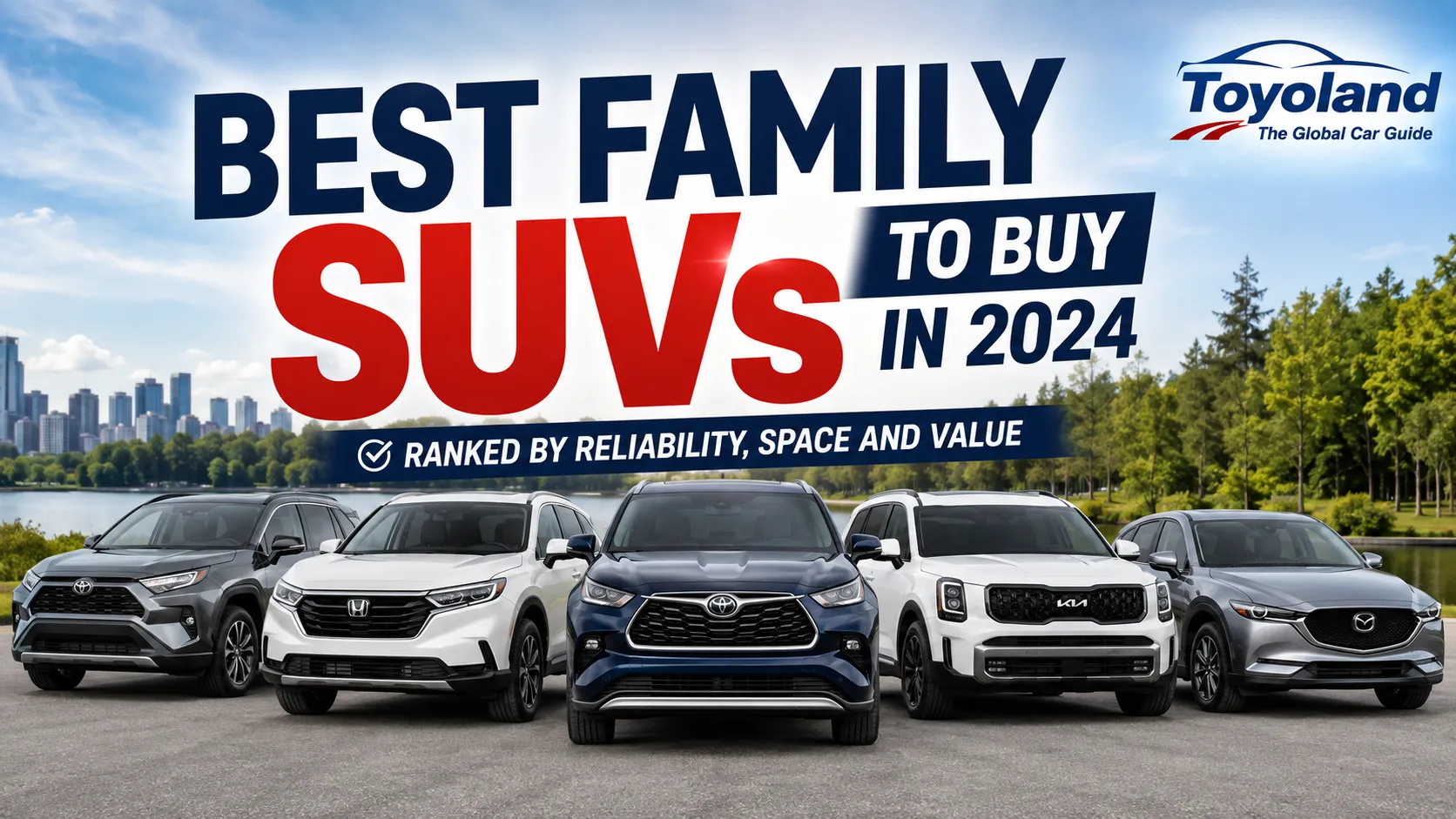
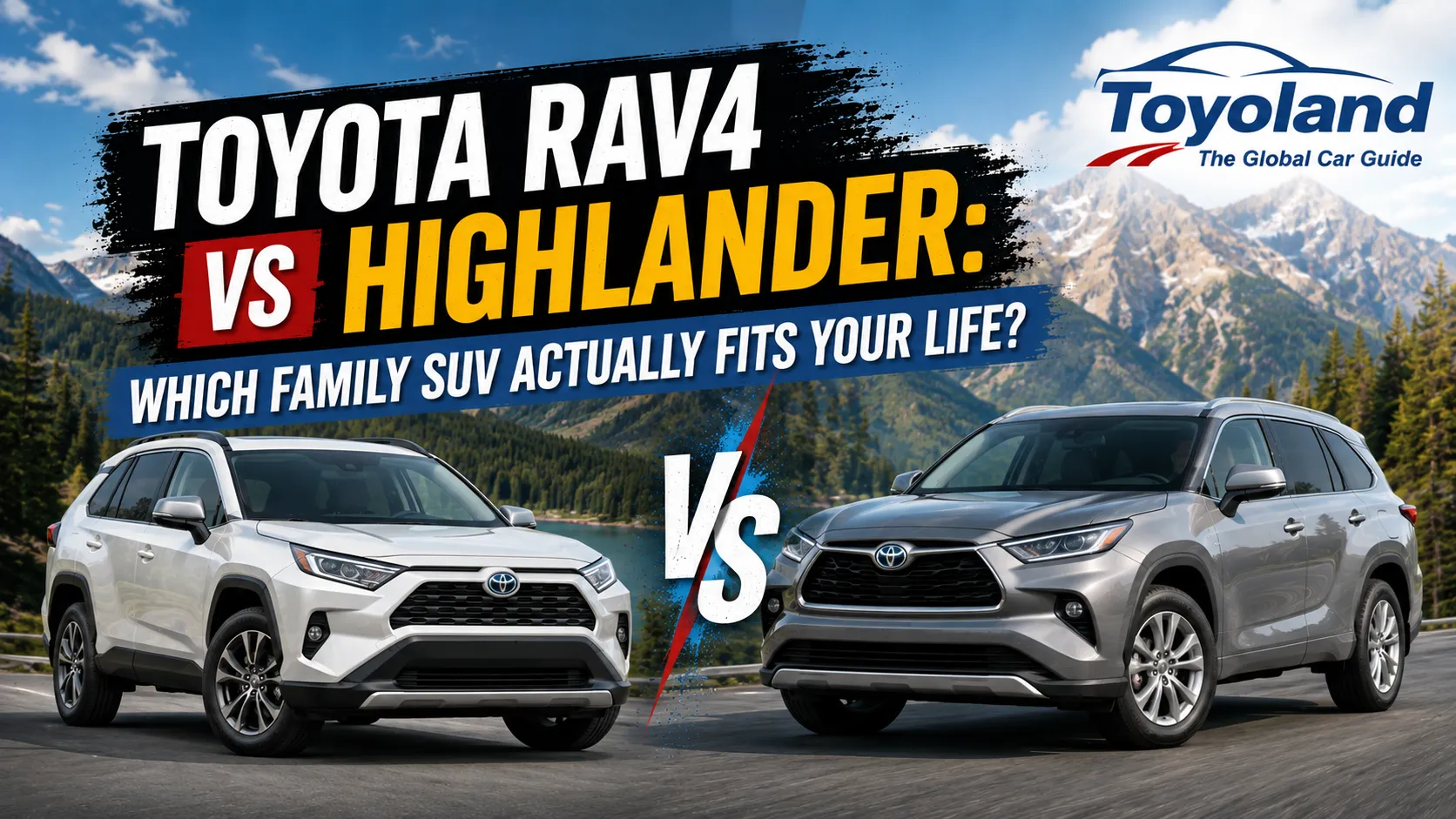
Here’s the liberating secret: this isn’t actually a binary. The market’s best-kept open secret for torn families is the space between the extremes. The compact crossover — think RAV4-sized and below — delivers most of the SUV’s seat height and boot practicality with economy and manners far closer to a sedan’s, which is precisely why the class conquered the world. And in markets lucky enough to get them, the estate car remains the connoisseur’s answer: sedan driving pleasure and economy fused with cargo space that embarrasses many SUVs. Hybrid versions of both narrow the running-cost argument further still. If the six questions above left you genuinely split, the answer is almost certainly hiding in this middle ground — you’re not torn, you’re a crossover family who hasn’t test-driven one yet.
Four real families, four right answers
Principles are useful; recognising yourself is better. Here are four composite families drawn from the many versions of this conversation I’ve hosted, each landing somewhere different — and each correctly.
The city apartment family. Two adults, one toddler, street parking, short urban journeys, one big holiday drive a year. They wanted the SUV “for the child.” What actually improved their life was a compact sedan that fits the spaces near their building, costs little to insure, and handles the annual long trip in comfort with the boot easily taking a folded travel cot. The SUV would have been a daily parking penance for a once-a-year benefit. Sedan — and they’d tell you so themselves now.
The two-car-seats-and-a-dog family. Suburban house, driveway, two children under five, a retriever, grandparents visiting weekly, all-weather school runs. Every one of their daily frictions — the car-seat crouch, the boot Tetris, grandma’s knees — is something the SUV directly solves. They bought a hybrid RAV4-class crossover and the only regret was not doing it a year earlier. SUV, without guilt.
The keen-driver compromise family. One parent genuinely loves driving; the family needs space; the budget has limits. Their answer was the middle path — a well-sorted estate in their market, though a sharper-handling compact crossover would have played the same role. The driving parent kept a car that rewards them on a good road; the family kept its luggage space. Nobody surrendered.
The rural winter family. Long unpaved driveway, real snow, a trailer for the tip runs, no tight parking anywhere in their lives. This is the scenario the SUV was built for, and pretending a sedan suits it would be ideology, not advice. All-wheel-drive SUV, next question.
Notice what decided each case: not fashion, not fear, but a plain reading of the family’s ordinary week. That’s the whole method. Find yourself in one of these households — or between two of them — and your answer is most of the way written.
How to run the decision in the real world
Once the questions above have pointed you to a body style — or to the middle — make it concrete. Shortlist two or three specific models and compare them side by side on the numbers rather than vibes; a good comparison tool makes this a ten-minute job. Get real insurance quotes for each, because the spread between similar cars can genuinely surprise. Run your annual mileage through a fuel cost calculator with each car’s real-world economy — the difference compounds impressively over five years. Then do the test that outranks every spreadsheet: take your actual family, your actual pram or sports kit, and do your actual Tuesday — the school run, the supermarket, your own parking space. The car that makes an ordinary Tuesday easier is your car. It’s rarely the one that looked best in the advert, and it’s always the one you’ll be glad you chose in year five.
My bottom line
If your family life is defined by loading — of children, of cargo, of grandparents — and your roads or winters are demanding, buy the SUV without guilt; its advantages for you are real and daily. If your life is defined by city miles, tight budgets or the simple pleasure of a car that drives well, buy the sedan with pride; you’re not settling, you’re optimising. And if you’re honestly torn, go and drive a compact hybrid crossover before you decide anything — because the most common ending to this debate, in my long experience of hosting it, is both sides of the kitchen table getting most of what they wanted all along.