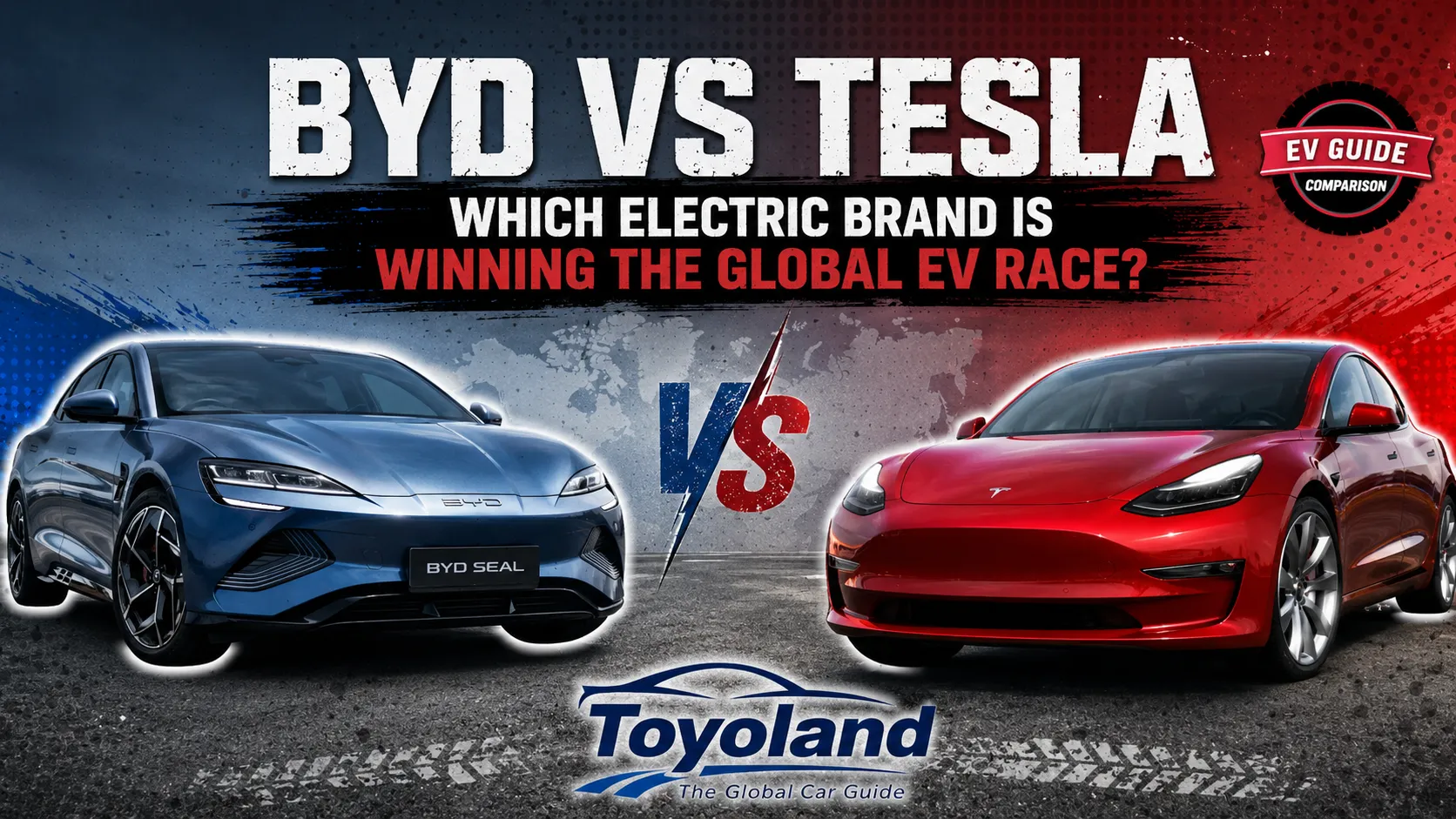

The BYD vs Tesla debate is dominating the automotive world, as these two giants compete for leadership in the global electric vehicle market. In 2023, BYD surpassed Tesla as the world’s largest seller of electric vehicles by volume, but the reality behind these numbers is far more nuanced and interesting than a simple headline suggests.
BYD vs Tesla: Strategic Differences
Tesla entered the market from the top down, focusing on software and premium positioning. In contrast, BYD began as a battery manufacturer, leveraging deep vertical integration to target affordability and volume. BYD produces its own battery cells, electric motors, and semiconductors, allowing it to control costs in a way few others can. For more industry context, visit Toyota Global.
Battery Technology and Performance
BYD’s core advantage is its Blade Battery technology. Unlike the nickel-manganese-cobalt cells used in most Tesla models, BYD’s lithium iron phosphate (LFP) chemistry is safer, more thermally stable, and cheaper to produce. While Tesla has begun using LFP chemistry in some standard range vehicles, BYD’s total control over its supply chain gives it a distinct cost advantage.
Product Quality and Market Reputation
Tesla’s early production quality was famously inconsistent, with panel gap variations generating significant owner complaints. While quality has improved at its Gigafactories, the brand still faces perception challenges. BYD’s quality perception in Western markets is still developing. Models like the Atto 3 and Seal have received positive reviews, though some critics note that infotainment systems still feel developmental compared to established European brands. As detailed in our Toyota Reliability Guide, building long-term trust is a significant hurdle for new entrants.
Geographic Strategy and Global Competition
Tesla remains a dominant global force, particularly in North America and Europe, supported by its extensive Supercharger network. BYD dominates the Chinese market and has expanded aggressively into Southeast Asia and Australia. However, BYD faces significant headwinds in Europe due to import tariffs on Chinese-made EVs introduced in 2024, which have significantly increased the cost of its vehicles.
Which Brand Should You Consider?
Choosing between the BYD vs Tesla competition depends on your specific needs:
- Consider Tesla if: You rely on long-distance travel and need the reliability of the Supercharger network, or if you prioritize top-tier software and tech-first features.
- Consider BYD if: Value for money is your primary concern, your daily driving fits within standard ranges, and you want modern EV technology at a more accessible price point.
The Final Verdict
In terms of raw sales volume, BYD is currently winning the global EV race. However, Tesla maintains a clear lead in premium brand perception and infrastructure. As the market evolves, both strategies are proving to be coherent, and there is ample space for both to succeed. Ultimately, the BYD vs Tesla rivalry is pushing the entire industry to innovate faster, which is a win for all car buyers.