
Toyota has spent the better part of sixty years building a reputation most carmakers would trade almost anything for: the quiet assumption that if you buy one, it simply won’t let you down. Ask a taxi driver, a fleet manager, or the mechanic at the end of your street which brand gives them the least trouble, and you’ll hear the same name more often than any other. But “Toyotas are reliable” is a lazy generalisation, and after two decades of driving these cars, owning several, and helping friends and readers buy dozens more, I can tell you the real picture is more interesting than the slogan. Some Toyotas are near-immortal. Others are merely very good. A few have quirks worth knowing about before you hand over your money. This guide walks through the range model by model, the way I’d explain it to a friend across the bonnet of a used example we were inspecting together.
What “reliable” actually means when you’re the one paying
Before we rank anything, it’s worth agreeing on what we’re measuring, because reliability isn’t a single number. In my experience it comes down to three questions. First: how often does something go wrong? Second: when it does go wrong, how much does it cost to put right? Third: how long does the car keep doing its job before it feels tired, dated, or uneconomical to maintain? A car that never strands you but nickel-and-dimes you with small repairs isn’t truly reliable. Neither is one that runs sweetly for eight years and then needs a repair worth more than the car.
Toyota’s genius — and I don’t use the word lightly — is that it usually wins on all three counts at once. The company’s engineering culture famously favours proven solutions over novel ones. Where rivals rush new technology to market to win headlines, Toyota tends to introduce it a generation later, after the wrinkles have been ironed out. That conservatism used to be criticised as boring. Owners doing 150,000 trouble-free miles rarely complain about boring.
The longevity champions
Toyota Corolla: the benchmark for the entire industry
If reliability were a religion, the Corolla would be its founding text. It has been the world’s best-selling nameplate for a reason that has nothing to do with glamour: the thing simply refuses to die. The engines are conservative, understressed designs. The transmissions — whether manual, automatic, or the hybrid system — are proven across millions of units. Parts are cheap and available everywhere on earth, and any mechanic who has ever held a spanner knows their way around one.
In practical terms, a maintained Corolla reaching 200,000 miles is unremarkable. I’ve personally seen examples pass 250,000 miles still starting on the first turn of the key on cold mornings, and well-documented cases go far beyond that. What usually ends a Corolla’s life isn’t the drivetrain. It’s rust, accident damage, or an owner simply deciding they fancy something newer. If your priority is the lowest-stress ownership experience money can buy, this is where the conversation starts and, for many people, where it should end.
Toyota Camry: the same virtues in a bigger suit
The Camry takes everything that makes the Corolla great and adds space, refinement, and motorway composure. It has been the default family sedan across huge parts of the world for decades, and the used market prices reflect how slowly these cars wear out. The four-cylinder engines are famously durable, and the hybrid version deserves special mention: the same core hybrid architecture Toyota has been refining since the late 1990s, in a state of tune that barely breaks a sweat.
High-mileage Camrys are so common that 150,000 miles barely dents their value if the service history is intact. For anyone covering serious annual distances — sales reps, airport runs, long family commutes — a Camry is one of the smartest per-mile purchases in motoring.
Toyota Land Cruiser: engineered for places without roads
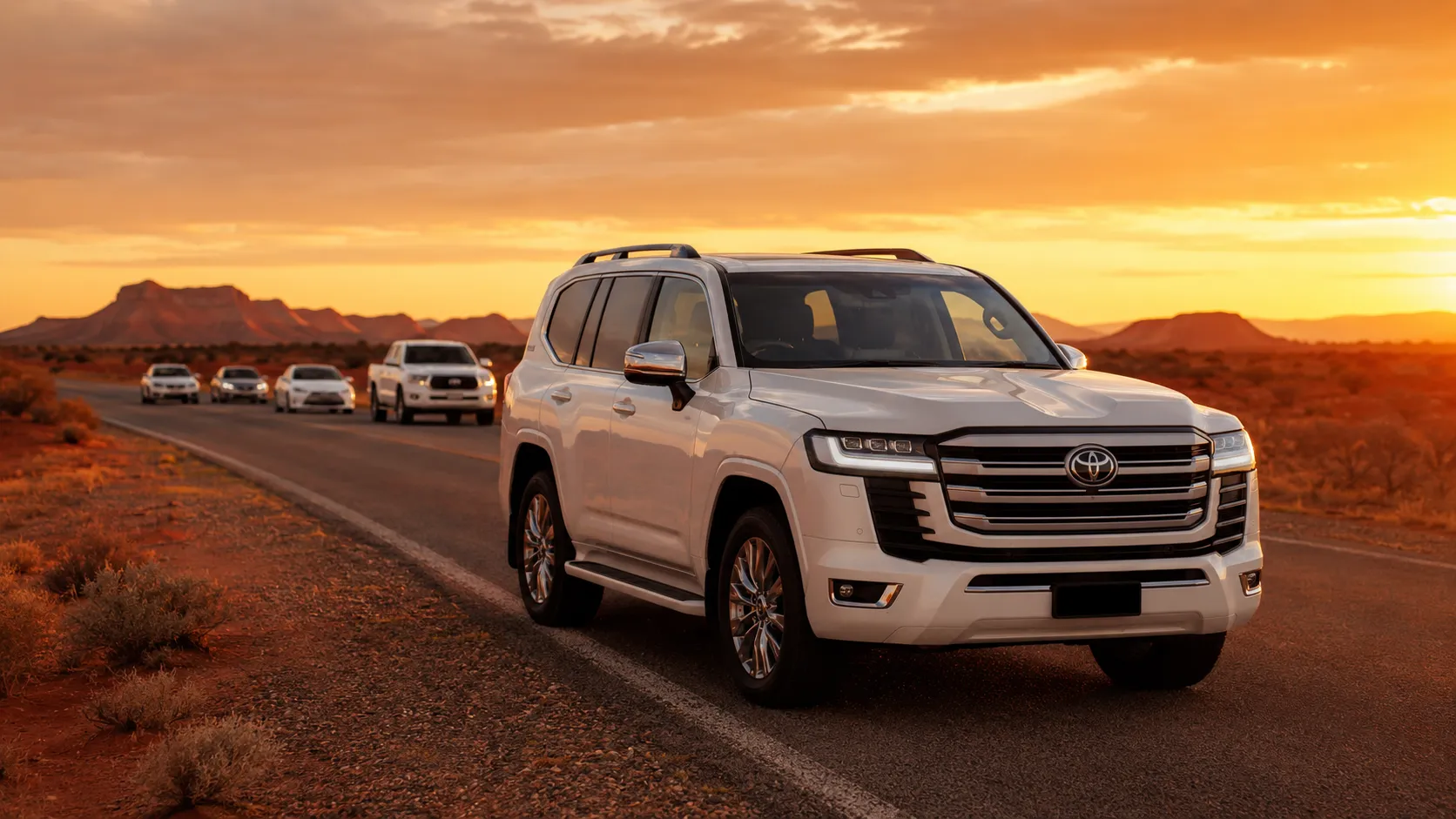
The Land Cruiser sits in a category of its own, and not just within Toyota. This is a vehicle developed for environments where a breakdown isn’t an inconvenience but a genuine danger — the Australian outback, African aid routes, Middle Eastern deserts. Every component is specified with a margin that borders on paranoia, which is exactly why used examples with 200,000 miles on them still command prices that make newcomers double-check the listing.
If anything, the Land Cruiser is over-engineered for suburban life. You pay for that robustness at the pump and at purchase. But if your definition of reliability includes “will still be working in twenty-five years,” nothing else in the mainstream market comes close. The newest hybrid-assisted versions add efficiency without, so far, compromising the fundamental toughness the badge is built on.
Toyota RAV4: durability for the crossover generation
The RAV4 effectively invented the compact crossover class, and it brought Toyota’s durability culture with it. Modern RAV4s — particularly the hybrid, which now accounts for a huge share of sales — have proven impressively robust. The hybrid system is the same fundamentally simple, chain-of-proof design used across the range: no turbocharger working overtime, no complicated dual-clutch transmission, just an understressed petrol engine and electric motors sharing the load.
The RAV4’s real-world reputation among owners is excellent, and its resale values are consistently among the strongest in the class — the used market’s way of telling you these cars don’t develop expensive problems. For families who want SUV practicality with Corolla-grade dependability, this is the sensible heart of the range.
Toyota Prius: the hybrid that proved the point
The Prius deserves its place here because it settled an argument. When hybrids arrived, sceptics predicted batteries failing at five years and repair bills that would erase any fuel savings. Hundreds of thousands of high-mileage examples later — many of them taxis that live the hardest life a car can live — the verdict is in. The hybrid system has proven to be one of the most reliable drivetrains ever mass-produced, full stop. Taxi Priuses routinely pass 300,000 miles on original batteries. If you’ve been avoiding hybrids out of battery anxiety, the Prius is the two-decade experiment that should put your mind at rest.
Toyota Hilux and the pickup family
No Toyota reliability guide is complete without the Hilux, a truck so famously indestructible that a certain television programme once tried and failed to kill one on camera. Like the Land Cruiser, it’s built for working environments where failure isn’t an option, and it holds its value accordingly. If your needs run to load-lugging rather than school runs, the same engineering philosophy applies: simple, proven, over-specified.
The honest caveats: where Toyota is merely good
I’d be doing you a disservice if I pretended the whole range walks on water. A few honest observations from years of watching these cars age. First, specific model years matter more than badges. Every manufacturer, Toyota included, has the occasional engine variant or gearbox pairing that proves weaker than the family average, and a smart buyer researches the exact year and drivetrain they’re considering rather than trusting the brand alone. Owner forums and recall databases are your friends here, and twenty minutes of reading can save you from the one below-average example in an otherwise excellent range.
Second, complexity is creeping in everywhere, and Toyota isn’t immune. Modern cars carry more screens, sensors, and driver-assistance hardware than ever, and electronics age differently from mechanicals. The drivetrains remain superb; the gadgets are simply a newer variable with a shorter track record. Third, rust remains the great equaliser. Toyota’s mechanical components frequently outlast the bodywork in wet, salted-road climates. When you inspect any used Toyota, spend as much time underneath it as you do in the driver’s seat.
The ownership habits that get you to 250,000 miles
Here’s the part that’s less exciting than model rankings but matters more: the highest-mileage Toyotas I’ve encountered didn’t belong to mechanical geniuses. They belonged to people who did the basics without fail.
- Service on schedule, every time. Oil changes are the single biggest factor in engine longevity — this is not negotiable, and it’s cheap insurance.
- Use quality fluids and parts. Toyota’s tolerances reward the right specification; the savings from bargain-bin parts are false economy over a decade.
- Buy on history, not mileage. A 150,000-mile car with a folder full of receipts is a better bet than an 80,000-mile car with none. Mileage tells you how far it’s travelled; history tells you how it was treated.
- Fix small things early. The rattle you ignore this month becomes the invoice you resent next year. Toyotas telegraph their needs politely — listen.
- Fight rust proactively. Wash the underside in winter climates, treat chips promptly, and inspect annually. The engine will outlive the sills if you let it.
So which Toyota lasts longest?
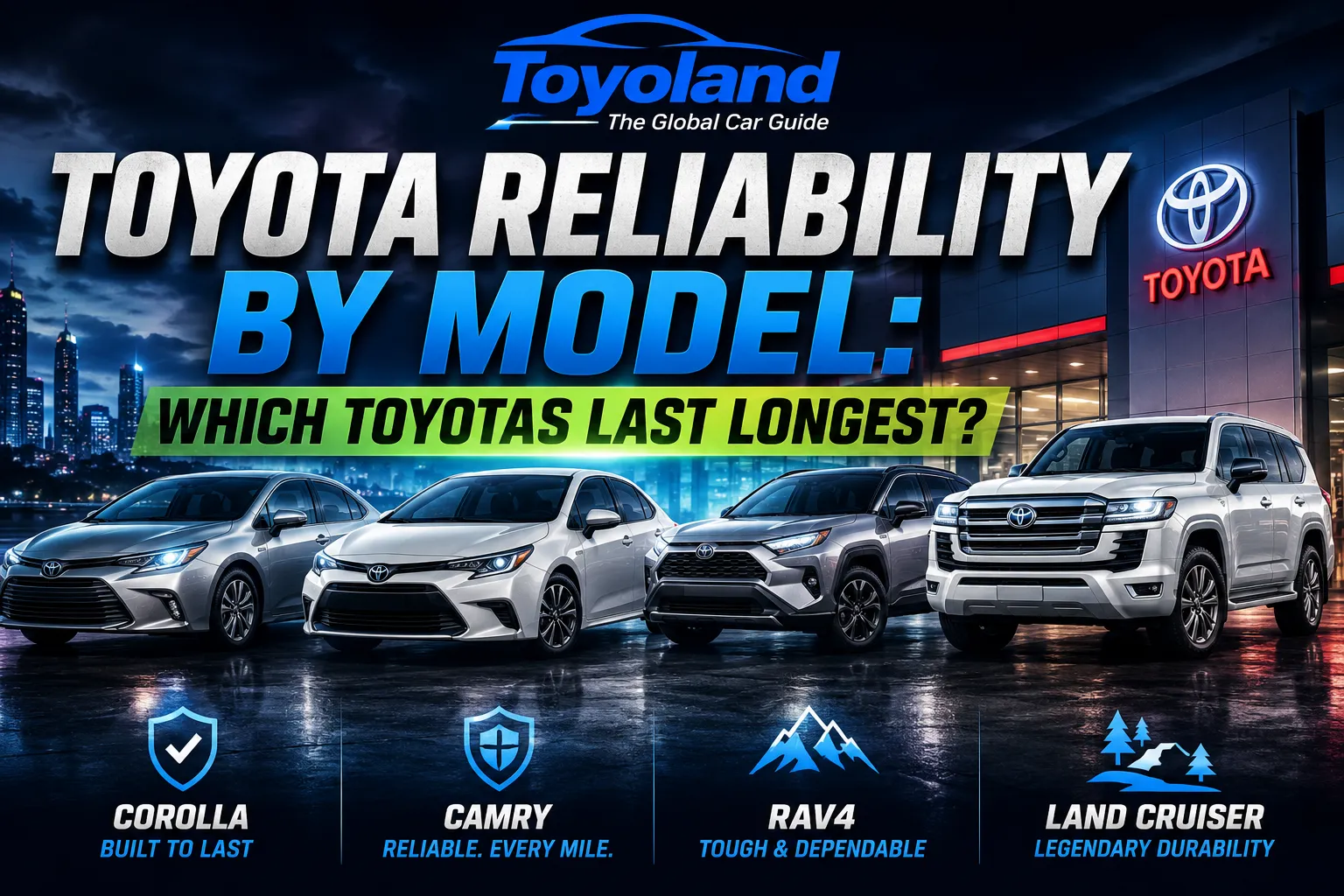
If I’m forced to a podium: the Land Cruiser stands alone for sheer engineered endurance, the Corolla and Camry are the everyday immortals that deliver the longest life per pound spent, and the Prius is the proof that Toyota’s hybrids belong in the same conversation. The RAV4 gives you nearly all of that durability in the body style most families actually want.
But the deeper truth is that within this range, you’re choosing between shades of excellent. The floor is set so unusually high that the honest advice isn’t “pick the reliable one” — it’s “pick the one that fits your life, then maintain it properly.” Do that, and the badge will hold up its end of the bargain. It has been doing exactly that, for millions of owners, for longer than most of us have been driving.
How Toyota compares with its rivals
It’s reasonable to ask whether the Toyota halo is still deserved, because the competition hasn’t stood still. Honda remains the closest challenger, and honestly, the gap between the two at the top of the reliability tables is small enough that individual model choice matters more than the badge — a point I’ve made at length in dedicated Honda-versus-Toyota comparisons. Mazda has quietly built a superb dependability record of its own with a similar philosophy of mechanical simplicity. The Korean brands have transformed their quality over fifteen years and back it with long warranties, though their long-term, high-mileage track record is still being written in a way Toyota’s simply isn’t.
Where Toyota still separates itself is at the extremes. Ten-year-old, 150,000-mile examples of most brands become a gamble; ten-year-old Toyotas remain boringly ordinary purchases. The used market prices this in — you’ll pay more for an old Toyota than an equivalent rival, which is simultaneously annoying and the most honest reliability data that exists. Thousands of used buyers voting with their own money, year after year, is a better testimonial than any survey.
Buying a used Toyota: my quick inspection ritual
Because so much of Toyota ownership happens secondhand, here’s the short version of the ritual I run before recommending any used example — the badge earns trust, not blind faith.
- Service records first, car second. I want to see consistent oil changes and evidence someone cared. A gap of two years in the folder tells its own story.
- Cold start if possible. Toyota engines should start instantly and settle to a smooth idle even cold; anything laboured deserves questions.
- Underneath before inside. Sills, subframes, suspension mounts. Mechanical Toyota problems are rare; corrosion problems are the realistic risk, and they hide down there.
- On hybrids, a battery health check. Ten minutes at any specialist, and it converts the biggest unknown into a number.
- All the electrics, every button. Windows, cameras, screens, sensors. The drivetrain will likely outlast the gadgets, so make sure the gadgets start from a working baseline.
Follow that ritual and the famous Toyota safety margin works for you rather than being an excuse for skipping diligence. The brand’s reliability is a probability, not a guarantee — but it’s the best probability in the business, and stacking a careful purchase on top of it is how you end up with one of those quarter-million-mile stories yourself.