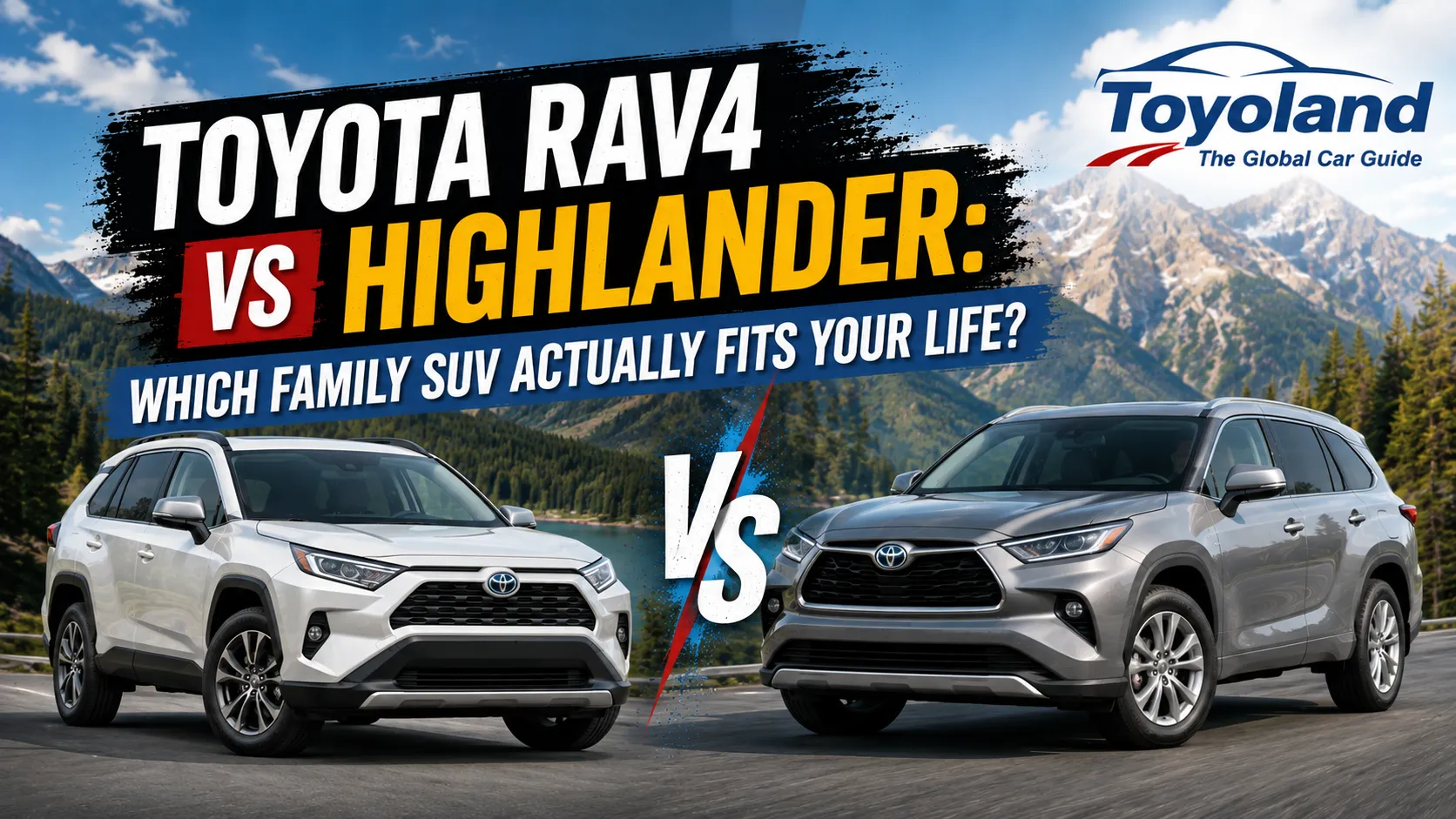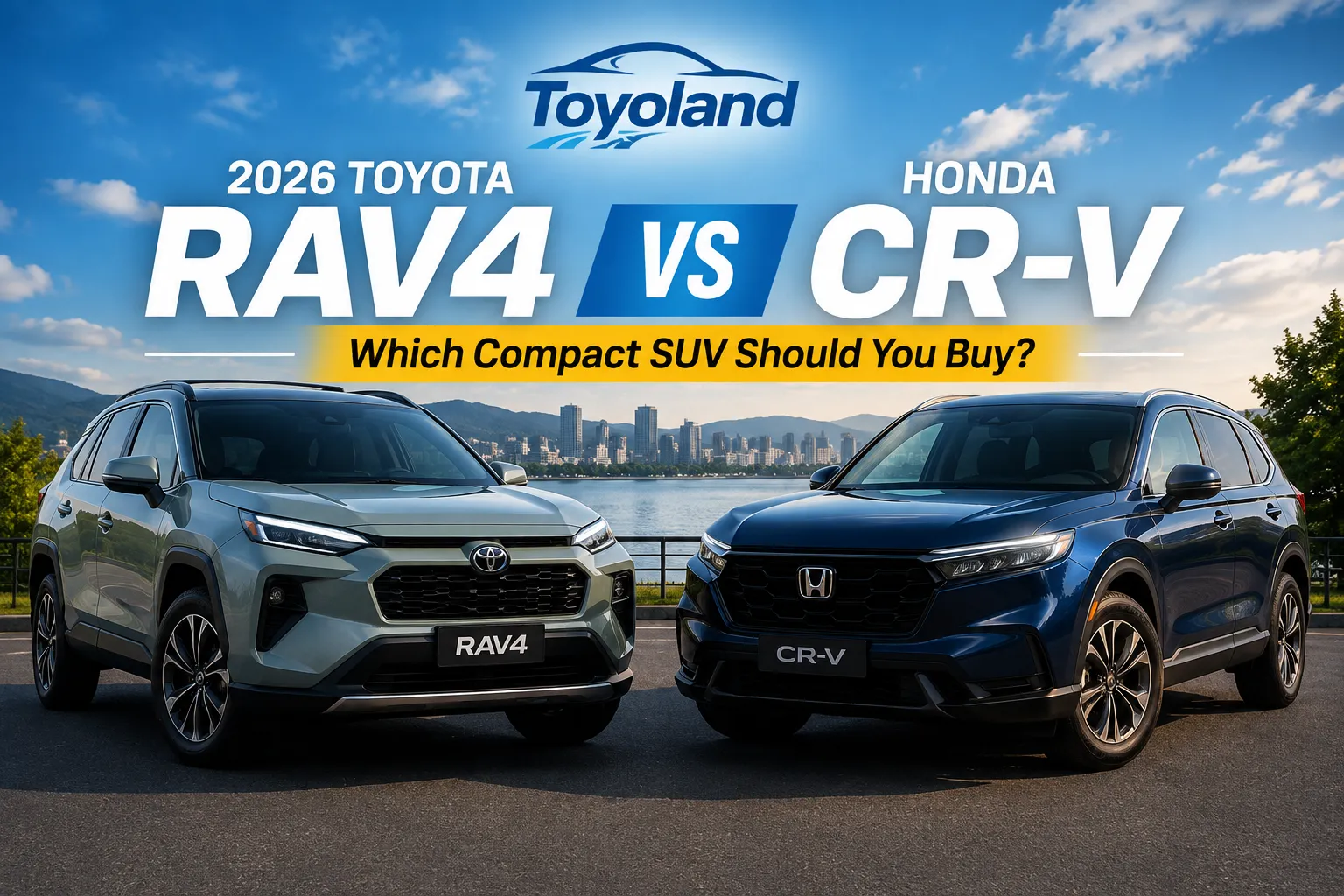
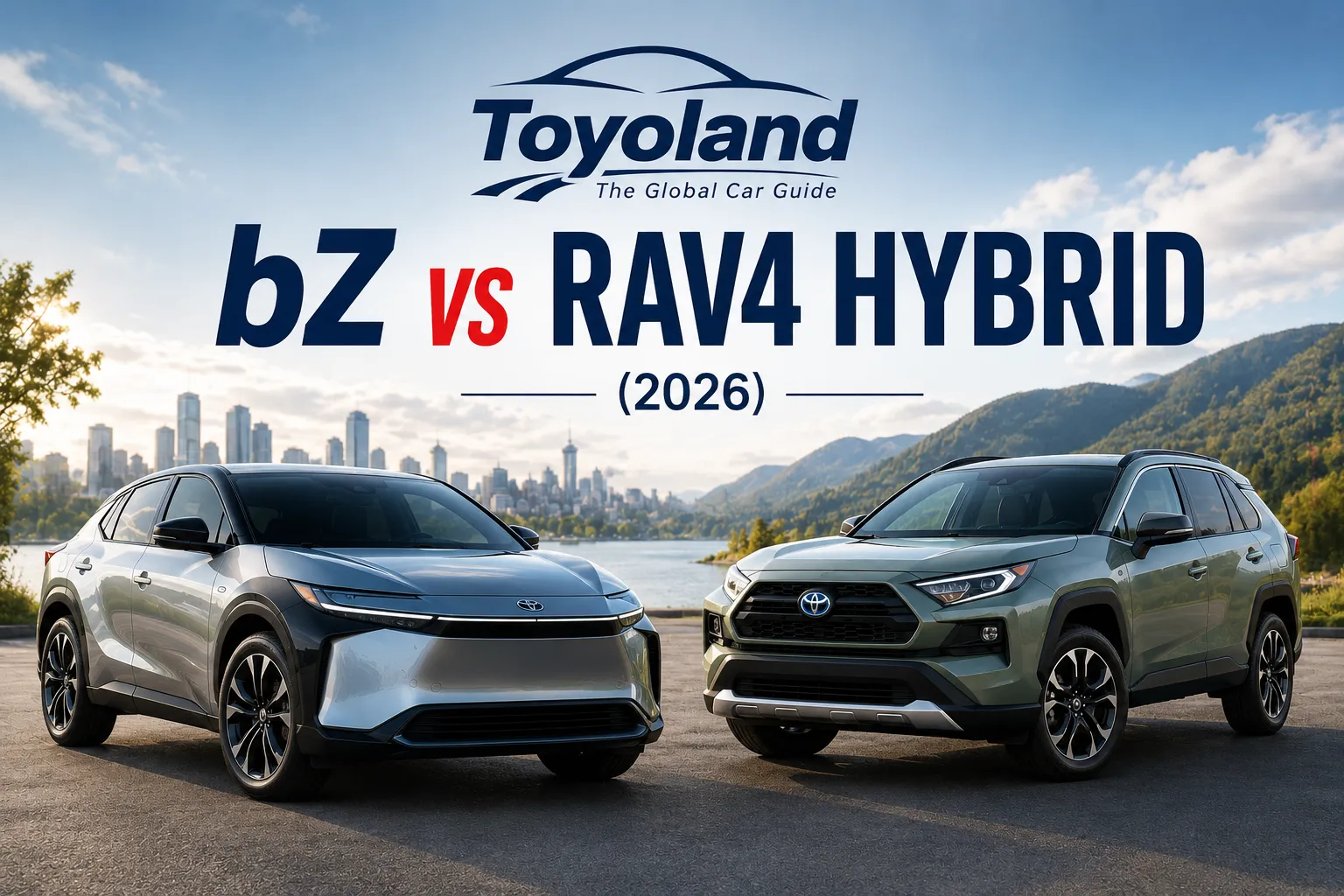

For the first time, choosing between electric and hybrid inside a Toyota showroom is a genuinely close call. The 2026 bZ — the renamed, heavily upgraded bZ4X — finally has the range and charging access to be recommended without asterisks. And the 2026 RAV4 has gone hybrid-only in its all-new sixth generation, making Toyota’s best-seller more efficient and more powerful at once. Same badge, similar size, similar money. Different answers for different lives.
This comparison is for a buyer cross-shopping exactly these two in 2026. We keep the evidence tiers explicit — Toyota/EPA/IIHS **documented** figures versus **reported** independent testing versus our **editorial** fit verdicts — and we won’t manufacture a universal winner, because there isn’t one. If you’re earlier in the decision, start with our complete guide to EVs.
The quick verdict
Choose the bZ if you can charge at home or reliably nearby, your daily driving fits comfortably inside 236–314 miles, and you want the quiet, gas-free EV experience with native Tesla Supercharger access. Choose the RAV4 Hybrid if you can’t charge dependably, you regularly drive long distances without time to stop, you want the lower entry price, or you simply want efficiency with zero behavior change. The tax-credit expiry (September 30, 2025) removed the bZ’s old $7,500 head start, which makes the RAV4 Hybrid the default value pick — the bZ now has to win on lifestyle fit and running costs, and for the right household it still does.
 Toyota
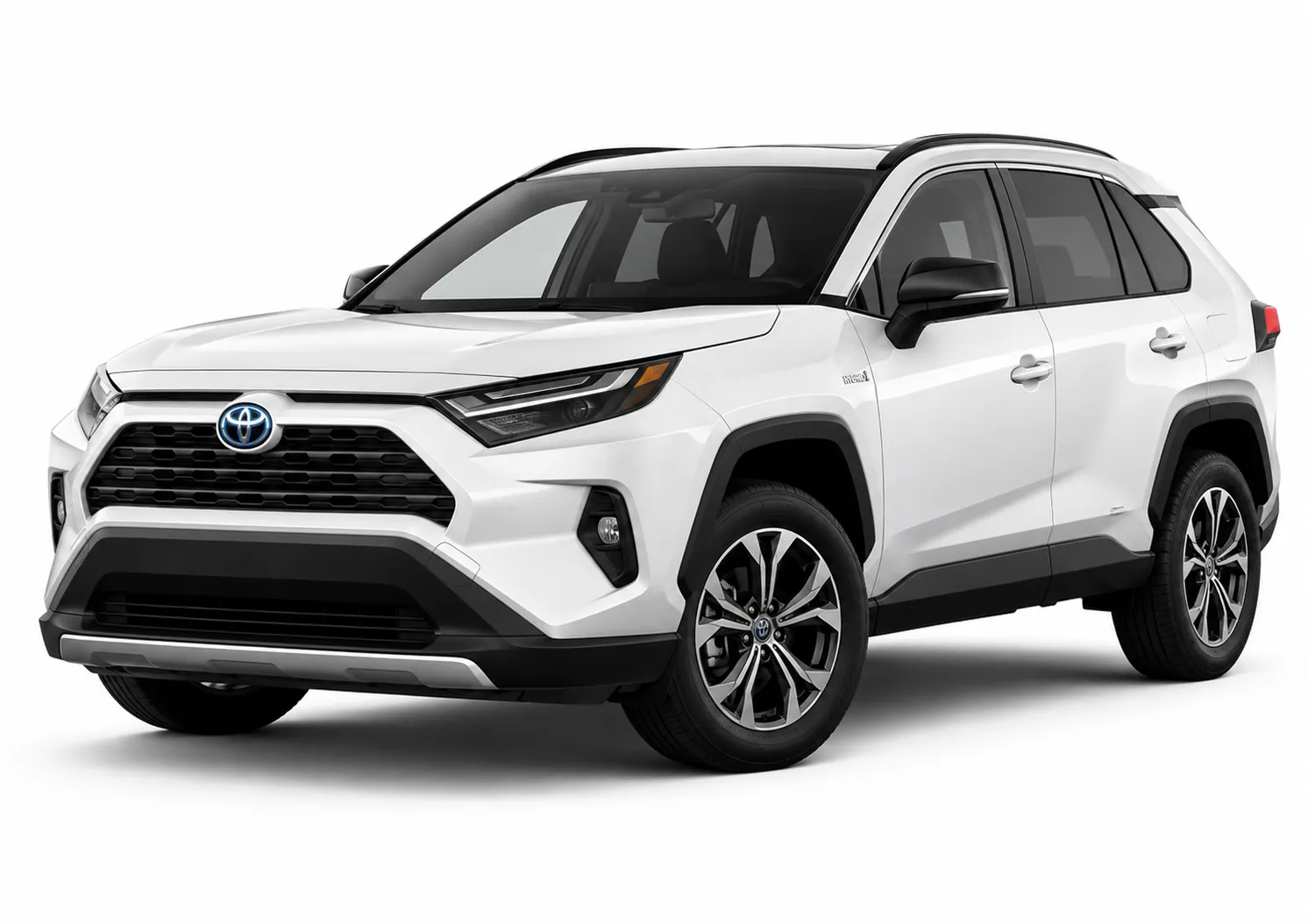 Toyota
What each car is in 2026
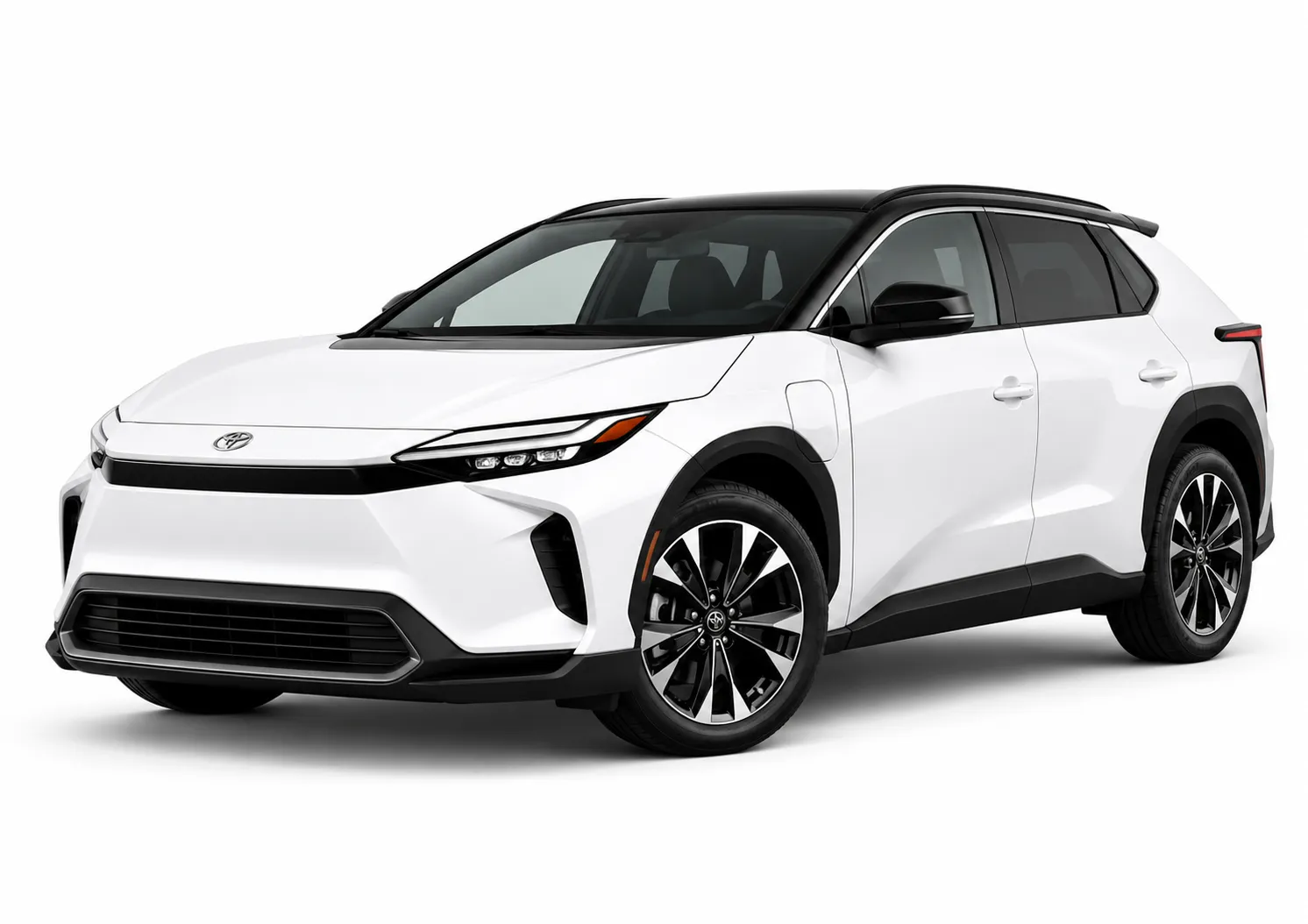
The **bZ** is Toyota’s compact electric SUV, overhauled and renamed for 2026: up to a manufacturer-estimated 314 miles of range (EPA-estimated 236–314 by trim), a native NACS port with Plug & Charge, battery preconditioning, an 11-kW onboard charger, and up to 338 hp in AWD form. It starts around $36,350 including destination. The full story — trims, charging behavior, recalls, safety detail — is in our full 2026 Toyota bZ review.
The **RAV4** enters its sixth generation as a hybrid-only lineup: 226 hp (FWD) or 236 hp (AWD), EPA economy up to roughly 48 city / 42 highway mpg on the most efficient front-drive trims, Toyota Safety Sense 4.0, and a starting price around $33,350 including destination for the hybrid LE. A 324-hp plug-in hybrid with about 50 miles of electric range joins from roughly $42,950. For used-market RAV4 thinking instead, see our RAV4 best-years guide.
bZ vs RAV4 Hybrid: The Decision Facts
|
2026 Toyota bZ
|
2026 RAV4 Hybrid
|
|
|---|---|---|
| Economy | 236–314 mi EPA-est. | Up to ~48/42 mpg |
| Refuel | ~30 min 10–80% DC / overnight home | Minutes at any station |
| Price | From ~$36,350 | $31,900 MSRP |
| Safety | Not a 2026 IIHS TSP | 2026 results pending — verify |
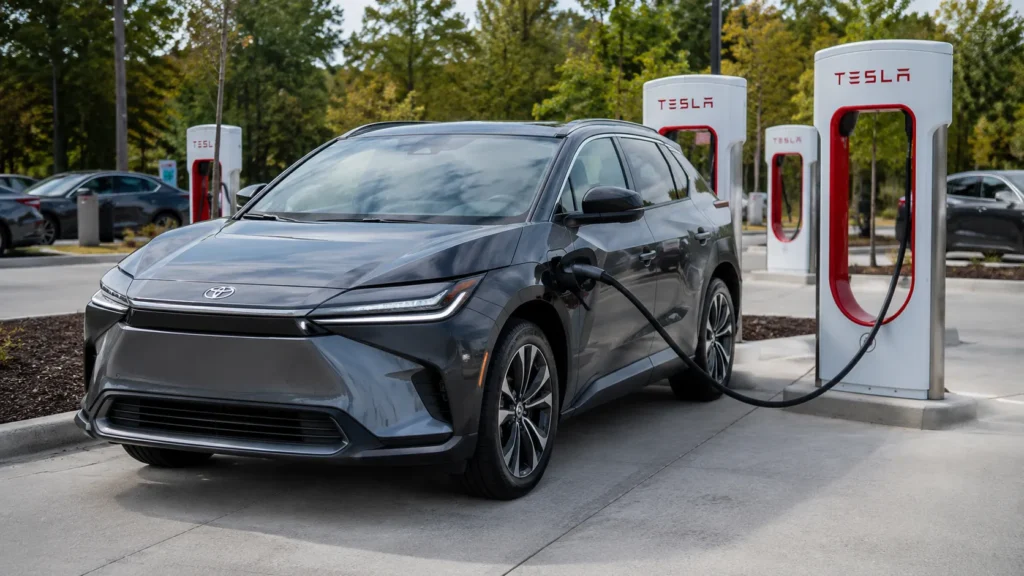
Range and refueling: the real dividing line
The RAV4 Hybrid refuels in five minutes anywhere and comfortably exceeds 500 miles between stops; there is nothing to plan. The bZ counters with 236–314 EPA-estimated miles by trim — and independent testing has been kind to it (Edmunds measured 331 miles from the long-range FWD version, beating its rating) — plus the single biggest convenience upgrade in its class this year: a native NACS port with direct Tesla Supercharger access and roughly 30-minute 10–80% fast charges under ideal conditions. If you charge at home overnight, the bZ’s “refueling” is actually *more* convenient than the RAV4’s. If you can’t charge at home, the equation flips hard toward the hybrid, and no spec sheet changes that.
Money: purchase price, credits, and running costs
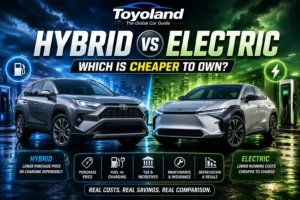
The RAV4 Hybrid starts about $3,000 lower, and since the **federal $7,500 EV tax credit expired for purchases after September 30, 2025**, there is no federal offset to close that gap on a new bZ (some state incentives and a home-charger credit may still apply). What the bZ retains is the running-cost edge: electricity per mile is typically well below even 44-mpg gasoline, and EV servicing is simpler. Whether that edge repays the purchase gap depends on your annual miles and local electricity prices — the exact math lives in our guide to whether an EV or hybrid is cheaper to own. As a rule of thumb: high-mileage home-chargers recover the gap; low-mileage or public-charging-dependent drivers often don’t.
Performance and everyday drivability
The bZ AWD’s 338 hp makes it the quicker car outright (about 4.9 seconds to 60), with the instant, silent response EVs do best; front-drive versions are brisk rather than fast. The RAV4 Hybrid’s 226–236 hp is fully adequate and its efficiency is astonishing for the size — and the 324-hp PHEV splits the difference, matching the bZ’s urgency while keeping the gas safety net. Both are comfort-tuned family SUVs, not sports cars; neither will disappoint a commuter, and neither pretends to thrill.

Safety: stated year-specifically
Precision matters here, and the two cars are at different points. The 2026 bZ‘s IIHS results are in: Good in the side test and both crash-prevention evaluations, but only Acceptable in the two updated frontal tests and Poor-rated headlights — a combination that keeps it off the 2026 Top Safety Pick list. NHTSA has so far rated only its rollover resistance (4 stars). The 2026 RAV4 is a first-year redesign: Toyota Safety Sense 4.0 is standard and the outgoing generation’s record was strong, but year-specific IIHS/NHTSA results for the new car should be verified rather than assumed — if it hasn’t been tested at your reading time, treat it as not yet rated rather than borrowing the old model’s scores. Neither car currently holds a 2026 safety award, so safety-award shoppers should verify both before deciding.
- Native NACS/Supercharger access + battery preconditioning
- Up to 314-mi EPA-est. range (beat its rating in independent testing)
- 338-hp AWD option
- Lowest per-mile running cost with home charging
- Not a 2026 IIHS Top Safety Pick (Acceptable frontals, Poor headlights)
- Needs dependable charging to make sense
- Federal credit no longer applies
- Hybrid-only 6th gen with up to ~48/42 mpg
- Lower entry price (~$33,350 incl. dest.)
- Zero charging dependence
- PHEV option (324 hp, ~50 mi EV)
- First-year redesign — long-term data and 2026 crash results pending
- First-year redesign — long-term data and 2026 crash results pending
- First-year redesign — long-term data and 2026 crash results pending
Reliability and track record
Honesty over brand faith: both are effectively first-year 2026 products, so neither carries a mature long-term record. The bZ nameplate dates to 2023 and its two notable recalls — the 2023 wheel-hub-bolt campaign (22V-444) and the 2023–2025 HVAC/defroster software recall (25V-577) — are documented and remedied history rather than current defects. The RAV4 name has decades of equity, but the sixth generation is new from the platform up, and our own year-guide discipline says first-year redesigns earn patience, not assumptions. Toyota’s hybrid system heritage is the RAV4’s strongest reliability argument; the bZ’s conservative battery management and 8-year/100,000-mile battery warranty are its counterpart. Call this dimension a cautious draw.
Practicality
Both are five-seat compact SUVs of similar footprint. The RAV4’s packaging and cargo flexibility have long been benchmarks, and the new generation continues the formula with the deeper dealer/service ubiquity of Toyota’s best-seller. The bZ offers the flat-floor spaciousness EVs enable and a large 14-inch screen, but no third-row option and slightly less cargo versatility. Families needing maximum flexibility lean RAV4; couples and commuters will find either sufficient.
Who should buy which
- Buy the bZ: home-charging households; drivers under ~200 daily miles who value quiet, smoothness, and Supercharger-backed road-trip capability; two-car households adding an electric runabout.
- Buy the RAV4 Hybrid: anyone without dependable charging; high-mileage long-haul drivers; lowest-purchase-price shoppers; buyers who want efficiency with zero lifestyle change.
- Consider the RAV4 PHEV: want most of the bZ’s electric driving with none of the range planning — if the ~$42,950-plus price works.
Still weighing the broader field? Our roundup of the best hybrid SUVs and primer on
Final verdict
There is no universal winner — and pretending otherwise would misserve you. The 2026 RAV4 Hybrid is the safer default: cheaper to buy, effortless to live with, efficient beyond argument. The 2026 bZ is the better car *for the right household*: charge at home, fit your days inside its range, and it is quieter, quicker (in AWD form), cheaper per mile, and now genuinely road-trip capable through the Supercharger network. Match the car to your charging reality and mileage — not to a scoreboard — and either one is an easy Toyota to recommend.